Sculpture by the Sea is back on the Bondi to Tamarama coastal walk for its 30th year, with 100 works along two kilometres of cliff path, free, until 2 November 2026. I went on a midweek morning because I know how busy the weekends get, and crowds make photographing the sculptures even harder than it already is.
I took my EOS R and my 35mm lens, planning to photograph people enjoying the sculptures rather than the sculptures on their own. Then I made a rookie error.
The one thing I forgot to bring with my camera
There was no memory card in the camera. I’d left it at home, and because I hadn’t brought my usual camera bag there was no spare either. Two spare batteries, fully charged, and nothing to write to. Pretty embarrassing for someone who does this semi-professionally.
I had two choices: go and buy a card, or make do with my phone. I chose the phone, partly as a challenge and partly because of the old saying that the best camera is the one in your hand. Every photo on this page was taken on an iPhone.
What I wanted to make
The photos the organisers and everyone else post online tend to show each sculpture on its own, filling the frame, so some pieces look enormous when in real life they’re quite small. It’s all perspective, where you stand and how close you get.
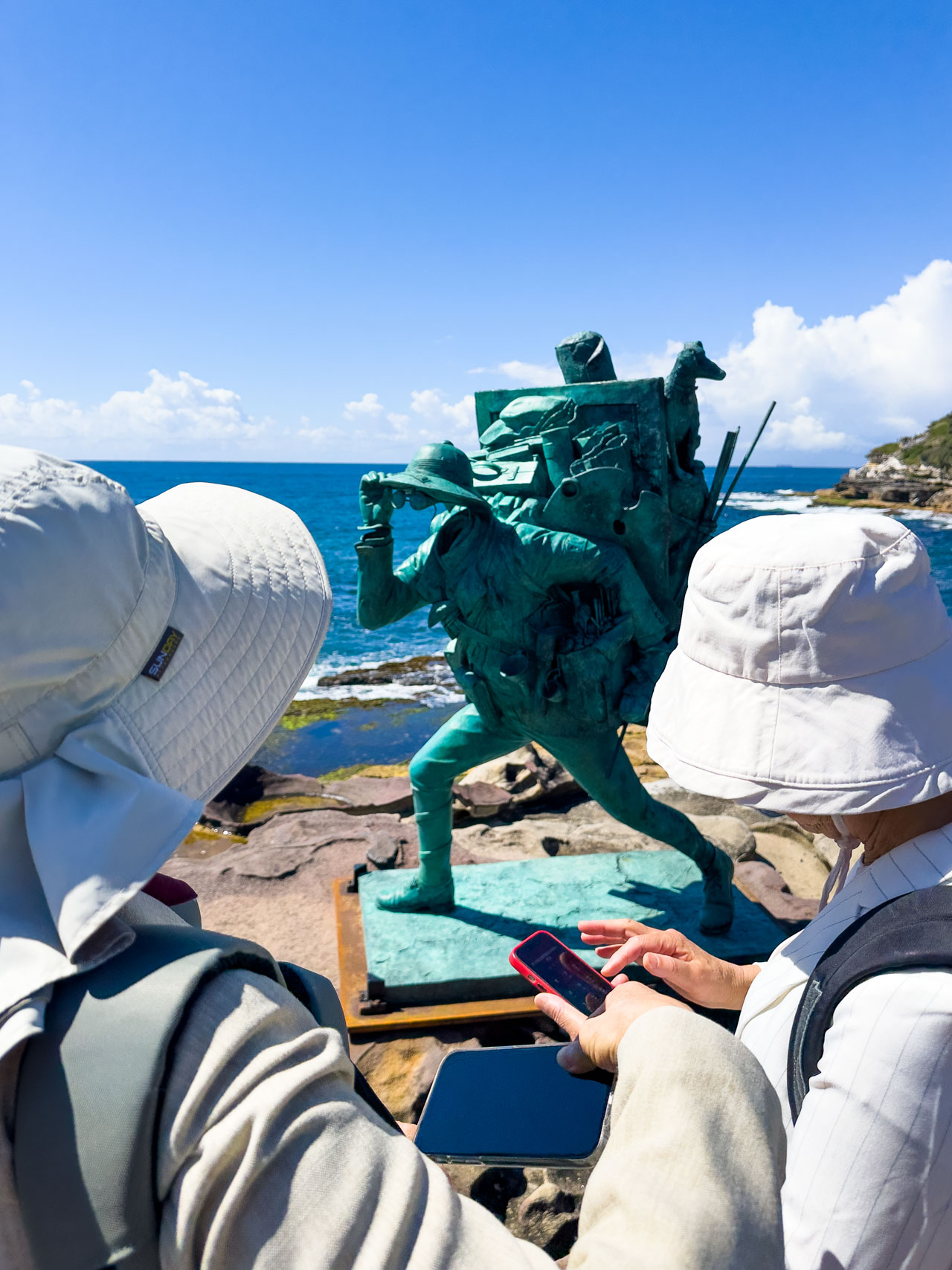
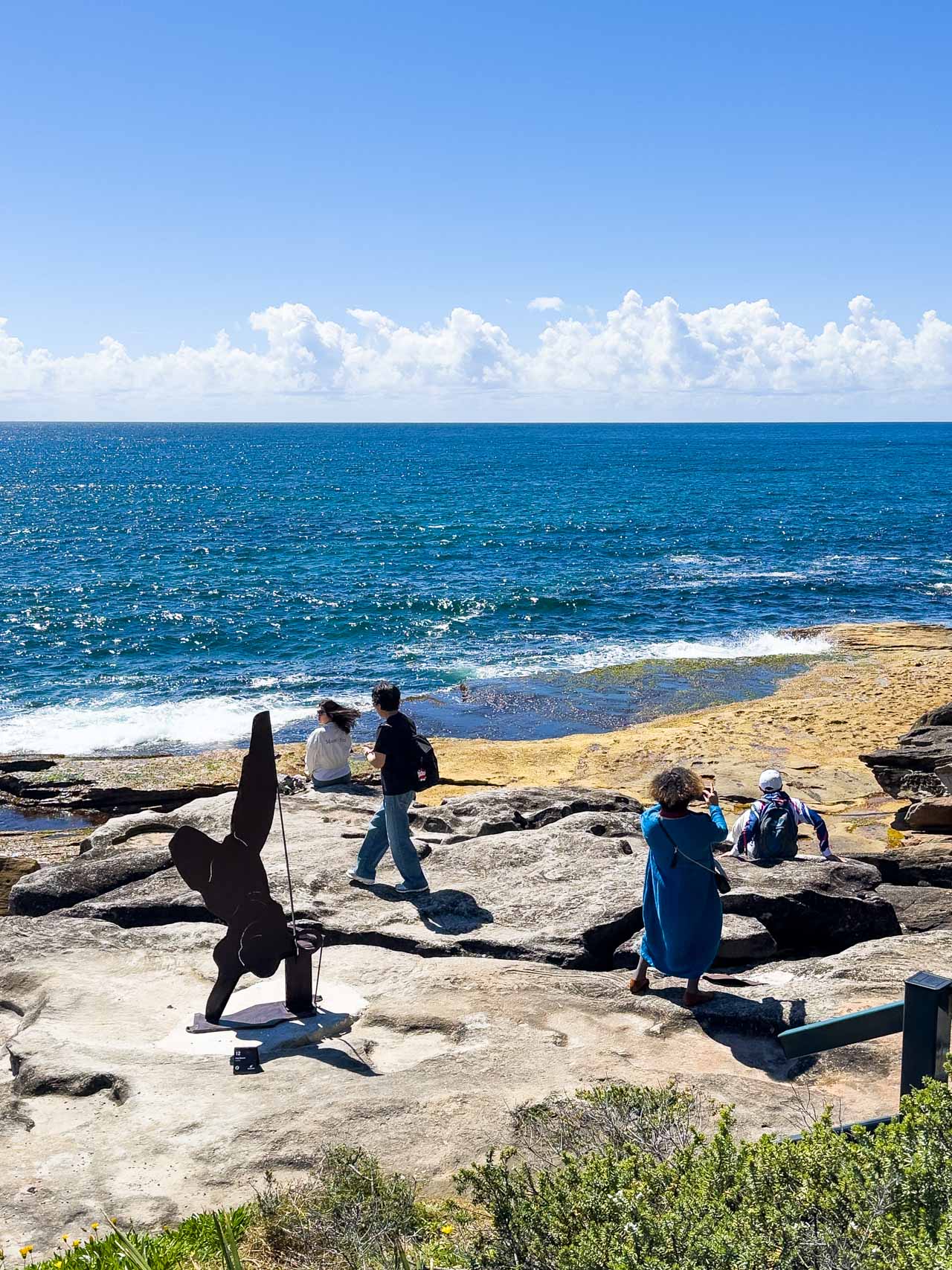
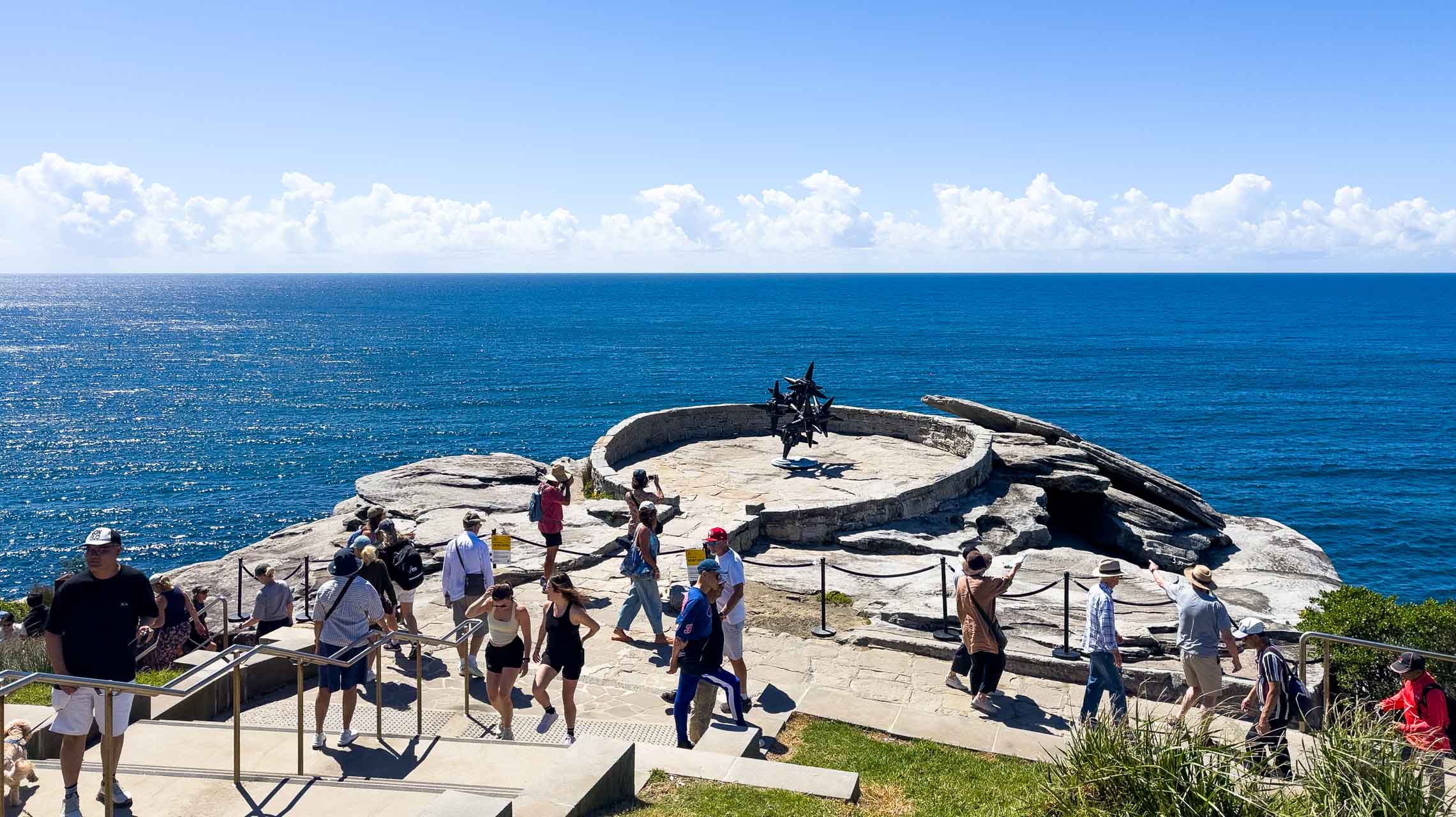
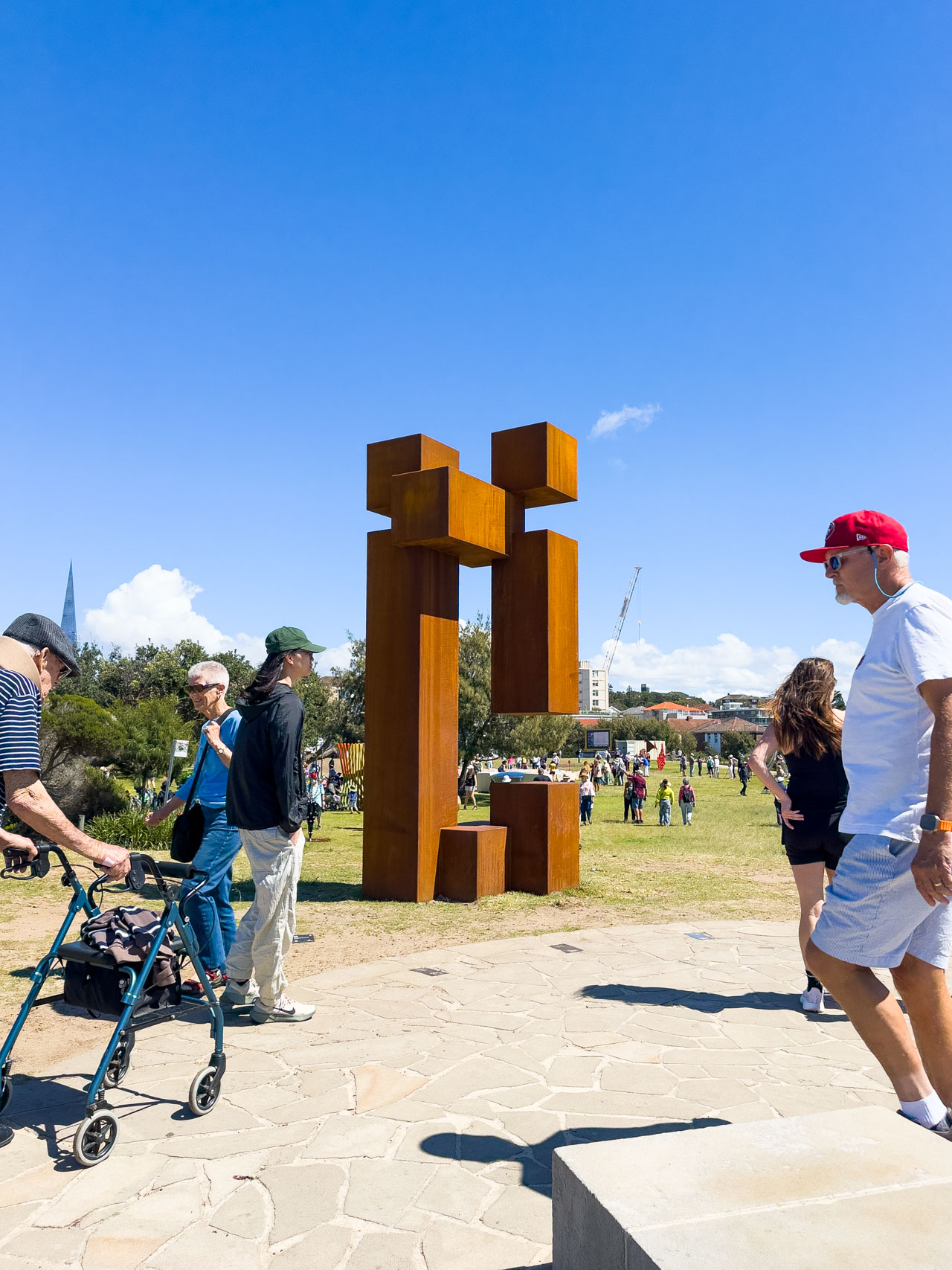
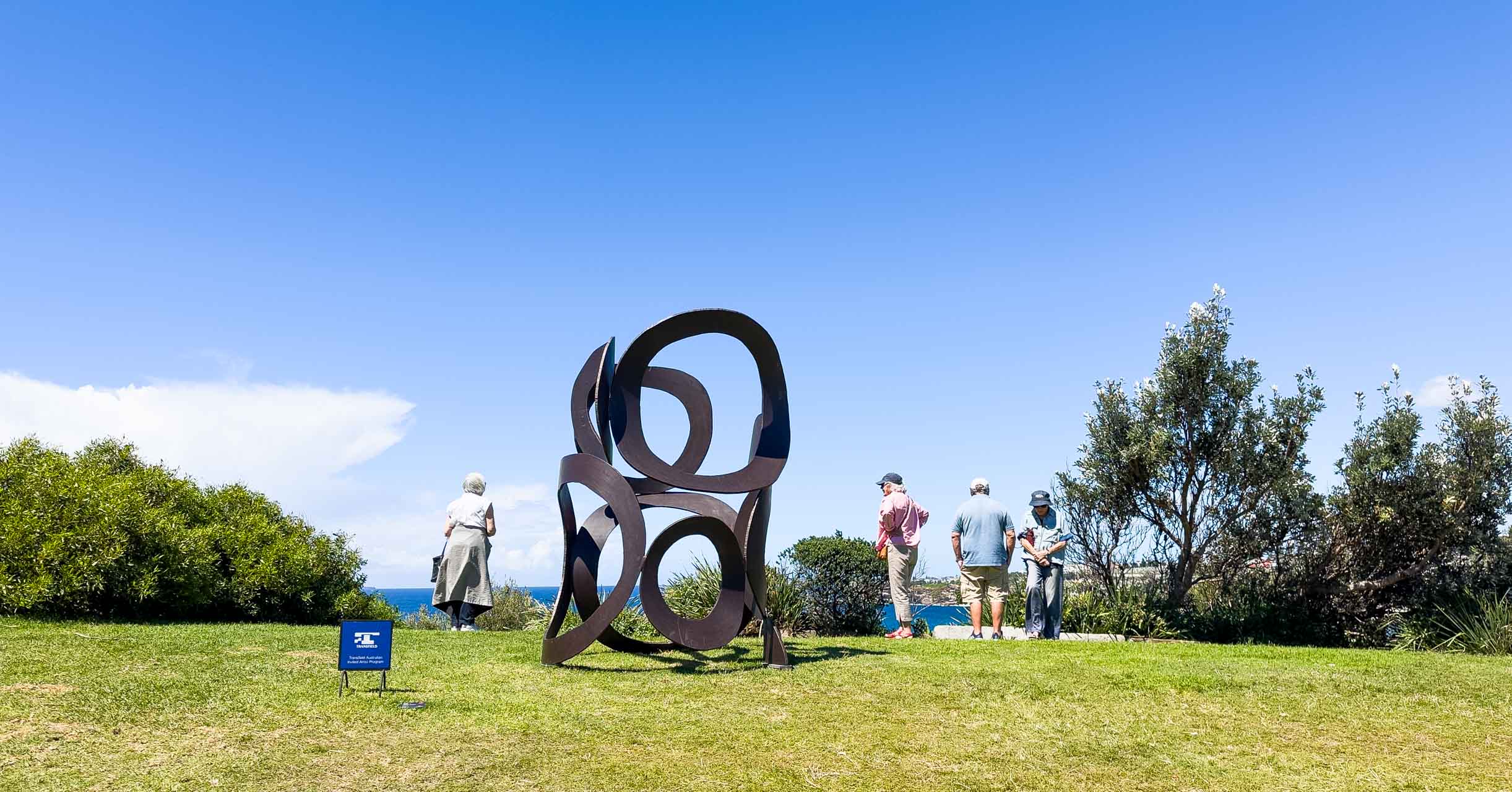
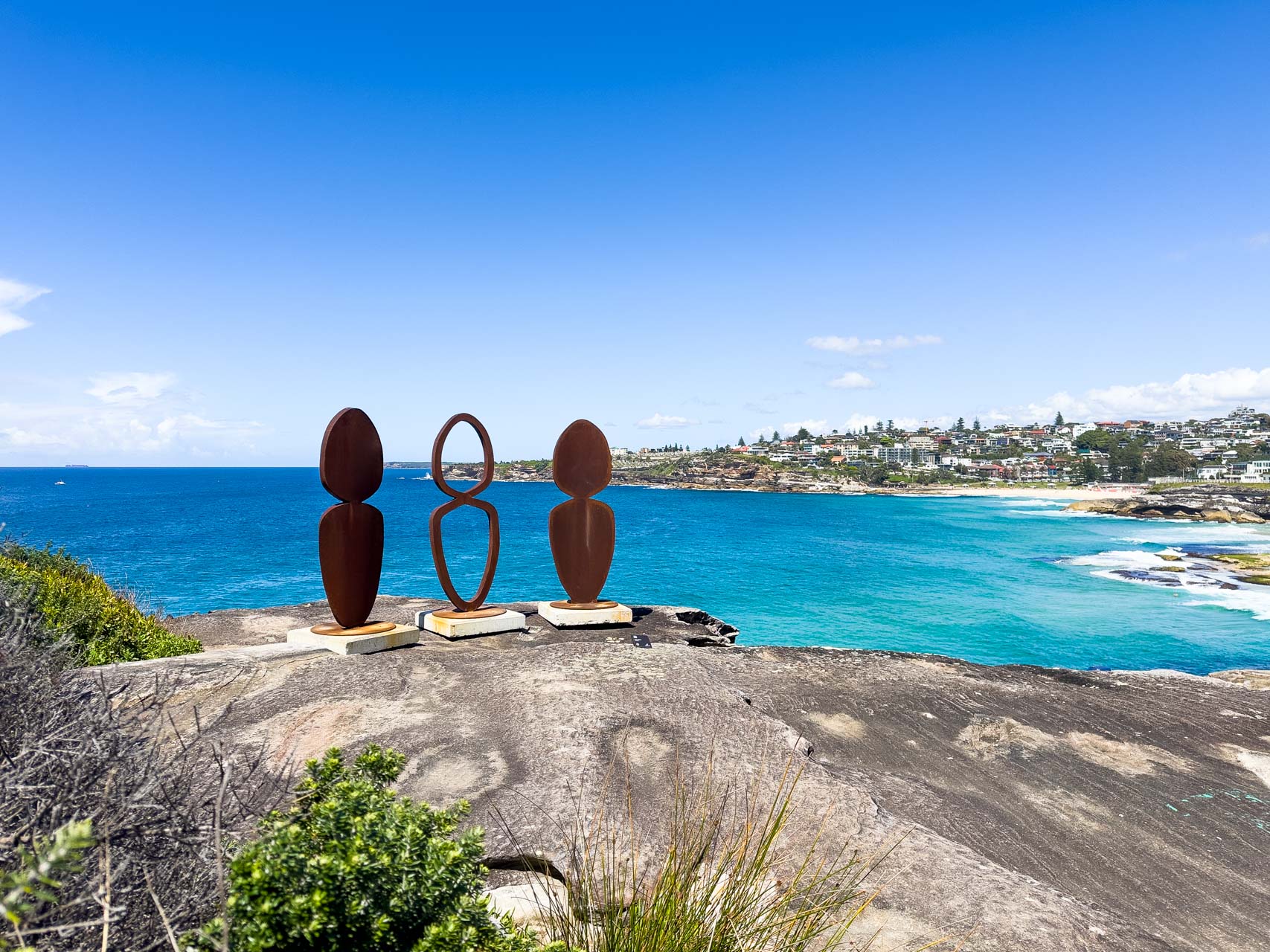
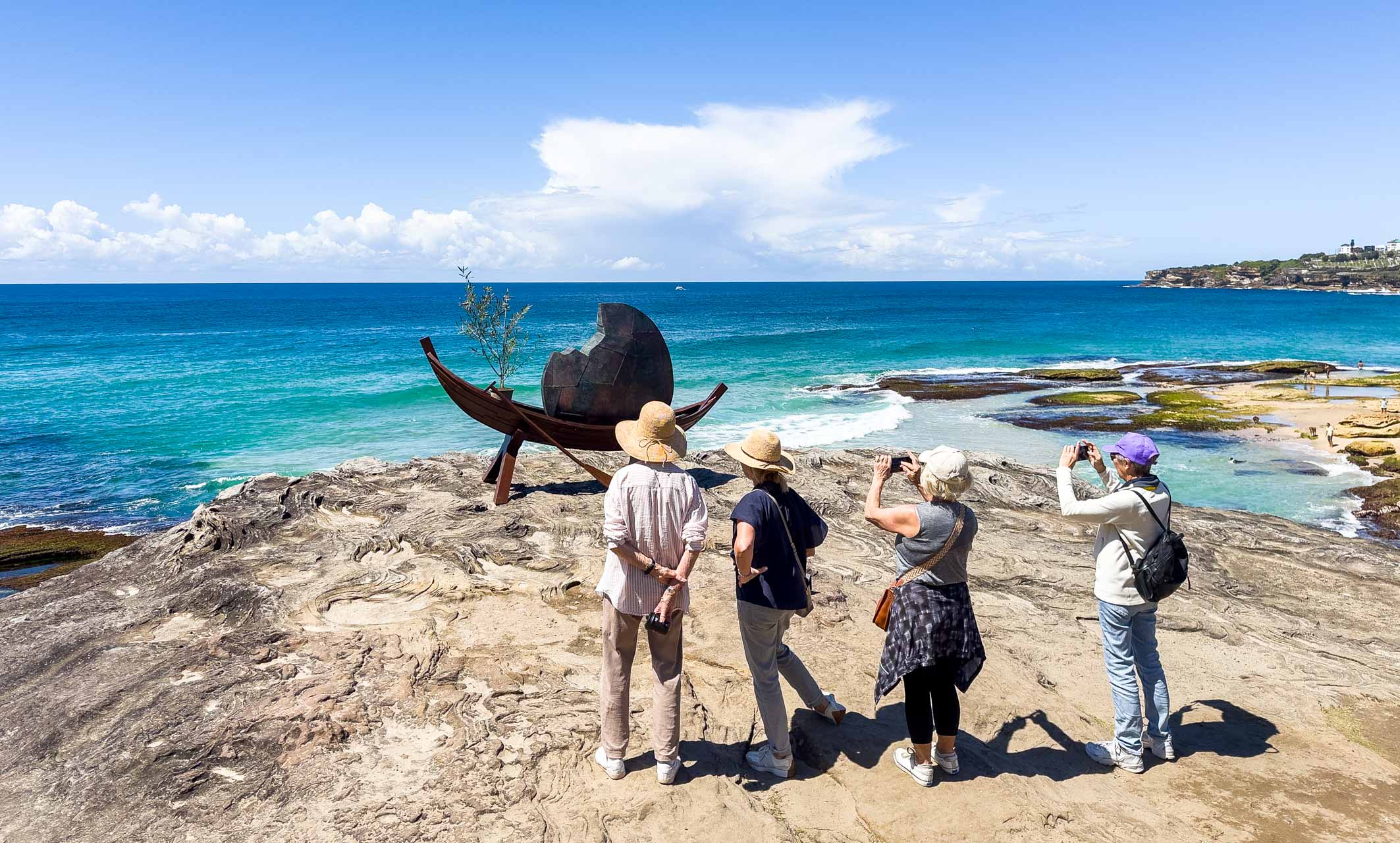
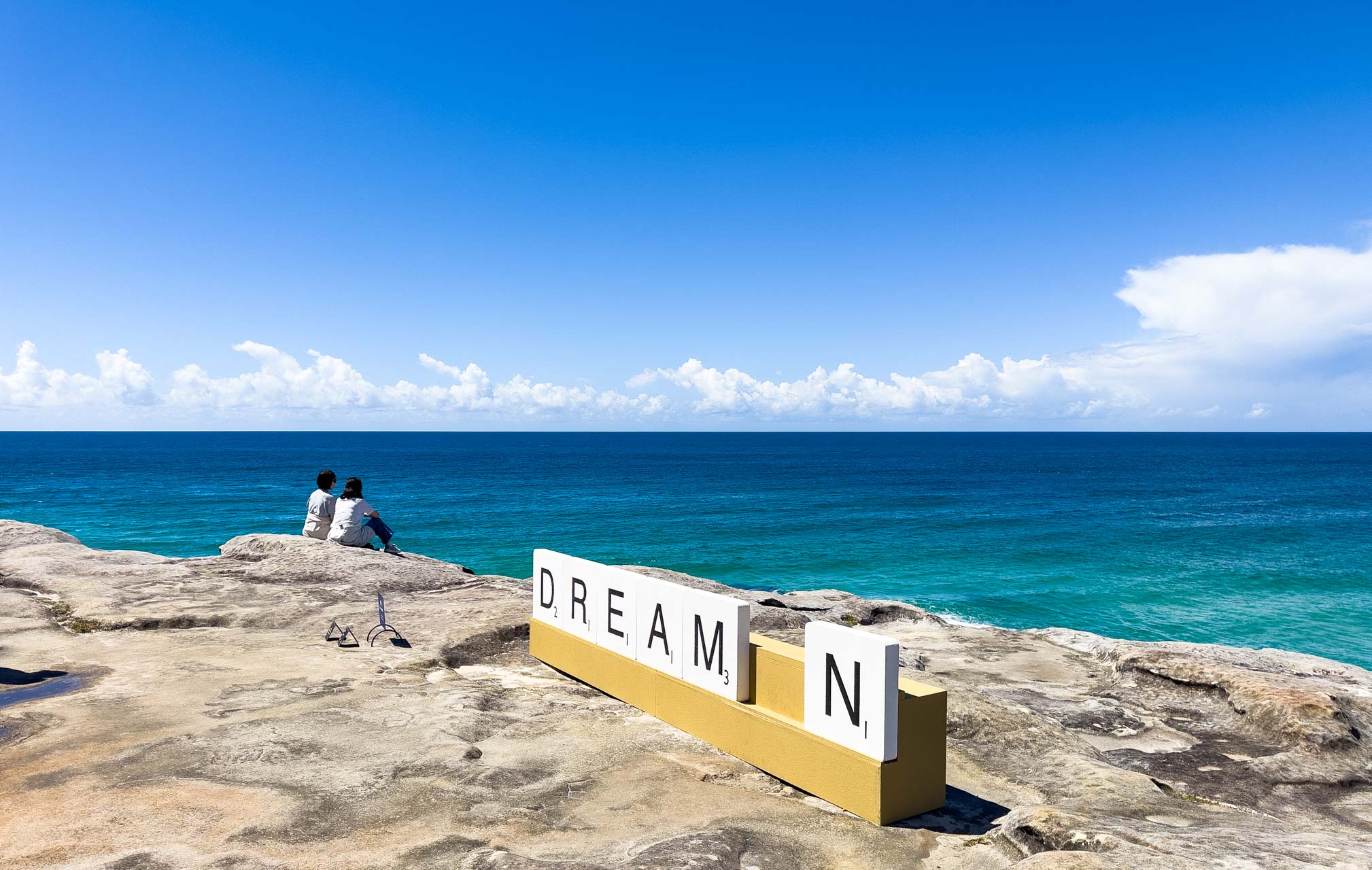
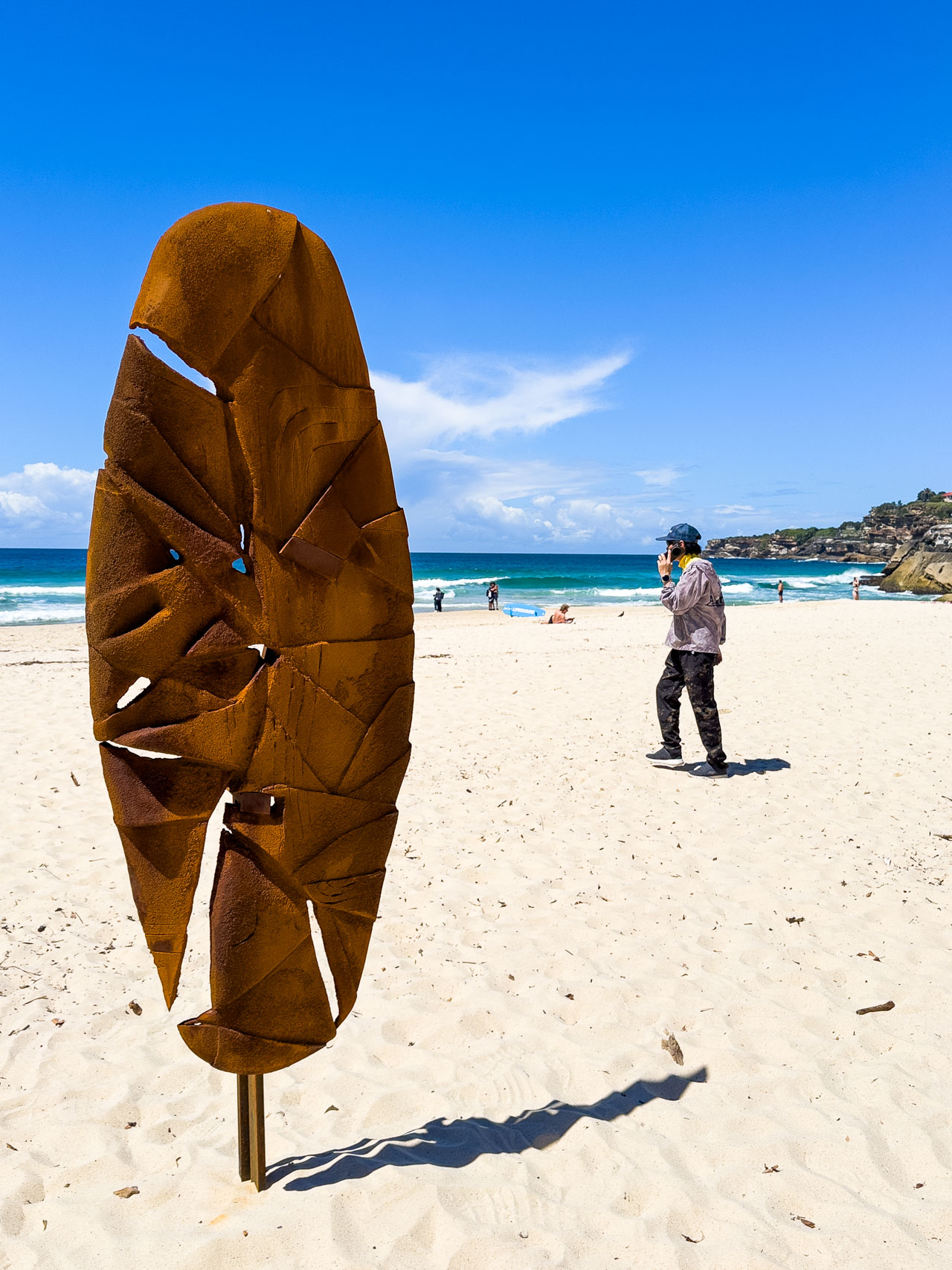
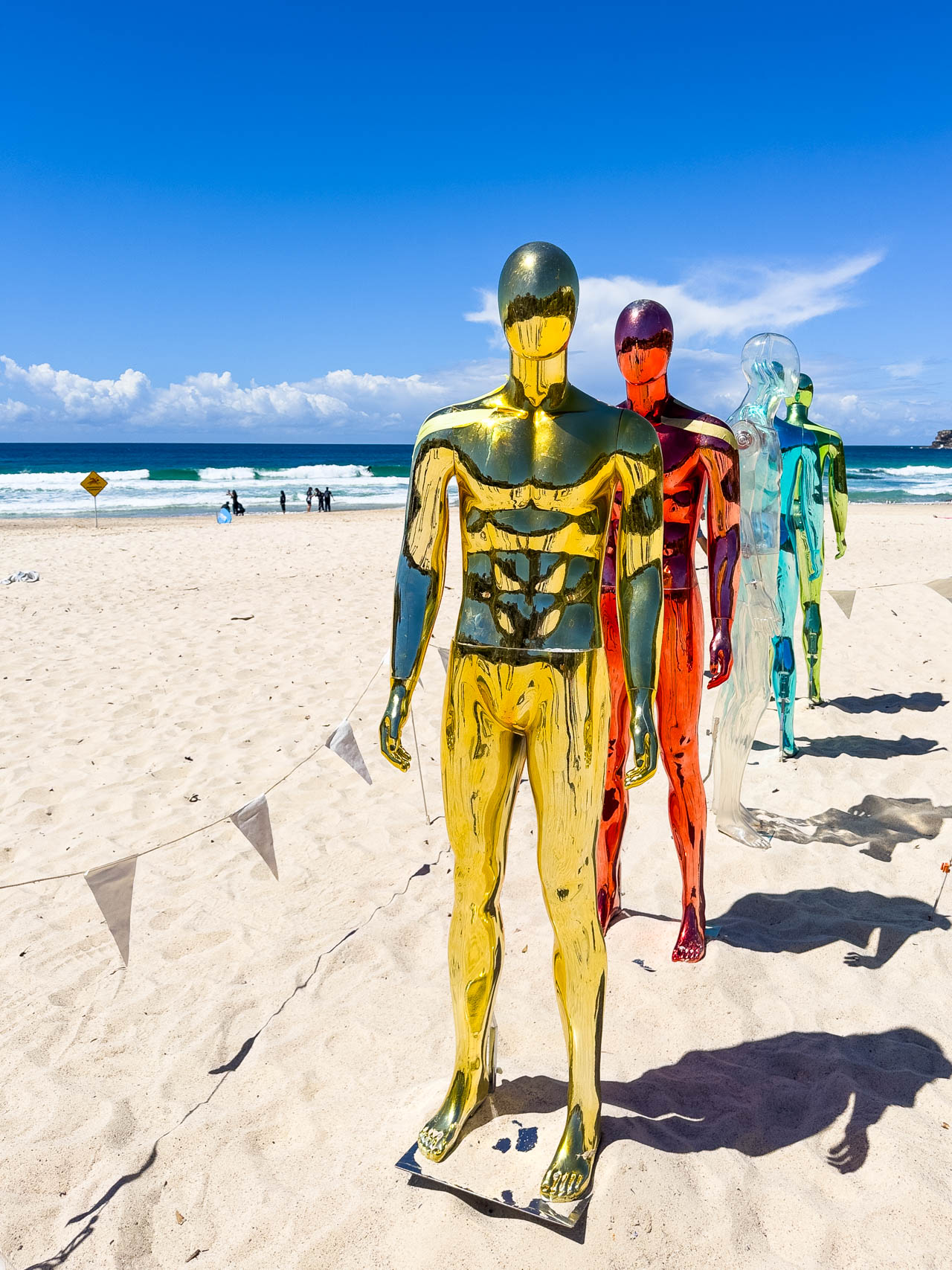
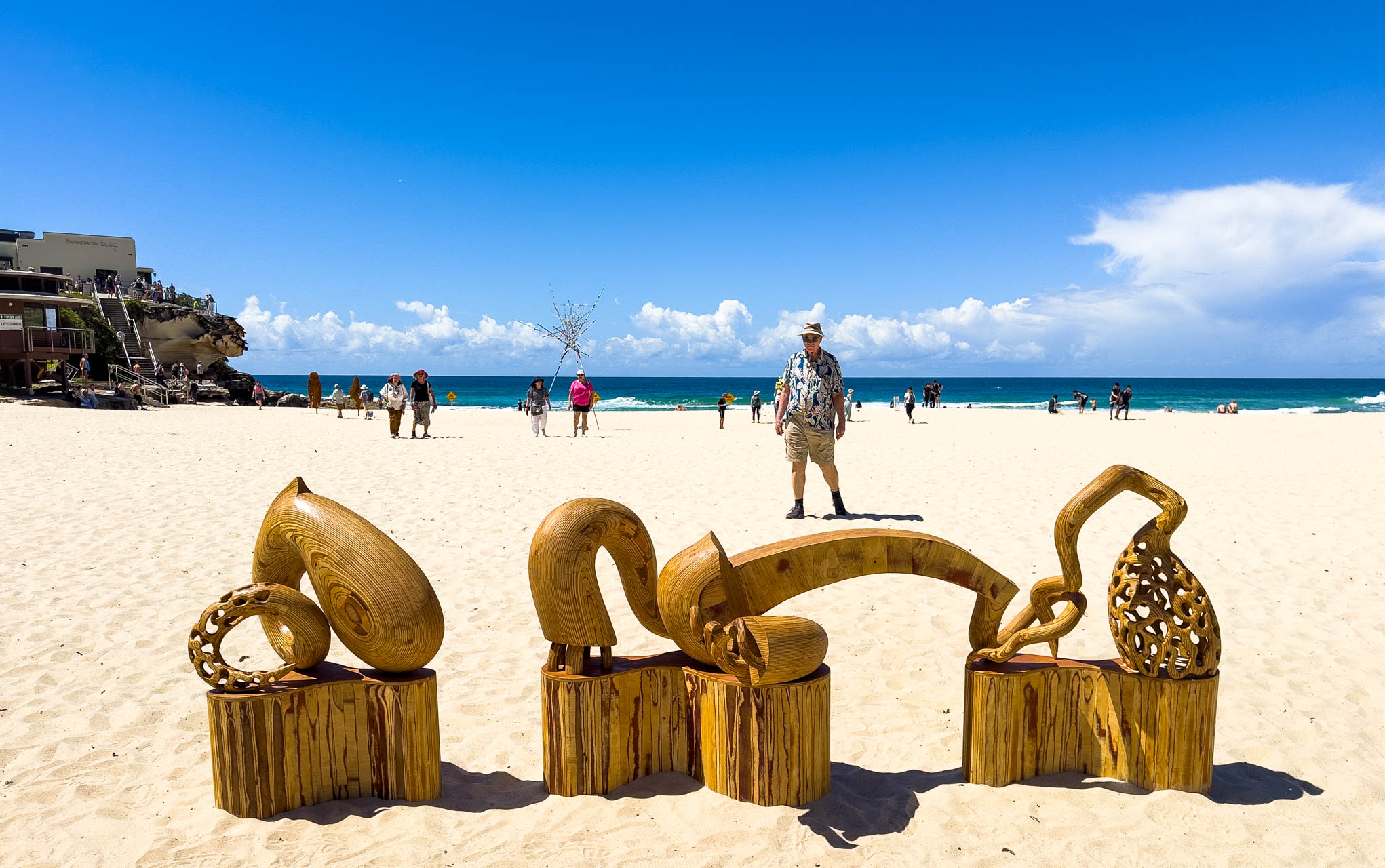
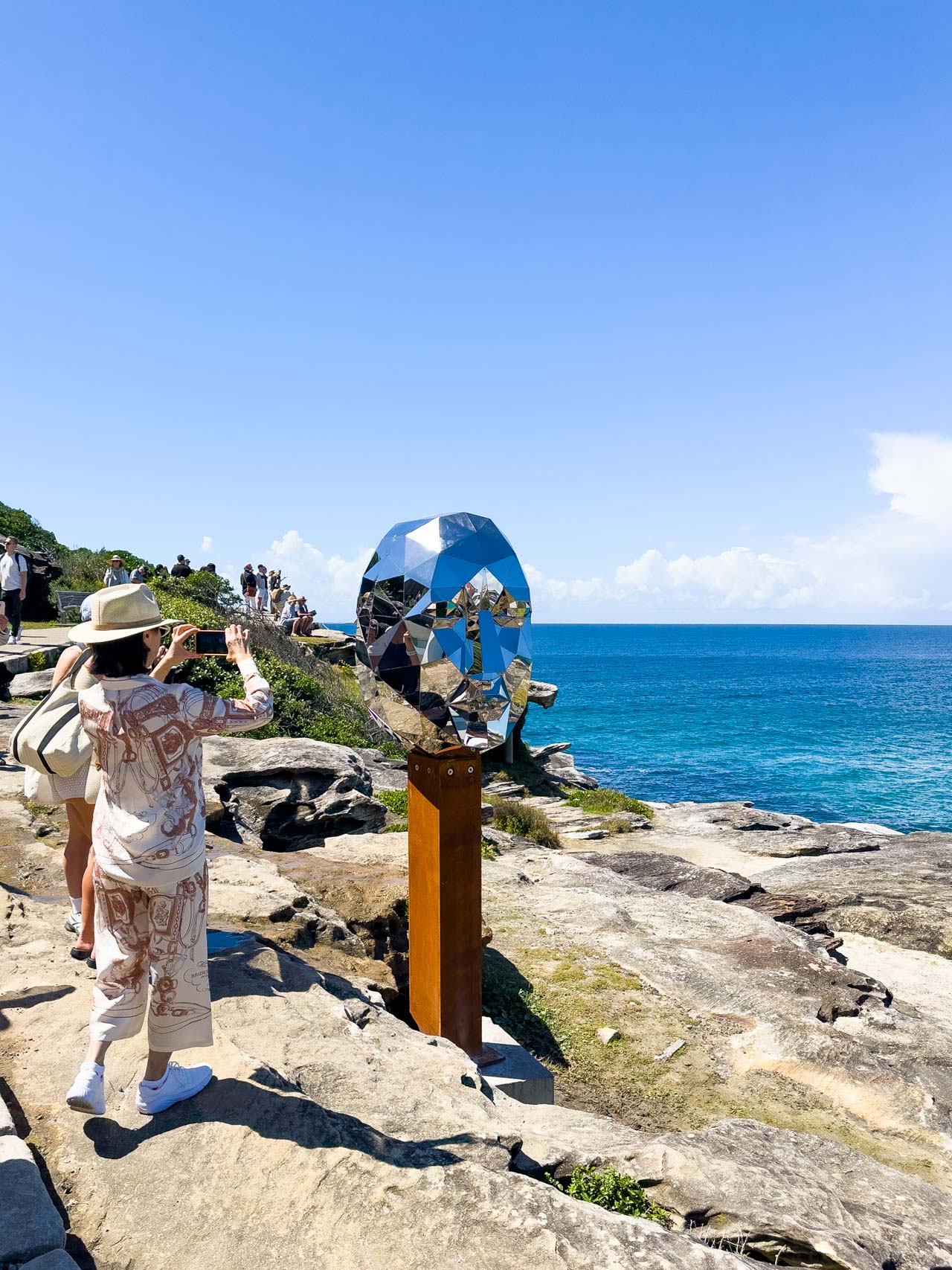
I wanted the opposite: the sculpture in its situation. Who’s looking at it, what they’re doing, what the spot looks like around it. More like street photography than a catalogue. So I put myself behind people’s shoulders, between hats, and among the groups with their phones out.
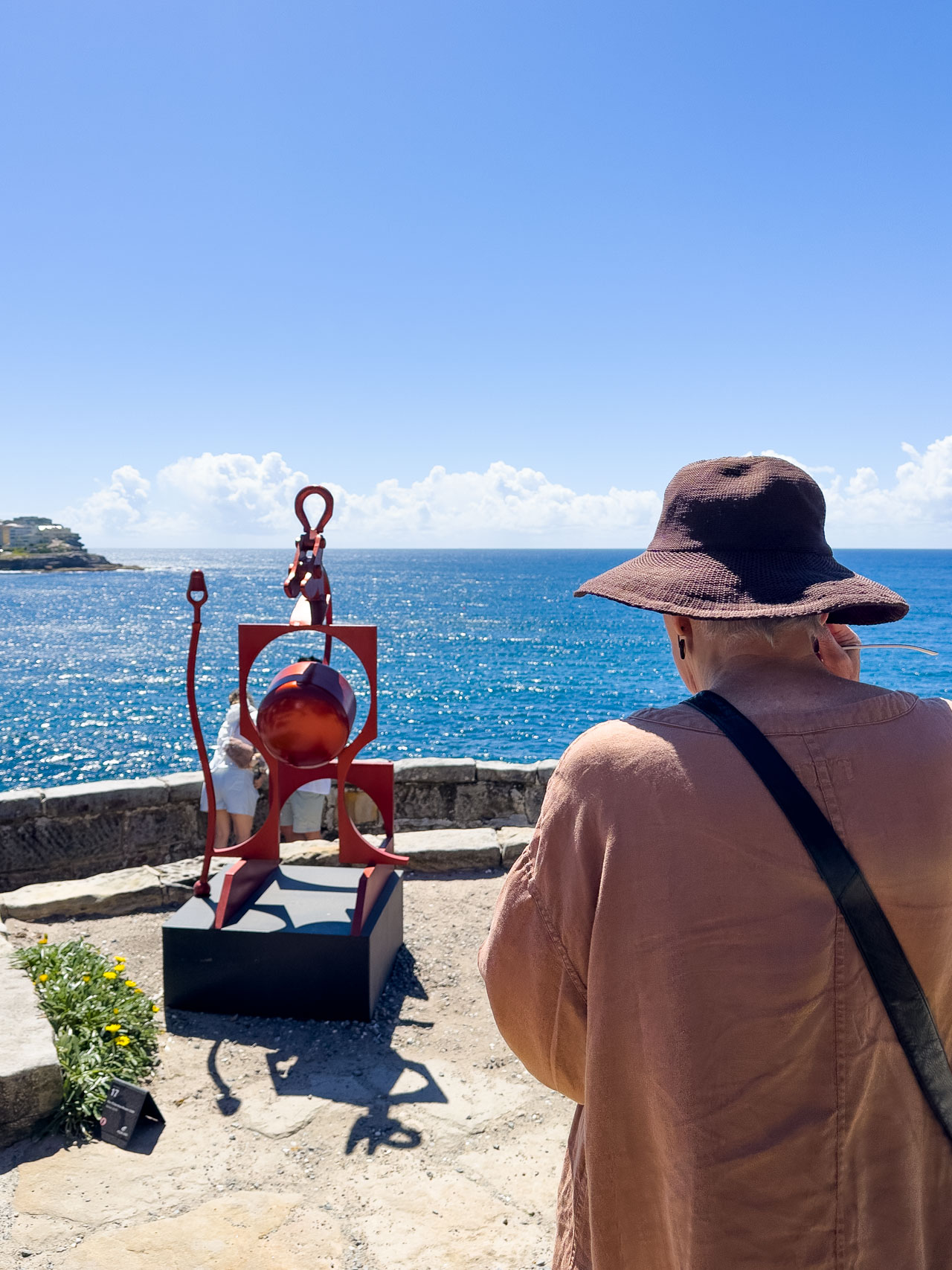
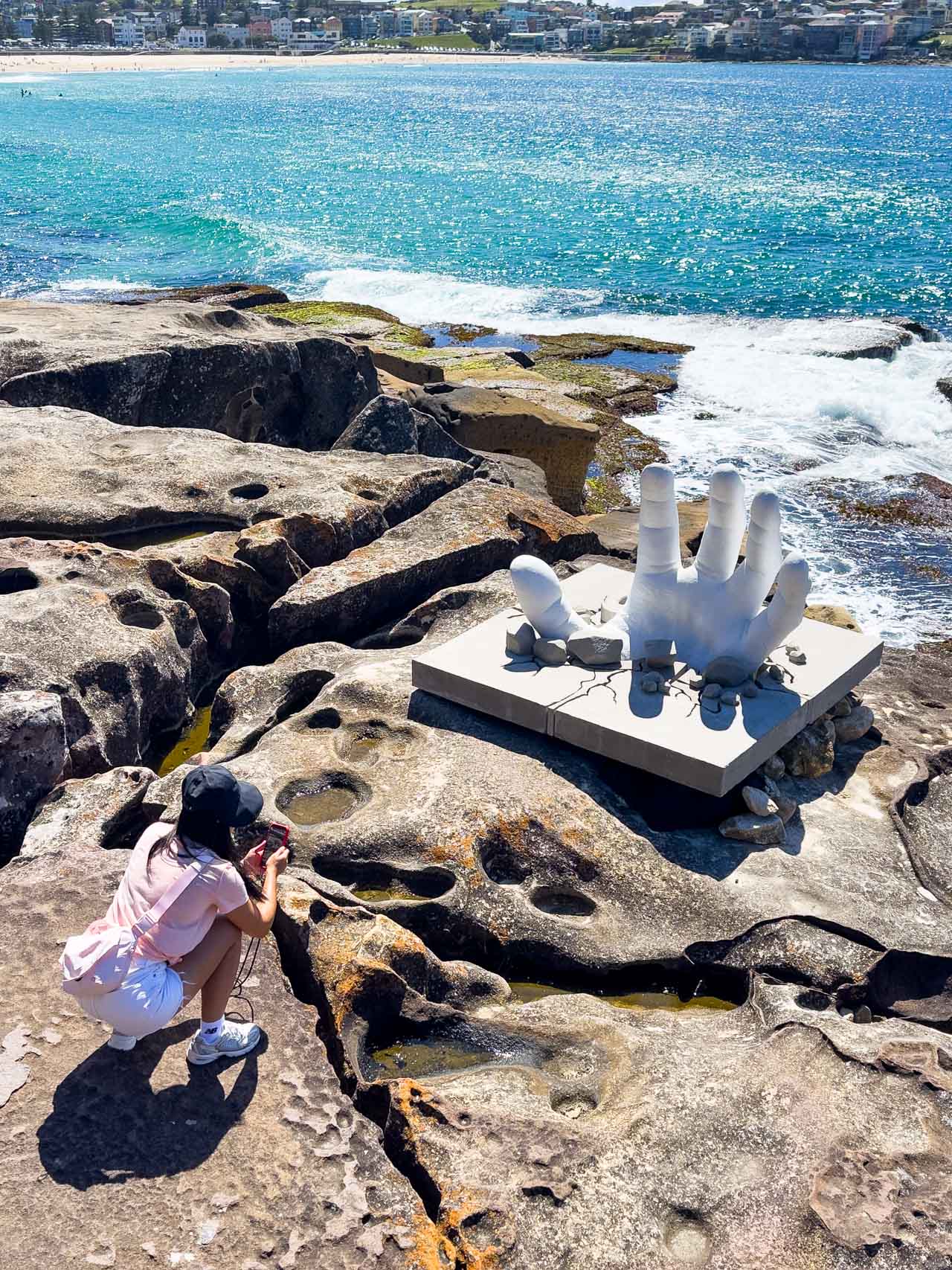
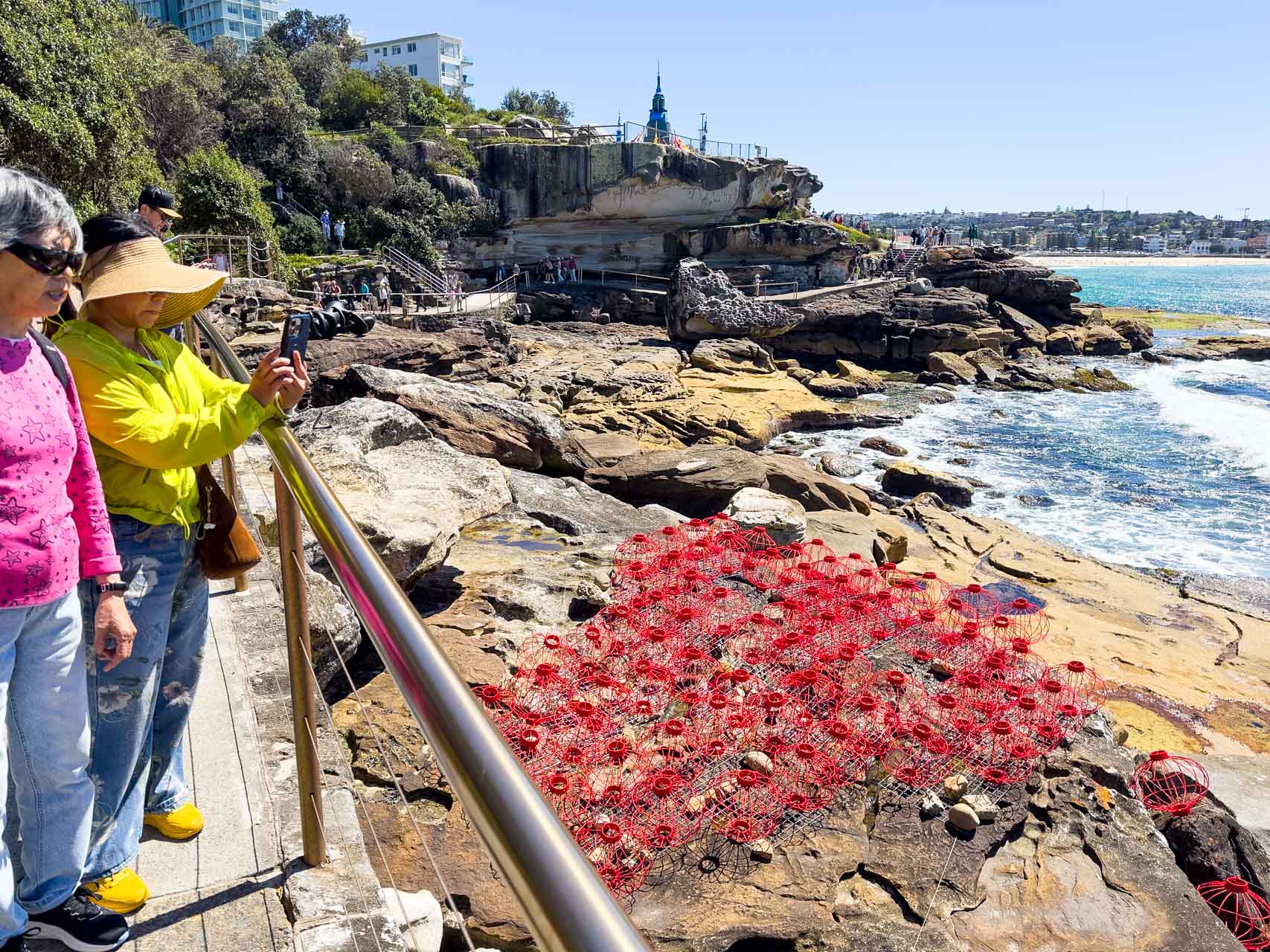
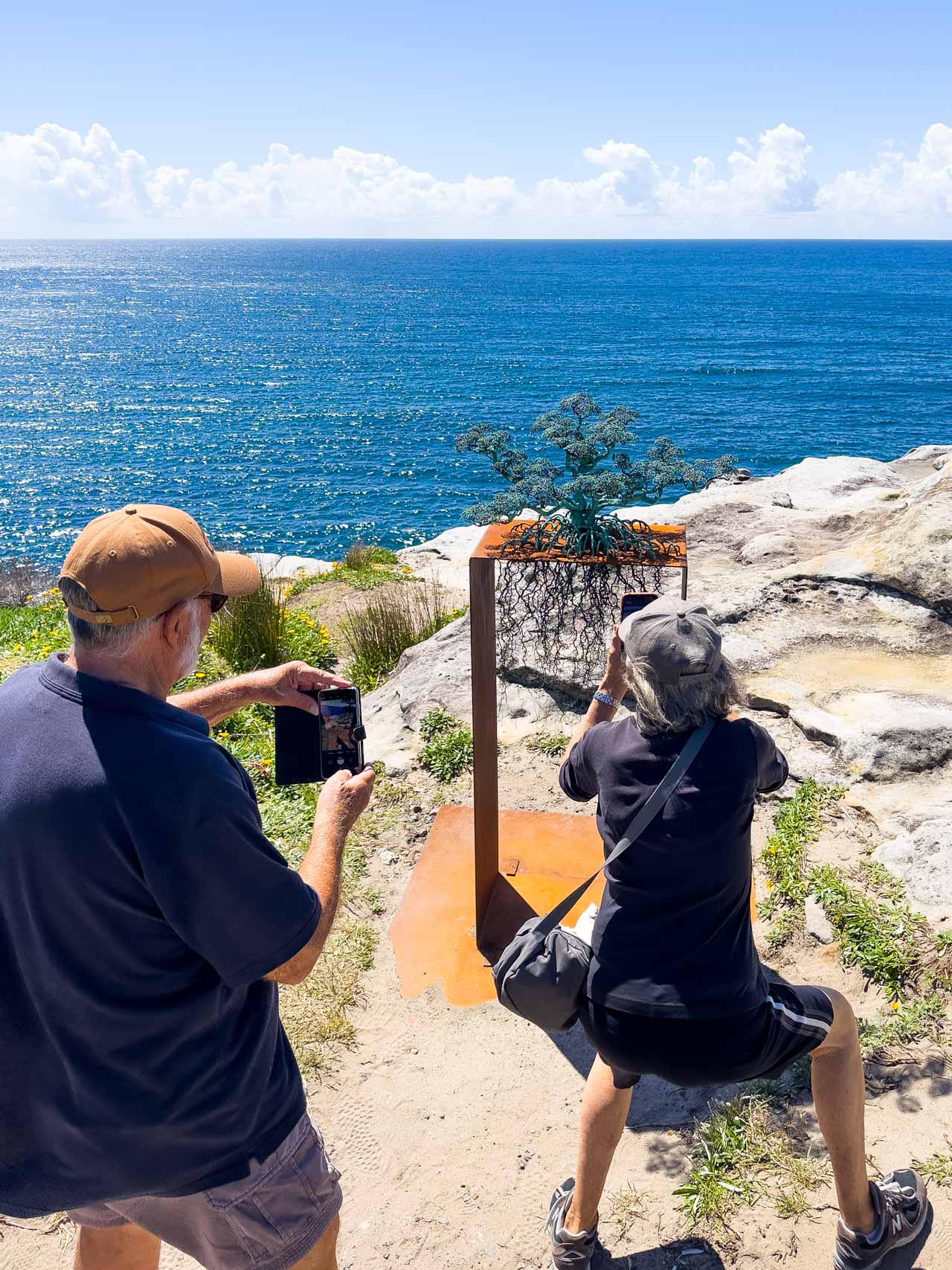
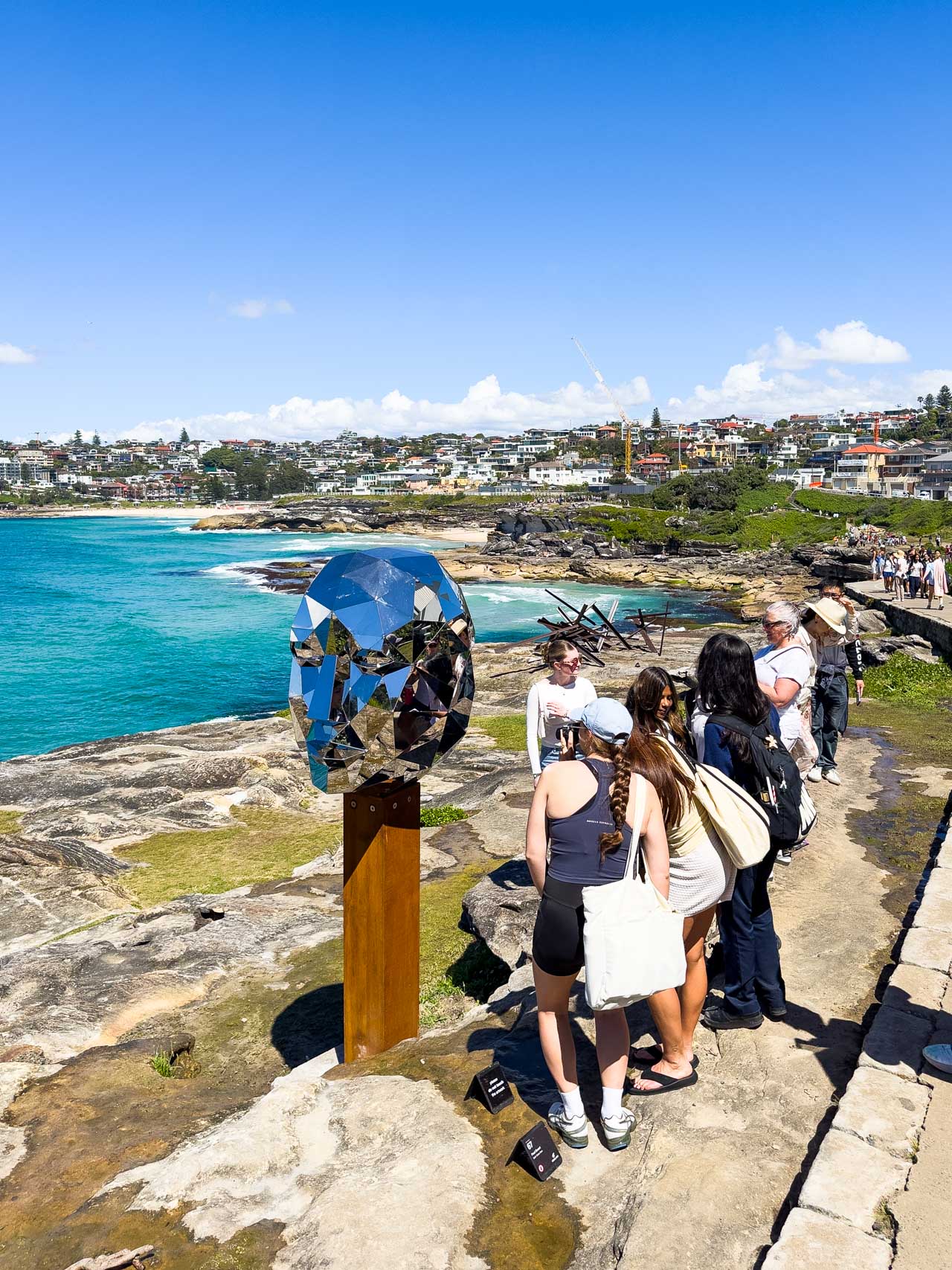
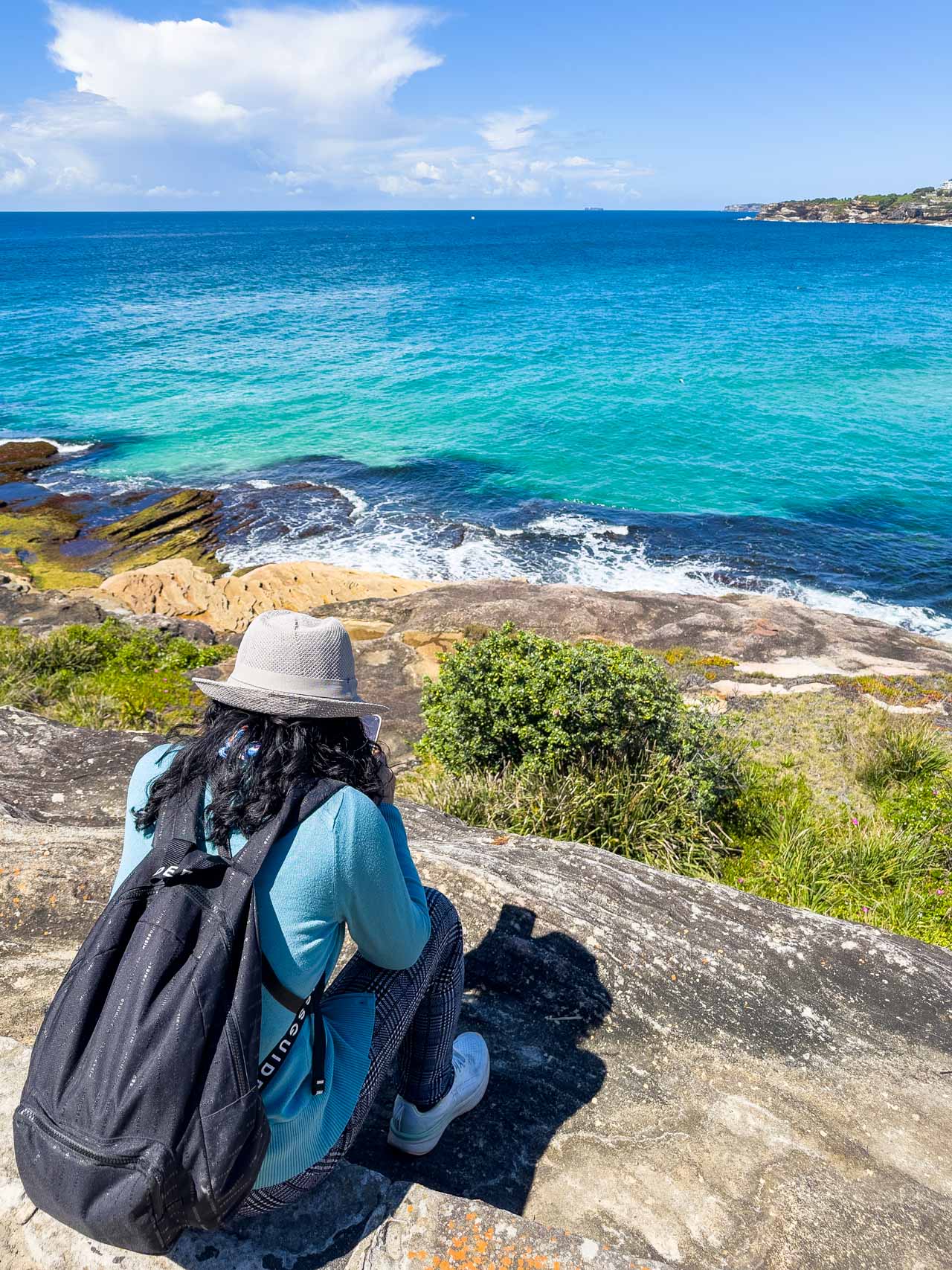
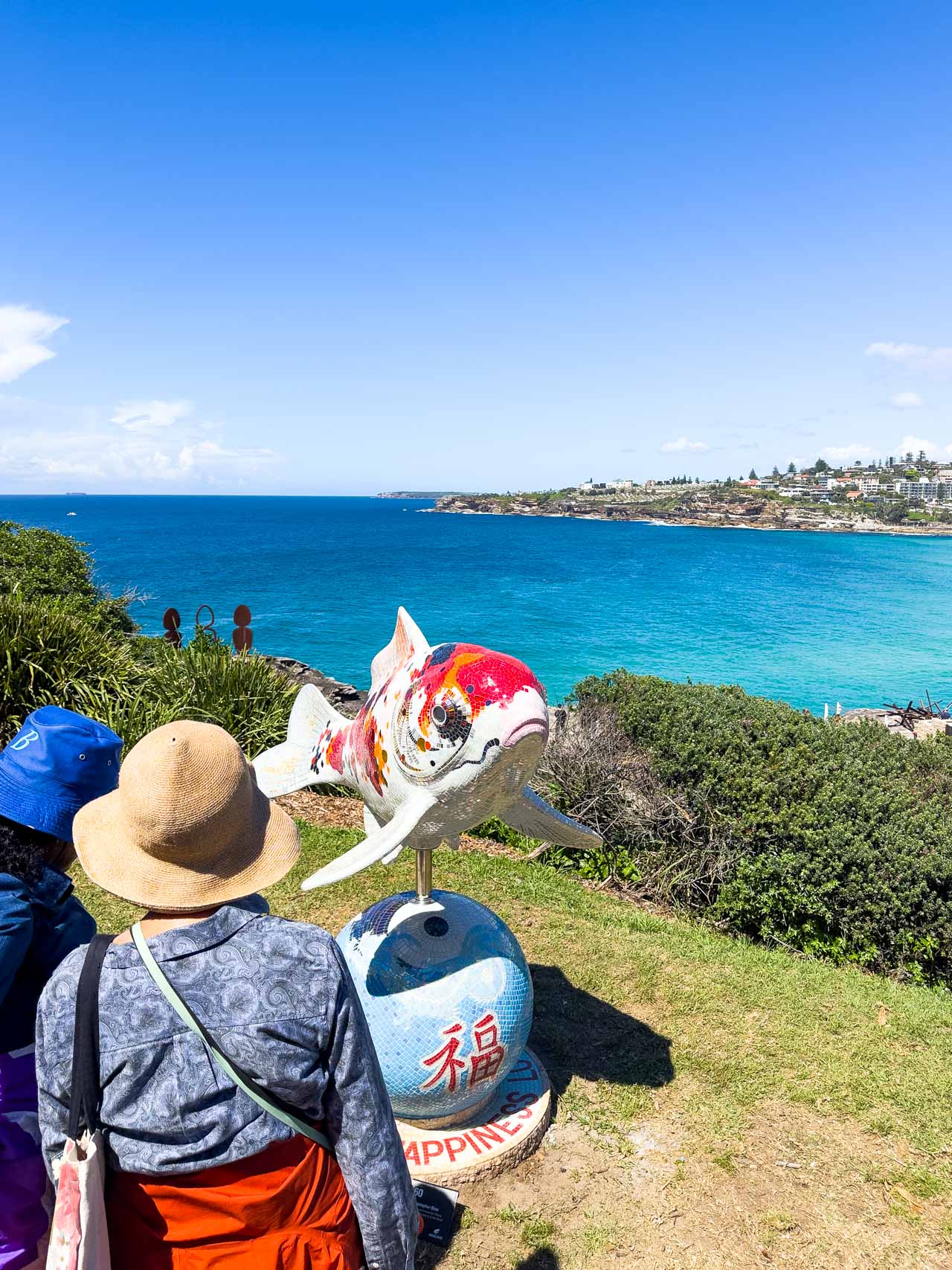
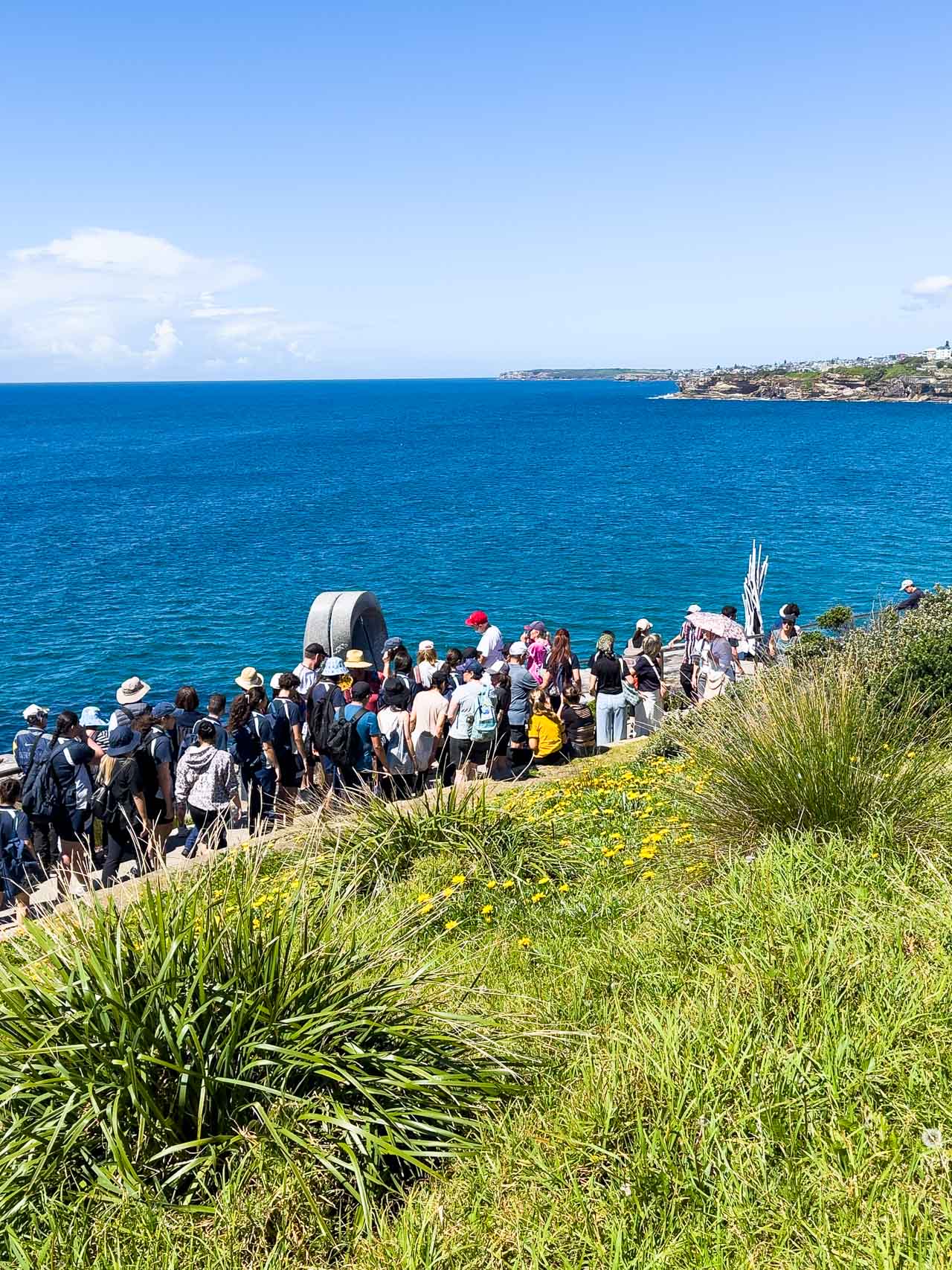
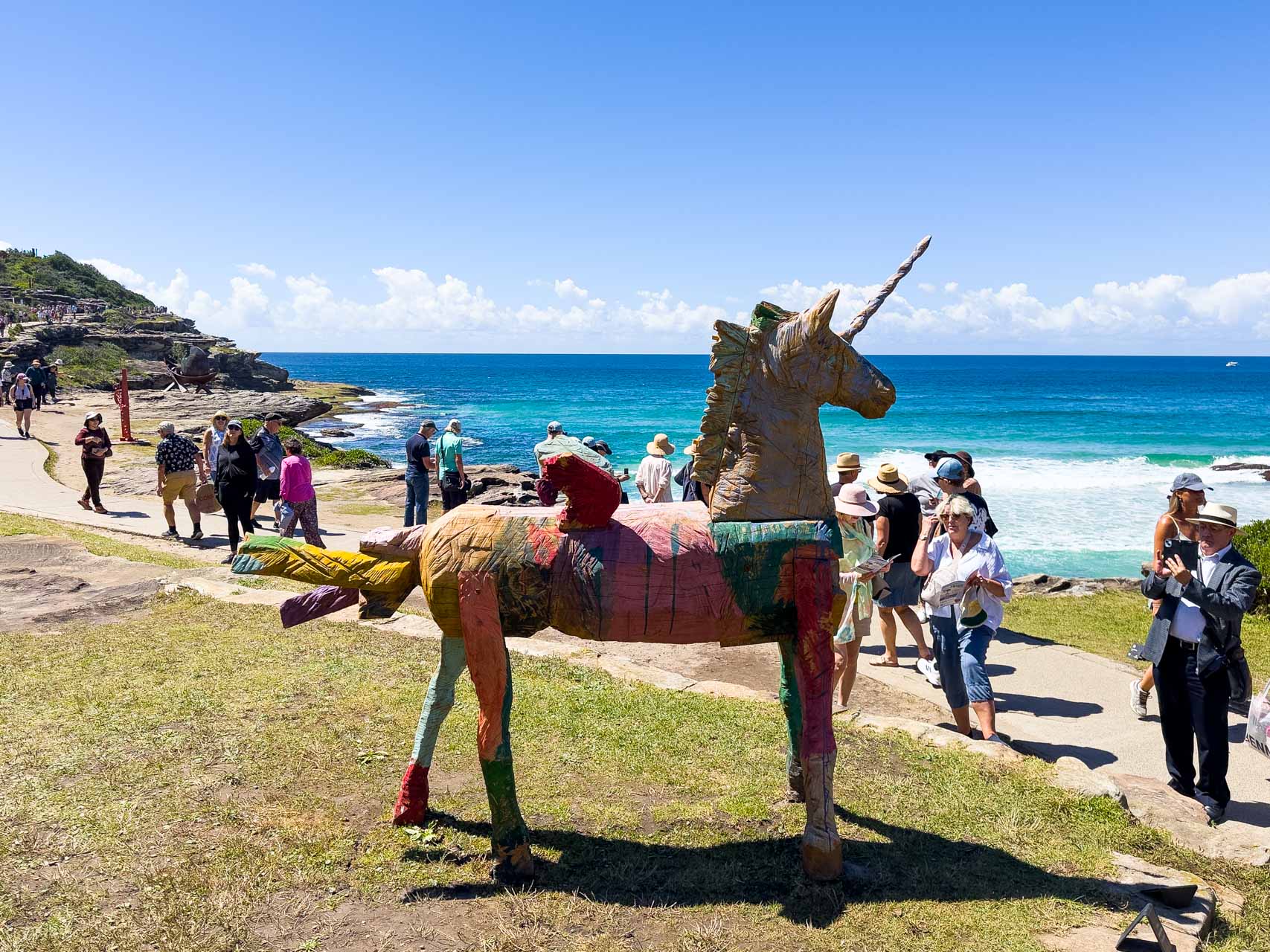
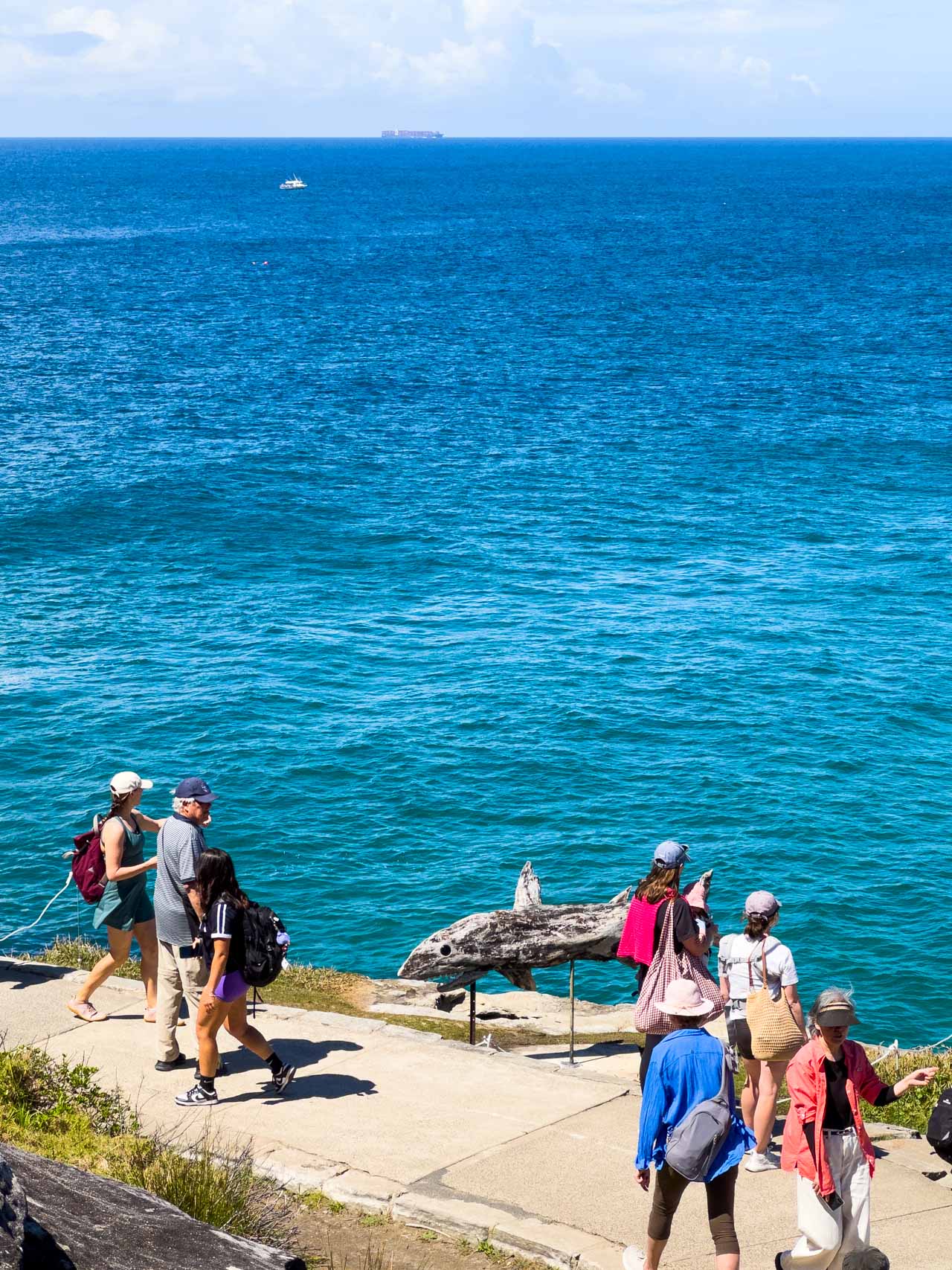
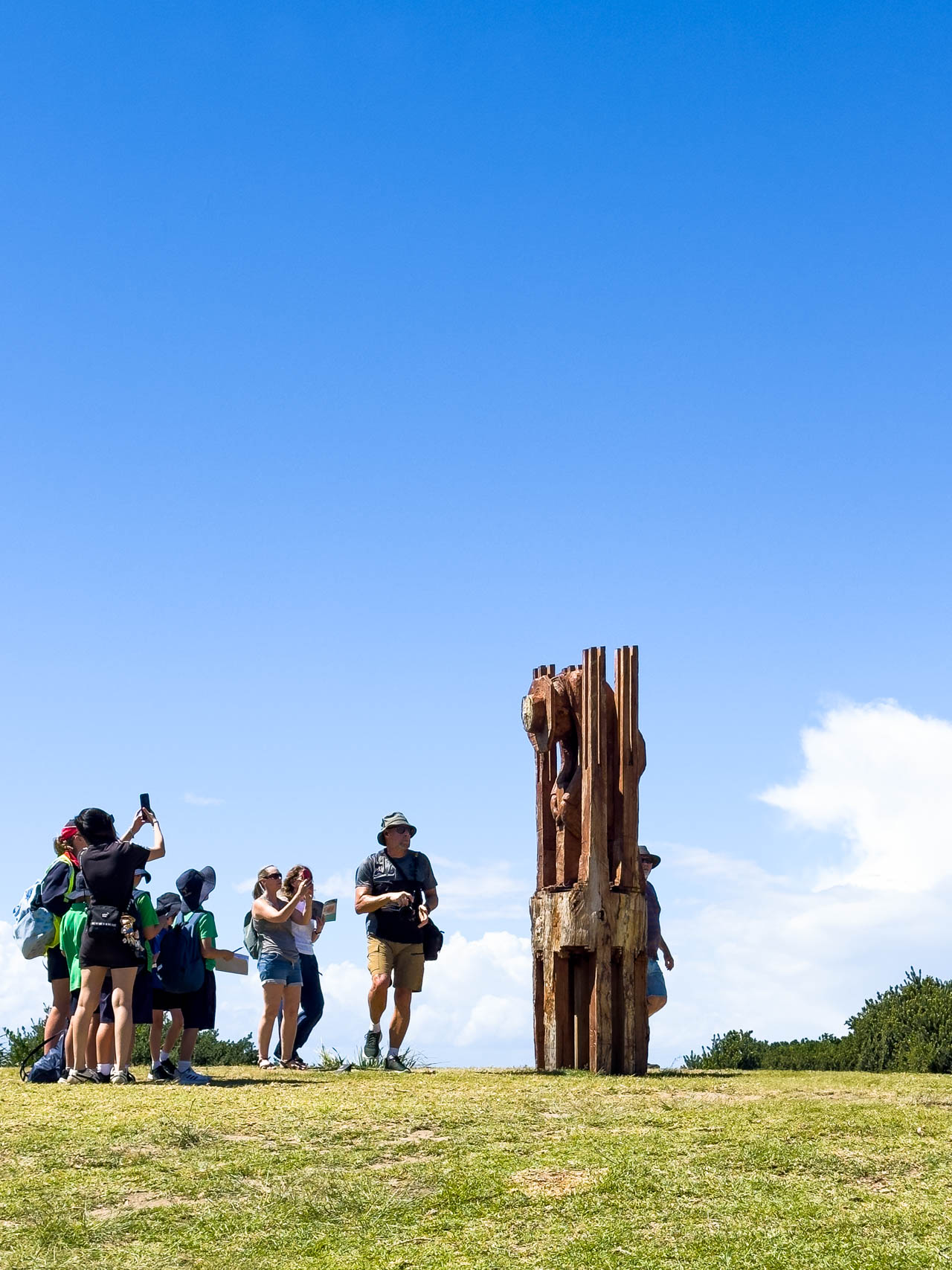
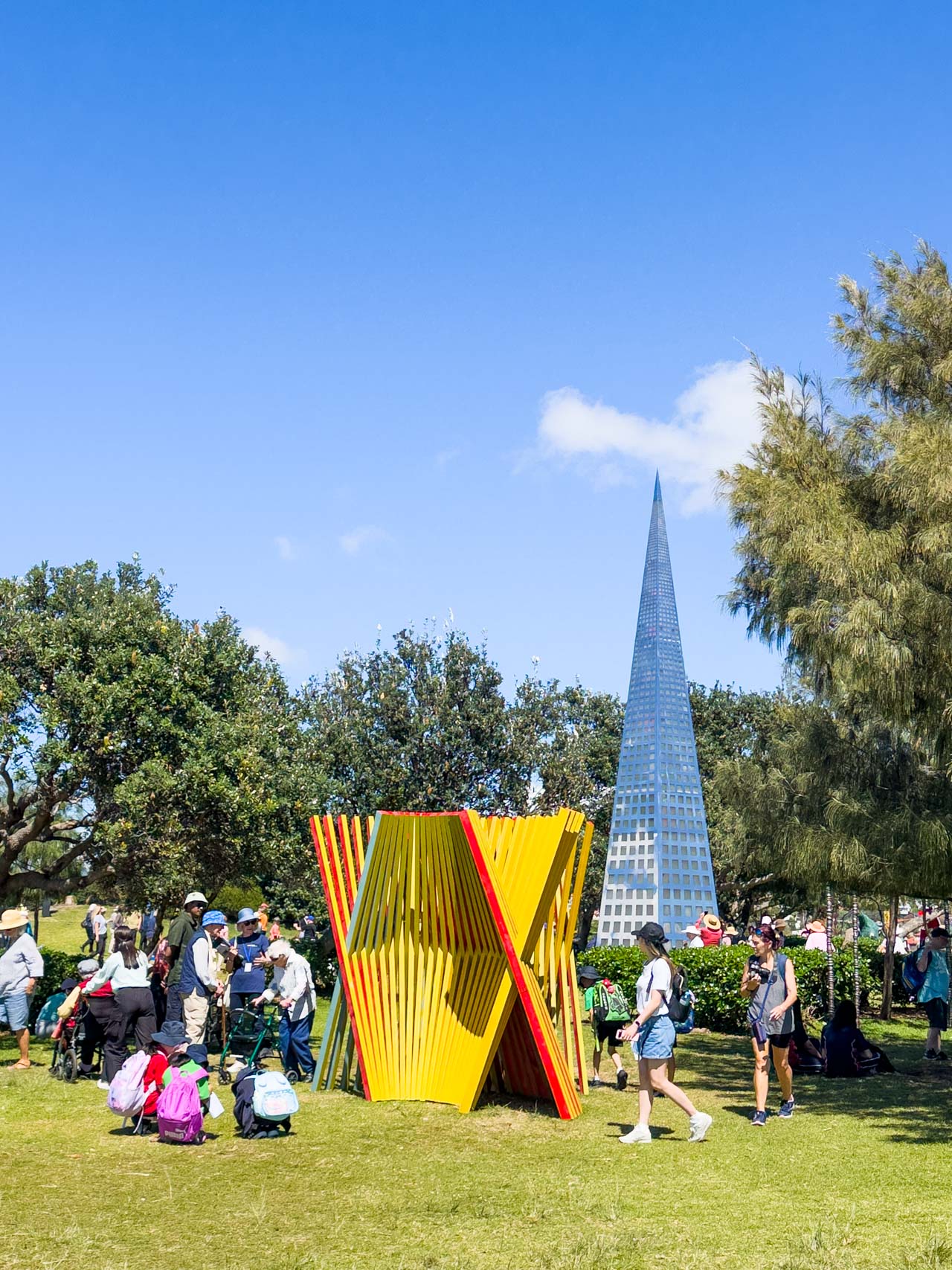
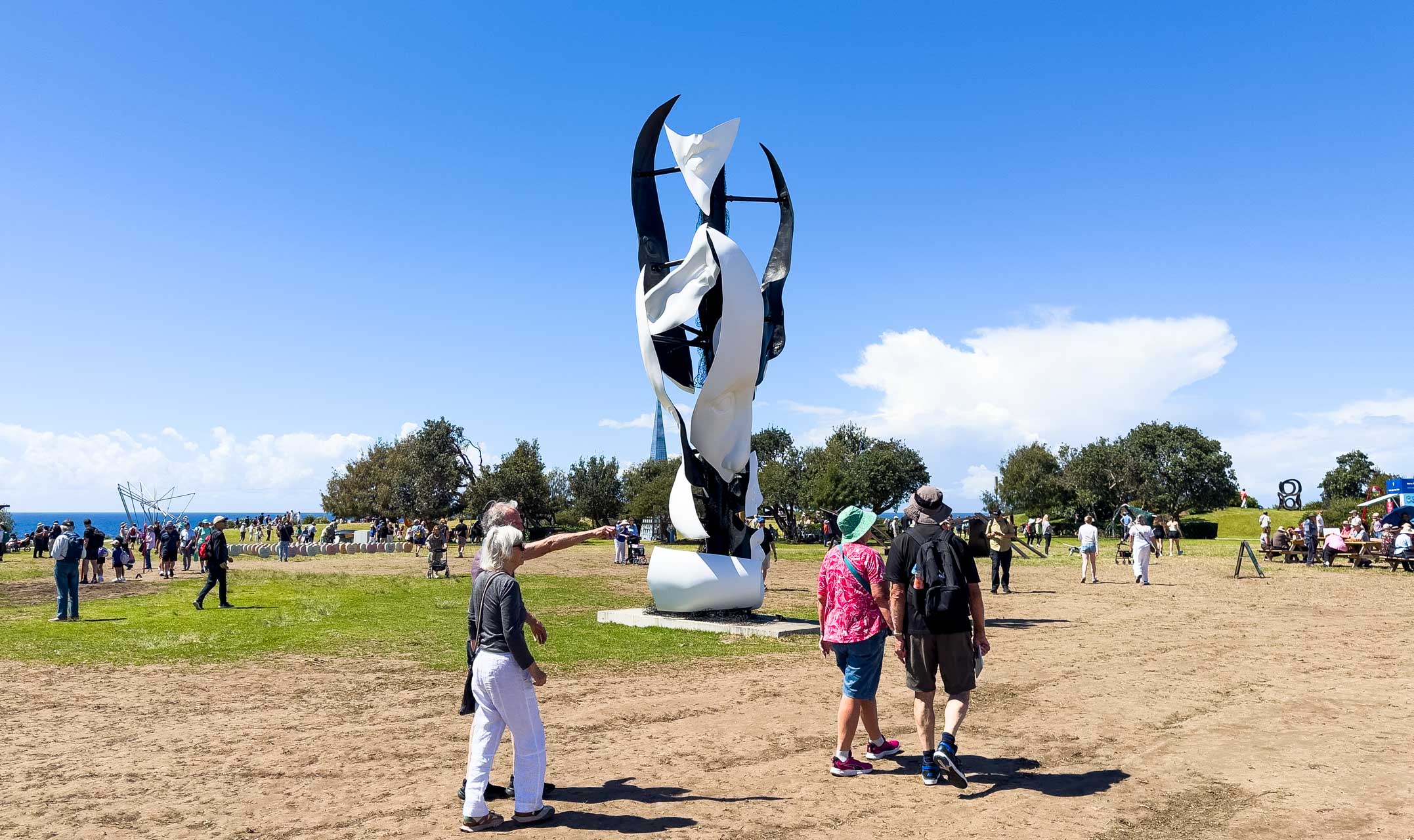
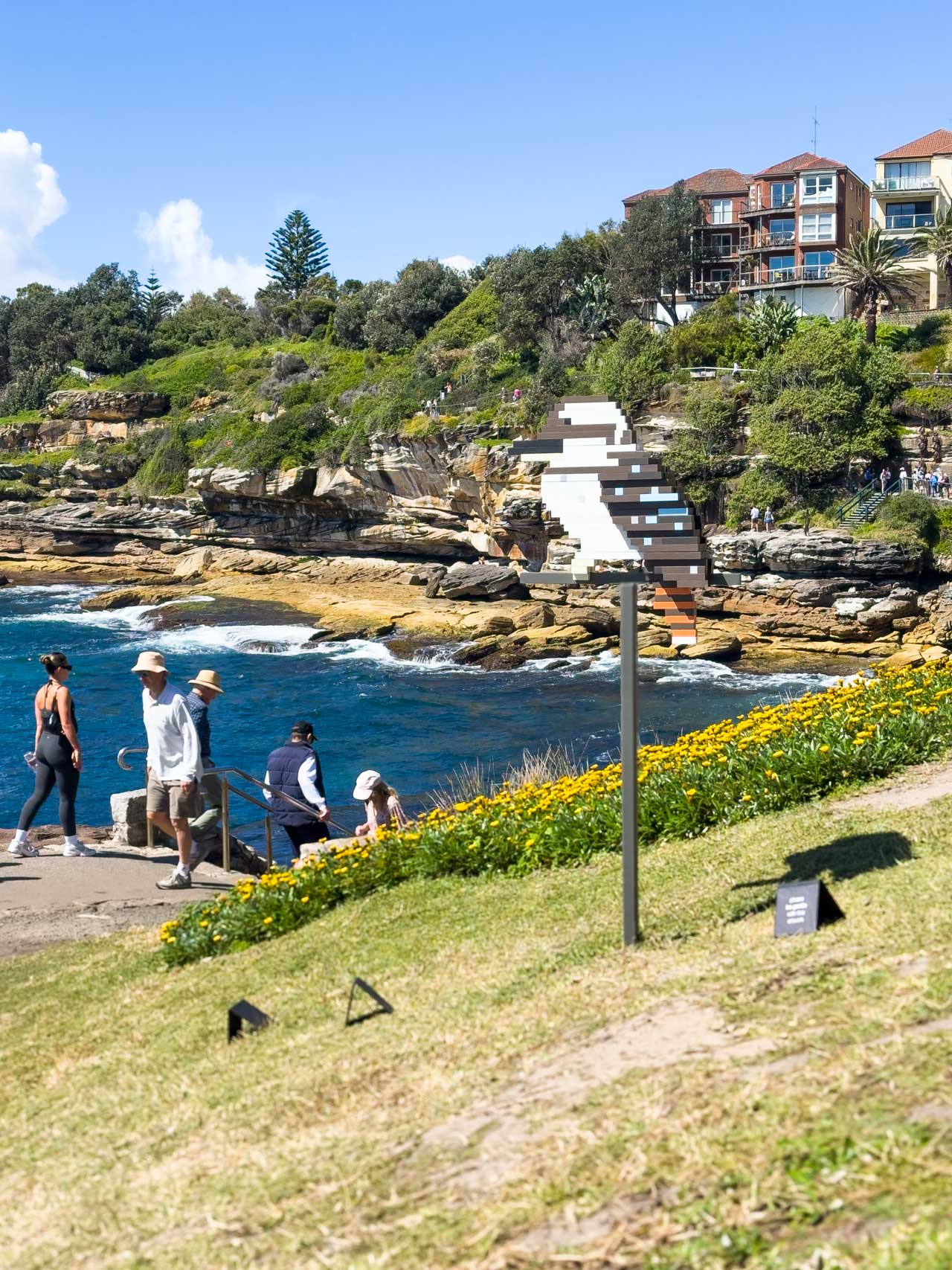
With a phone you lose a lot. The 35mm would have let me get closer and keep the background, and a zoom would have compressed the walkways, stairs and rock ledges into the frame and picked out faces from a distance. The walk has so many levels to shoot from that a long lens is worth carrying. The set isn’t what I’d hoped for, but it’s what the day gave me.
The pieces that made me stop
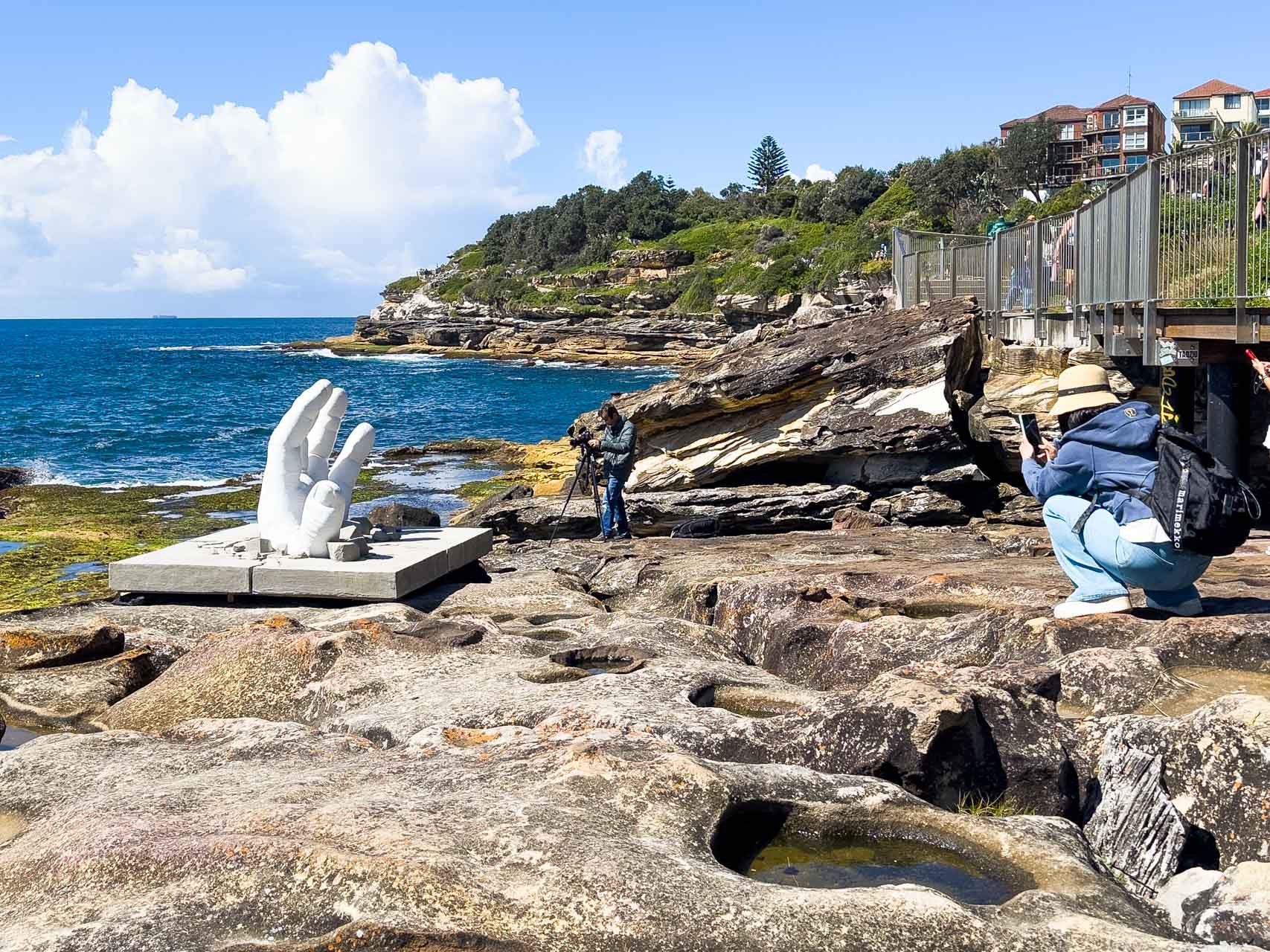
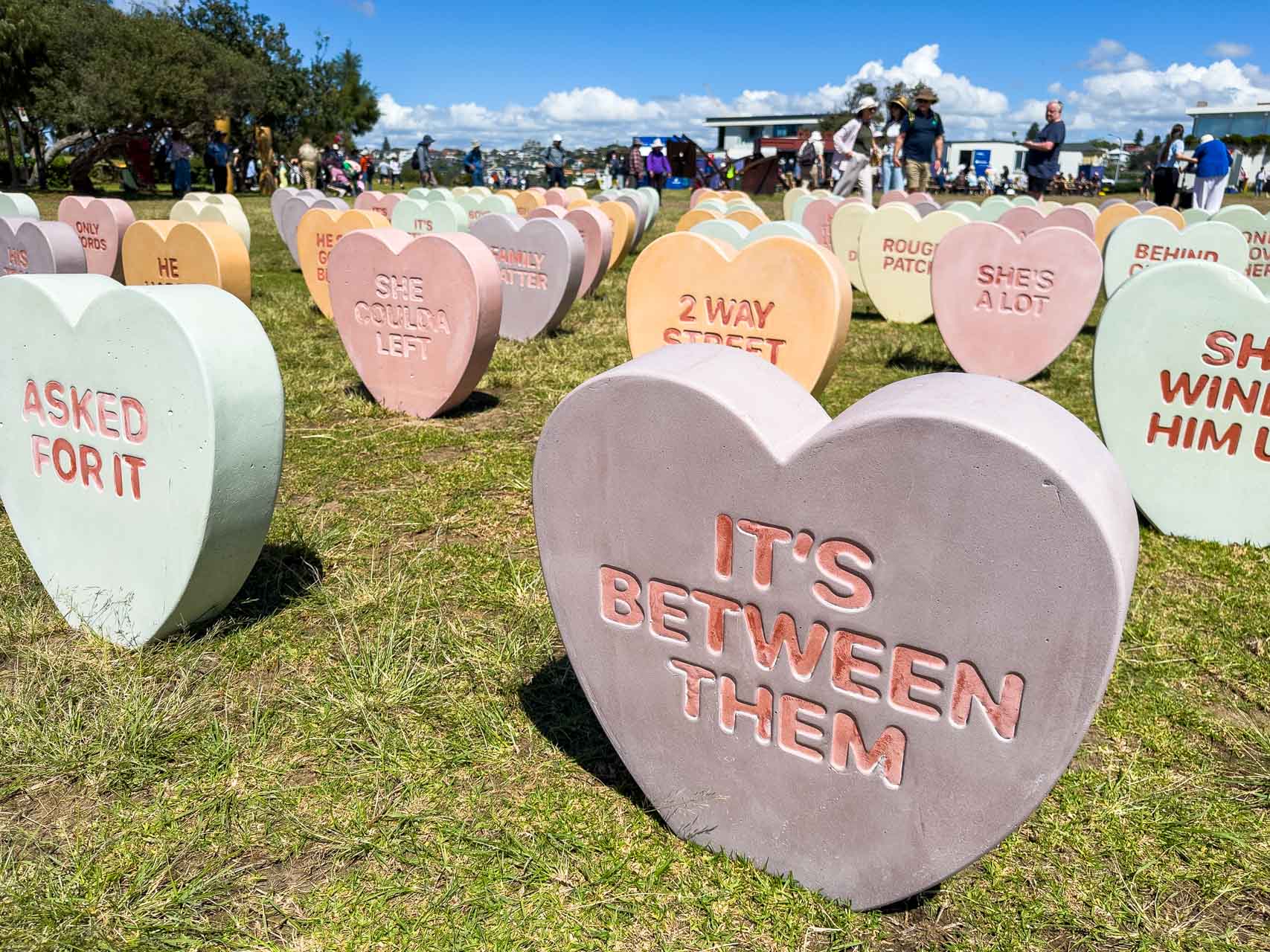
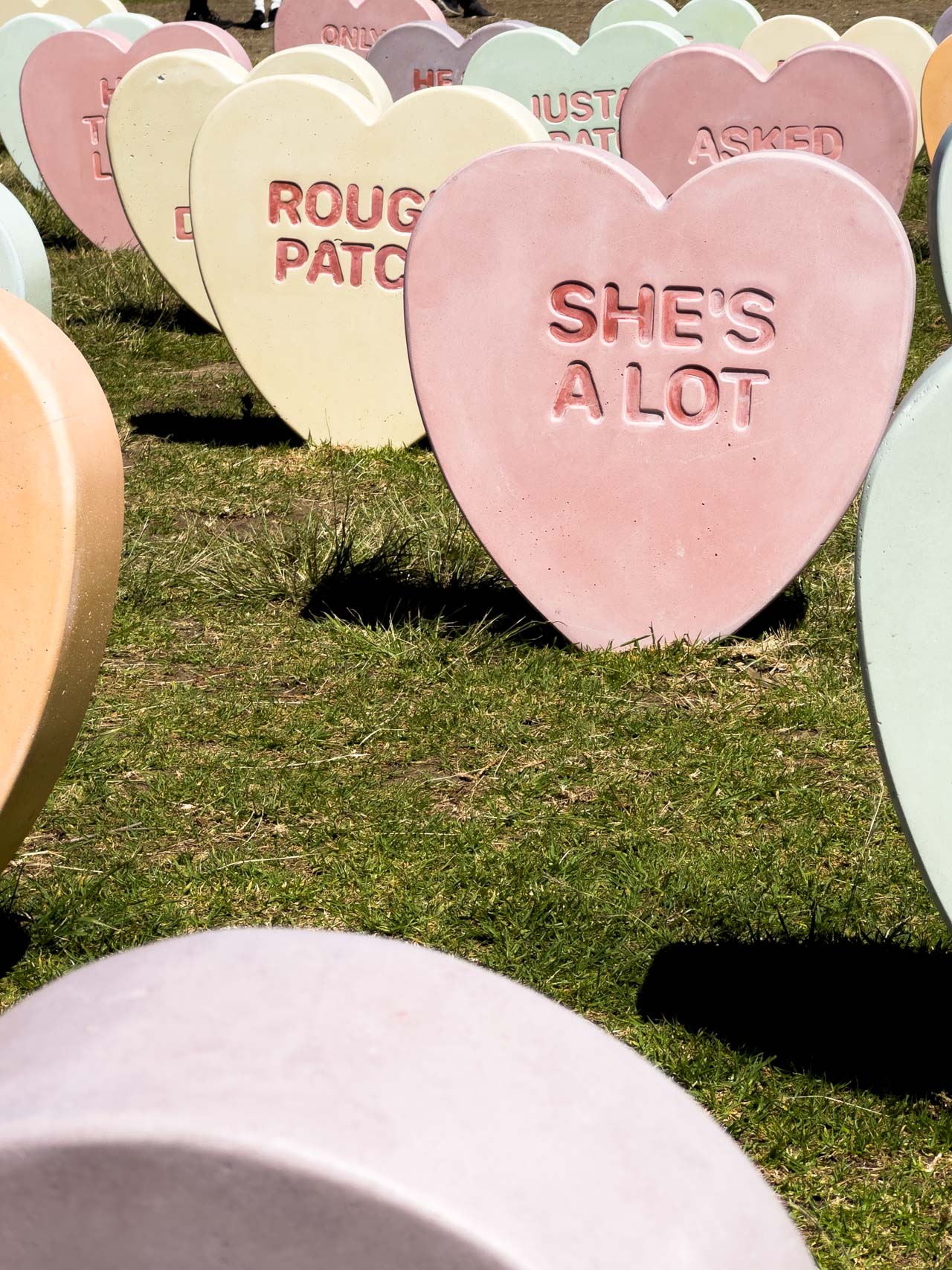
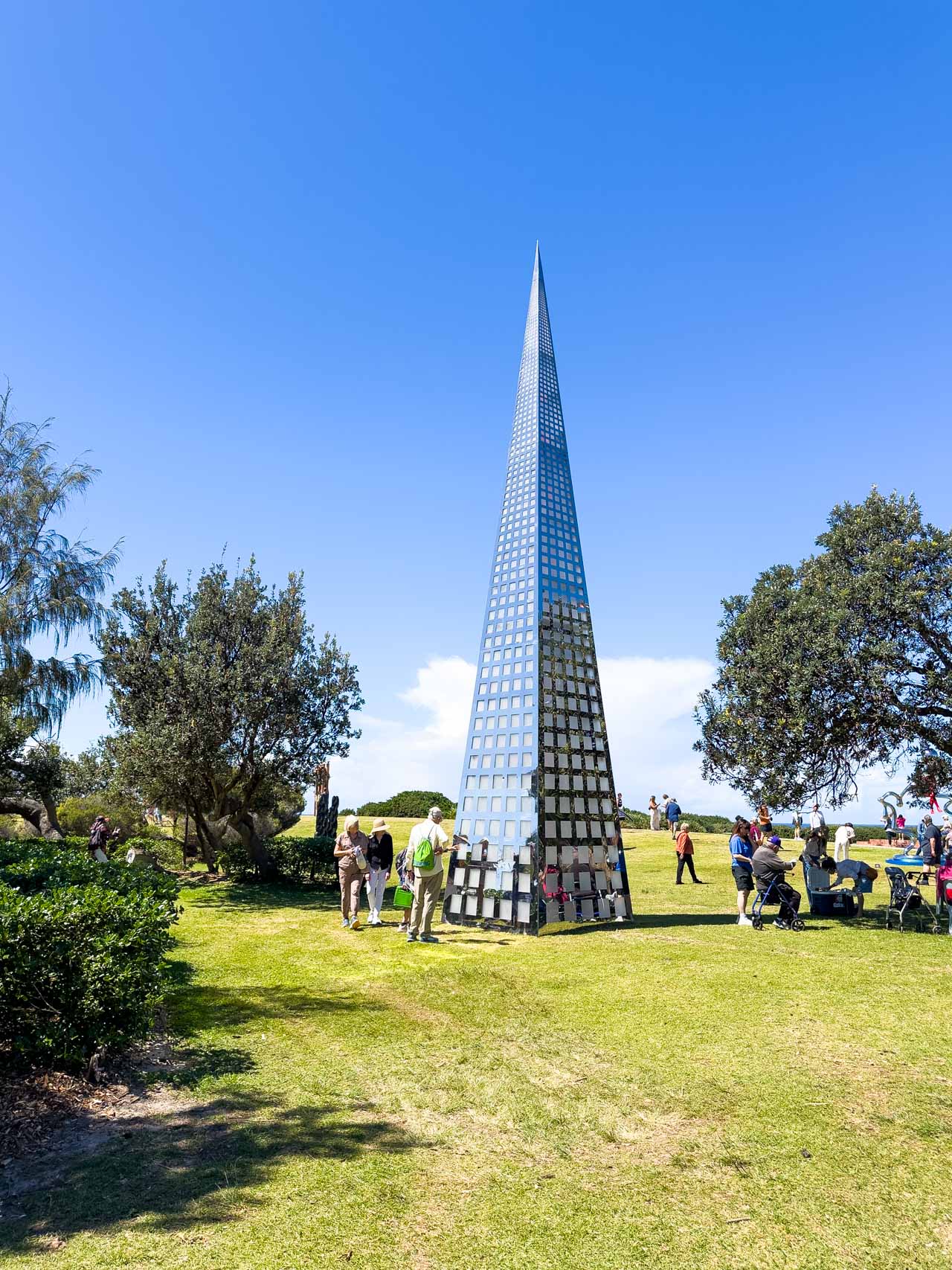
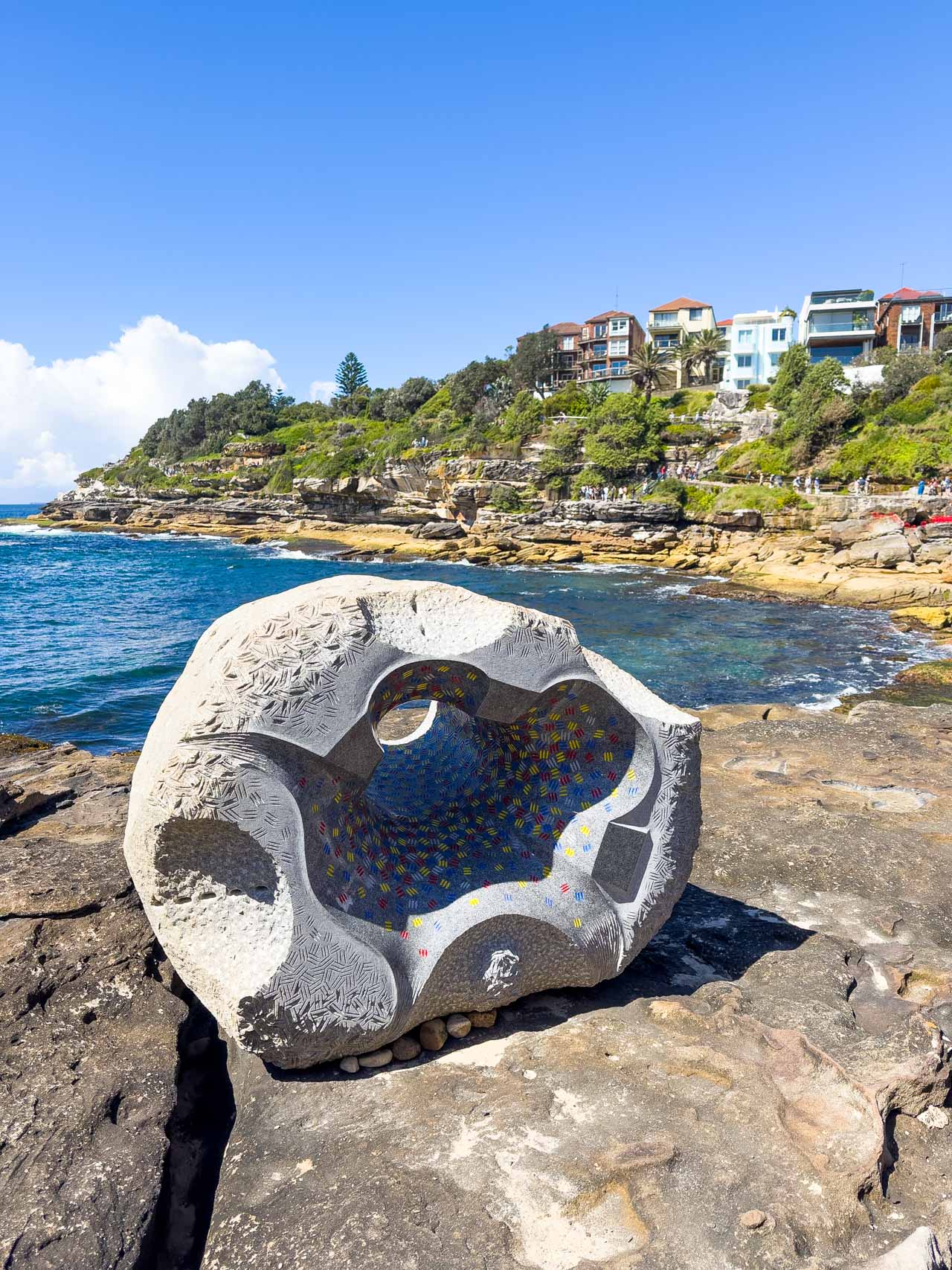
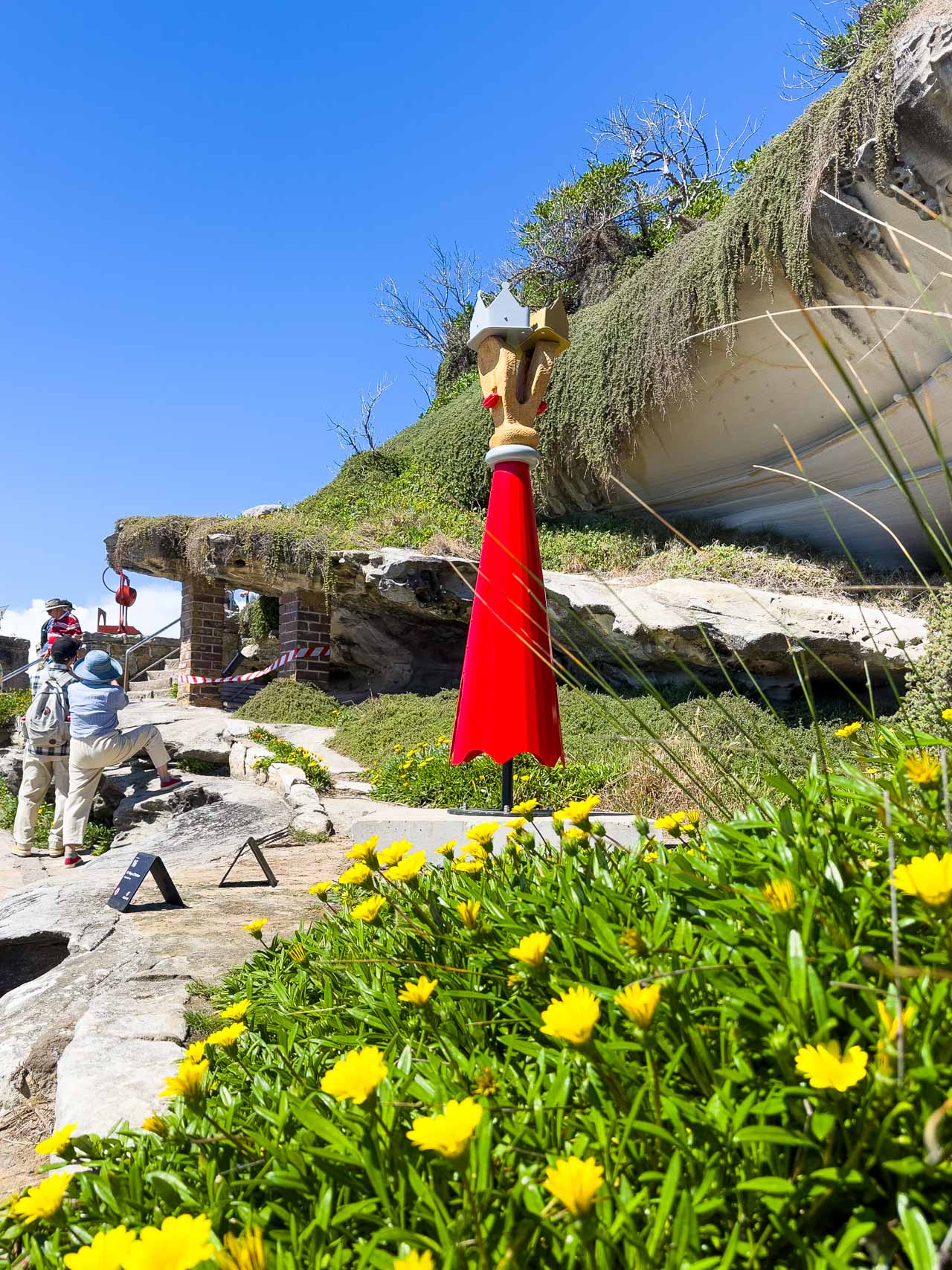
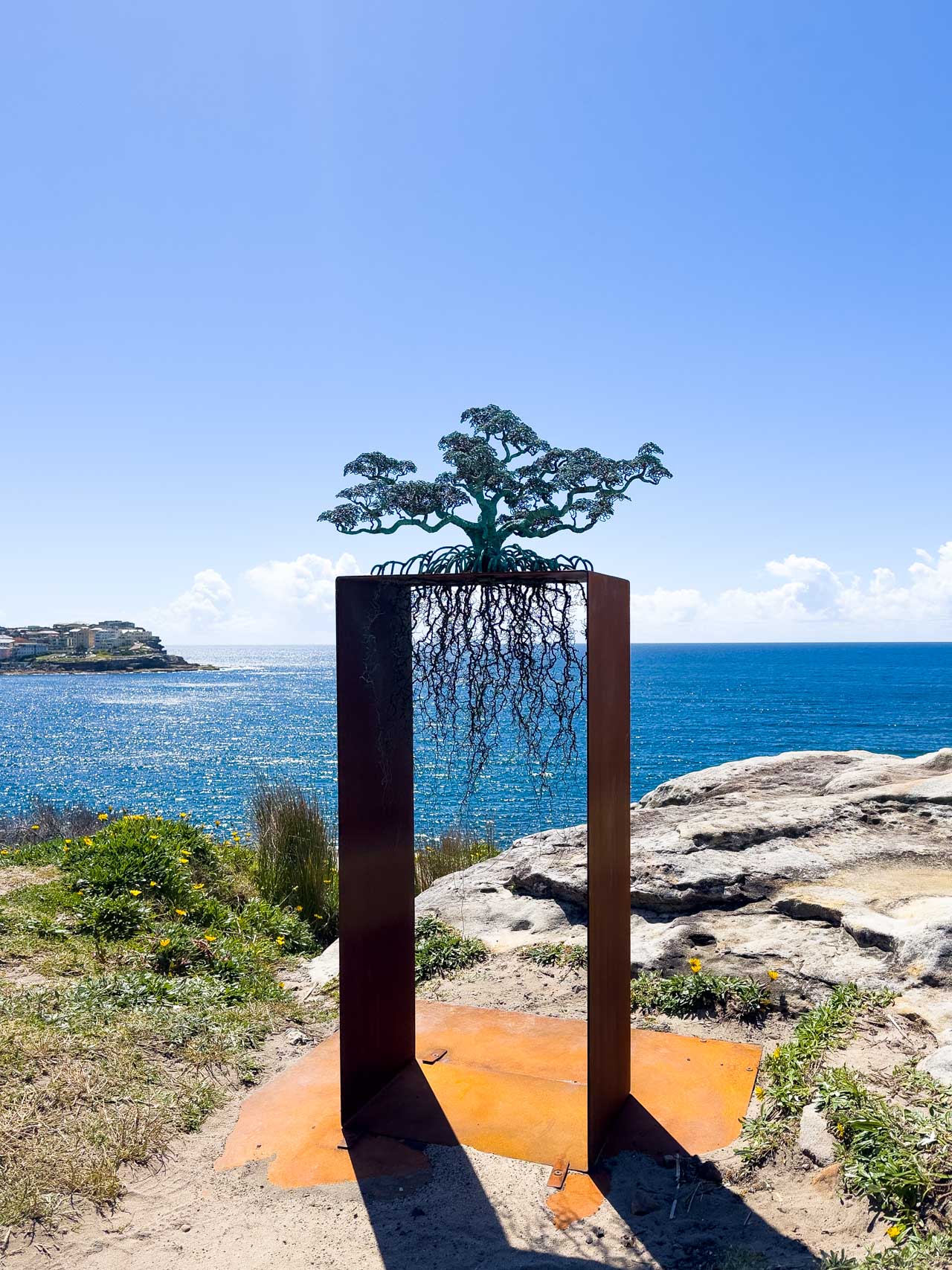
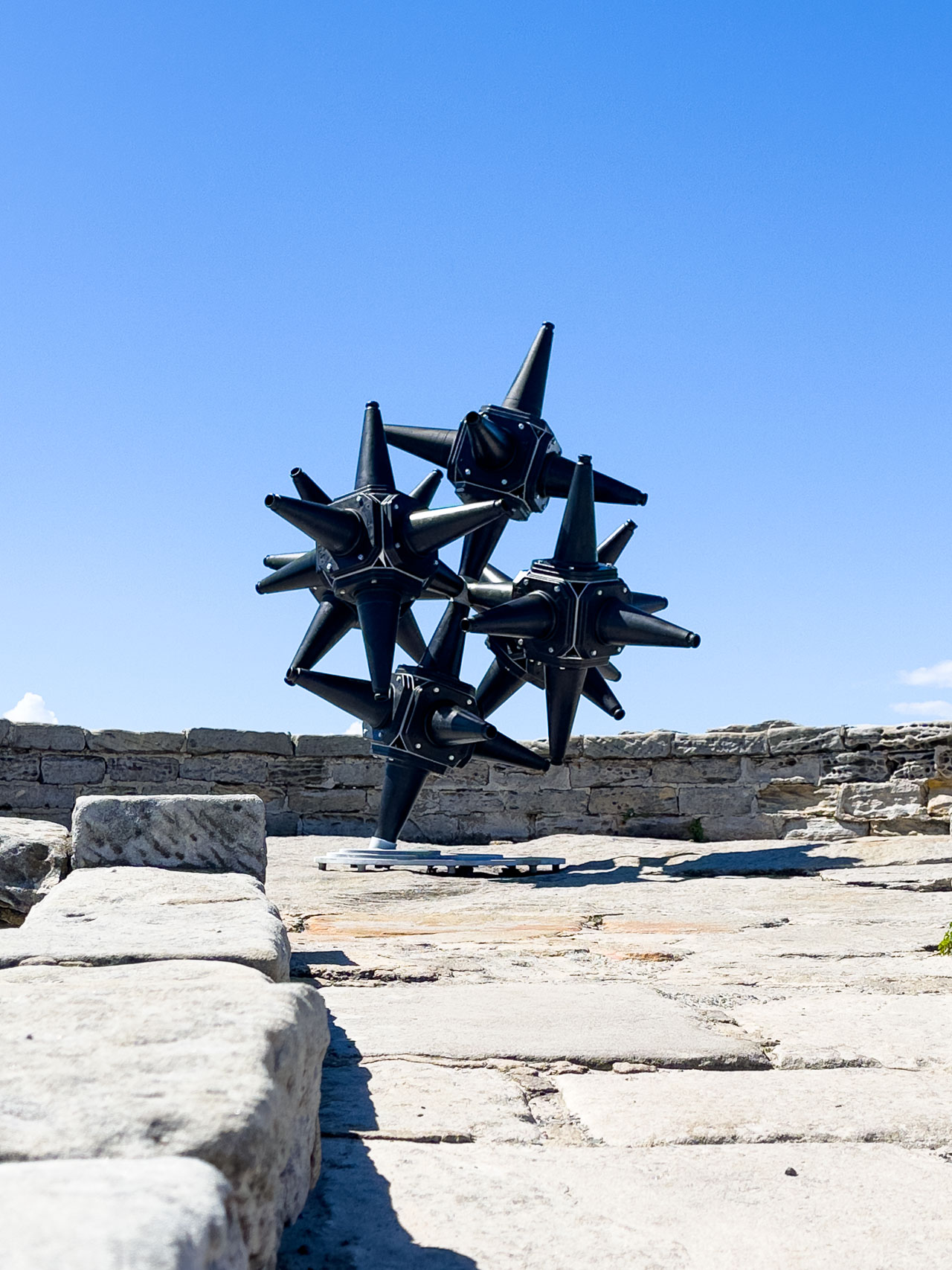
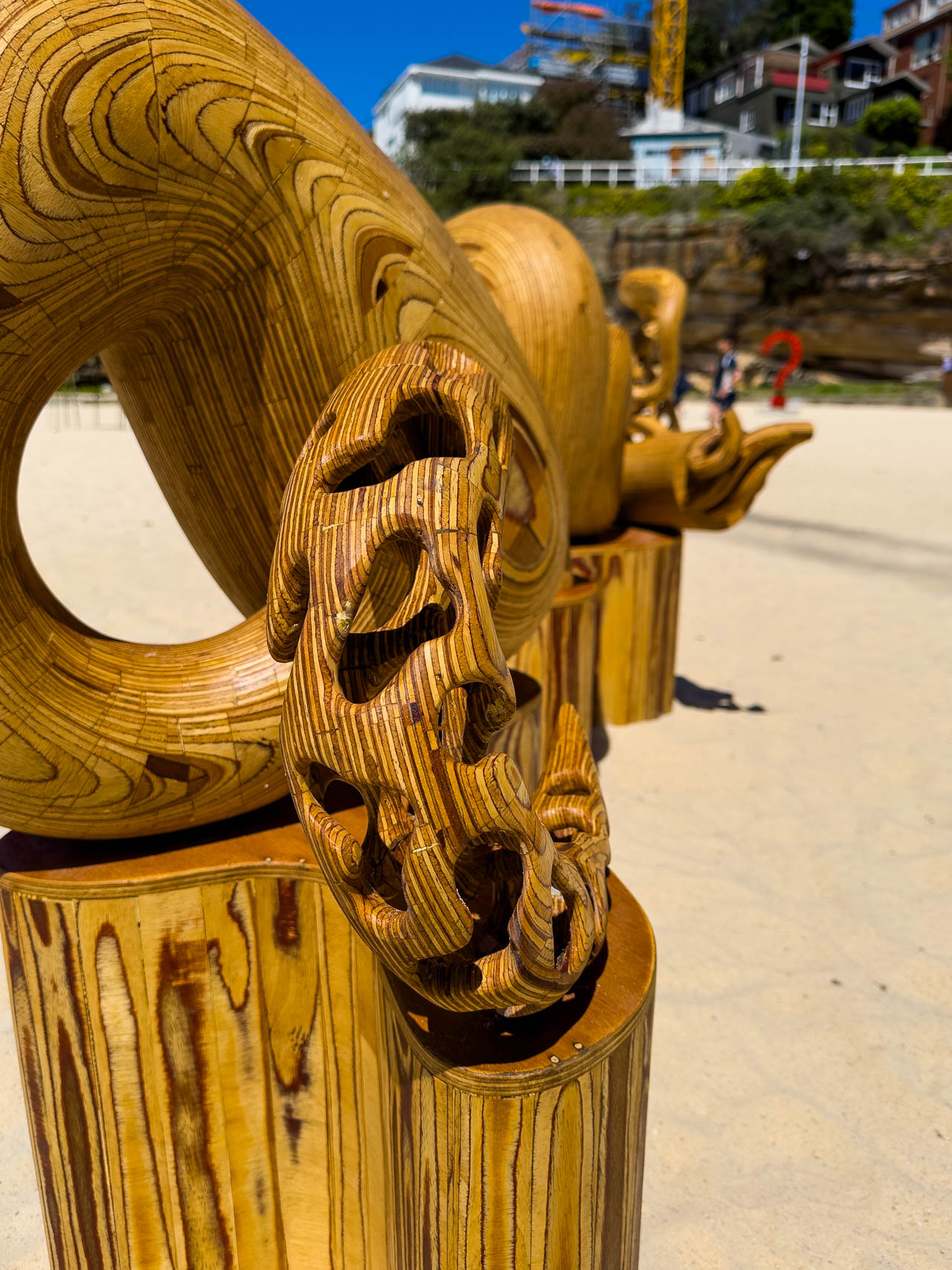
A few did stand out. Andre Braun’s Surface Breach, a giant white hand coming out of the rock shelf. Flim Flam Studios’ Sweethearts, a field of concrete candy hearts with lines like “It’s between them” and “She’s a lot” that had everyone reading them aloud. Clayton Blake’s mirrored Pinnacle beside Matthias Neumann’s yellow Xabana at Marks Park. Keizo Ushio’s granite Möbius ring, with a queue of people waiting to stand in front of it. Charlie Trivers’ carved plywood forms down on Tamarama Beach. And Yuri Miyashita’s bonsai with its roots hanging in a corten frame, which was most people’s favourite photo stop near Mackenzies Point.
My honest take on this year
I was a little underwhelmed. In previous years there were more large feature installations with real visual impact, the kind that make you stop, stare and wonder how and why someone made it. I don’t know whether there are more or fewer works this year, but the scale felt smaller, and a lot of pieces were nice without being arresting.
You could see it in the crowd. People were taking photos, but they flowed past rather than gathering. In other years the big pieces had knots of people around them all day. If you want to see what I mean, have a look at my photos from 2018.
Bondi and Tamarama are half the show
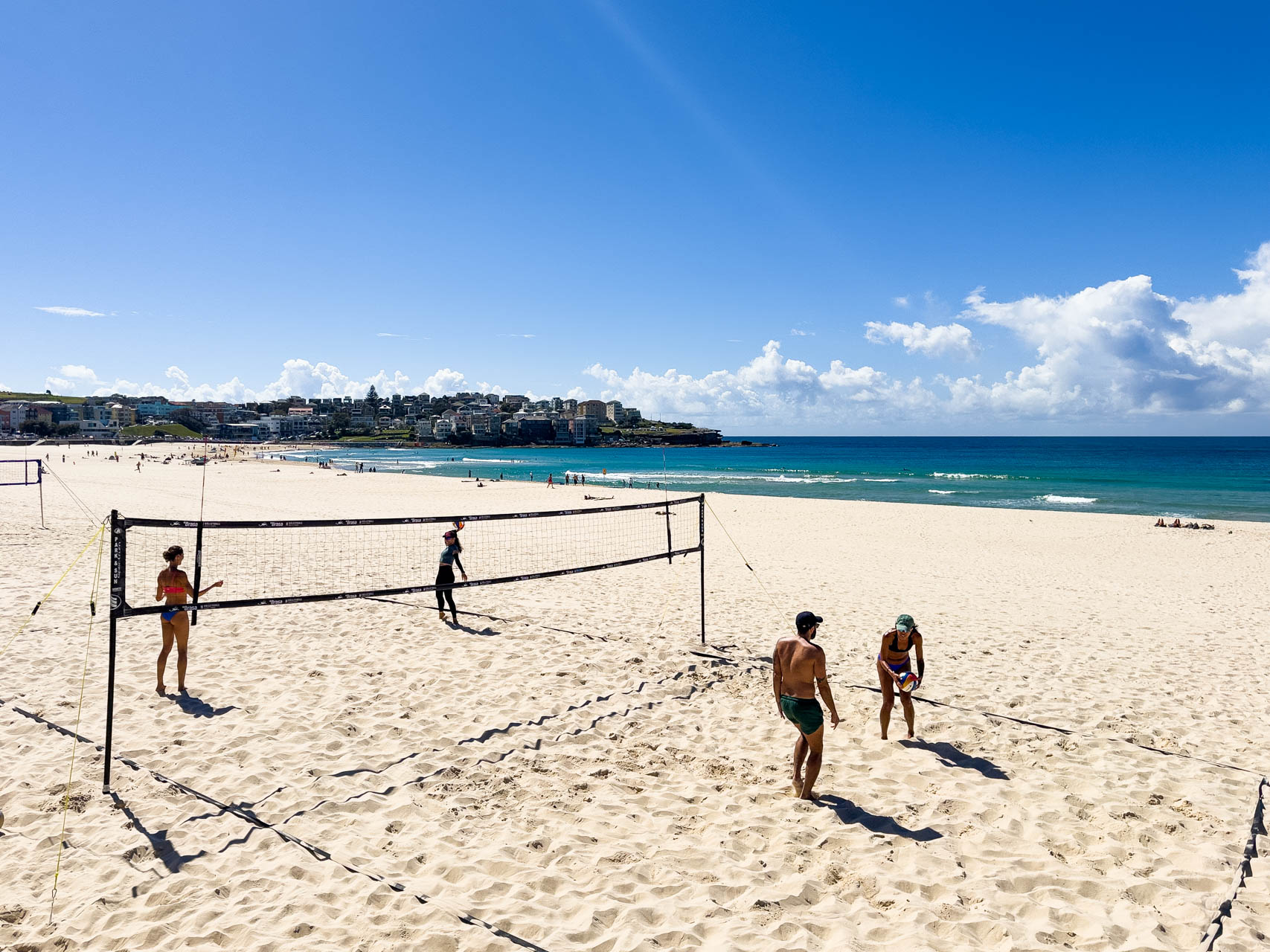
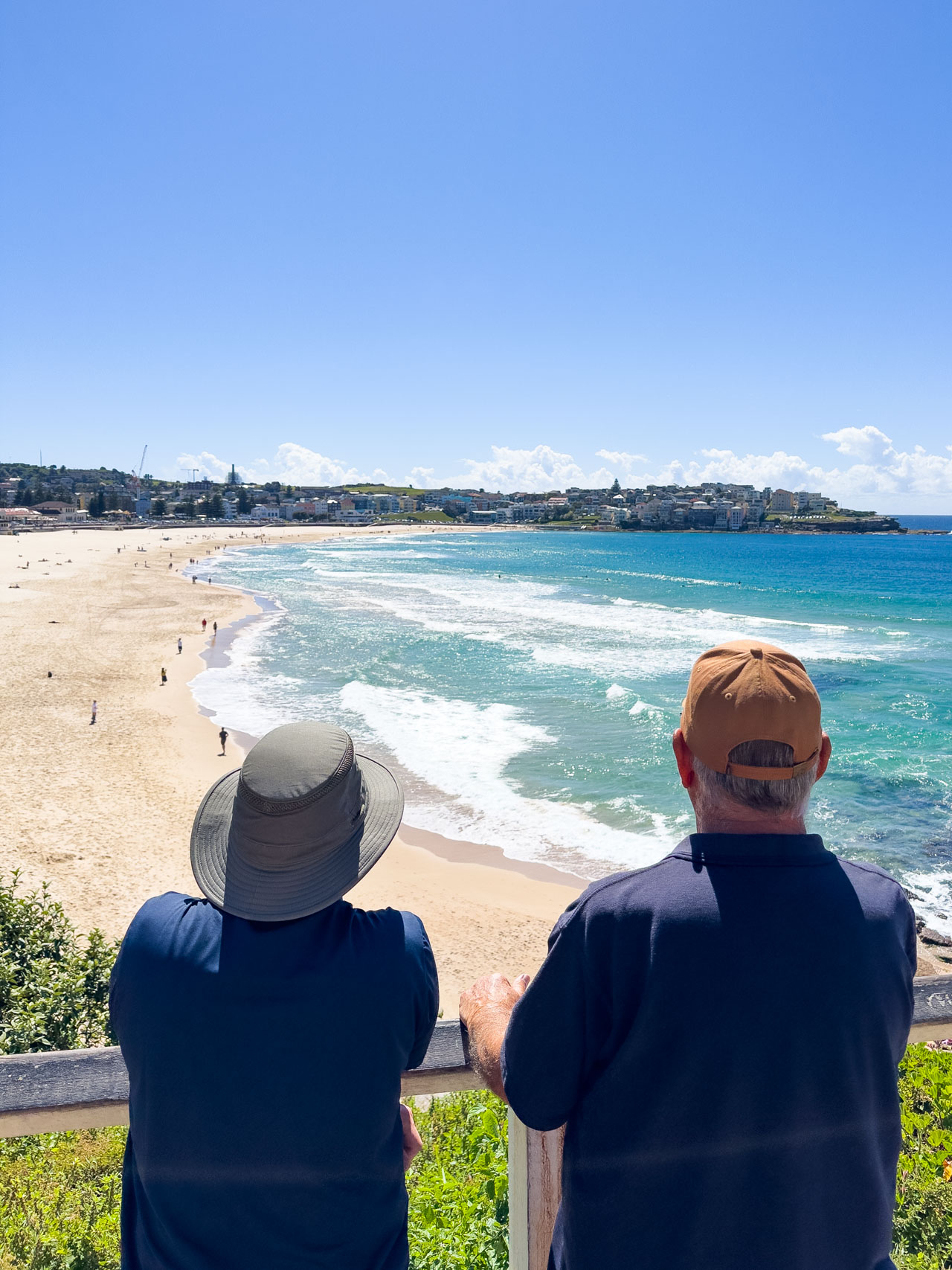
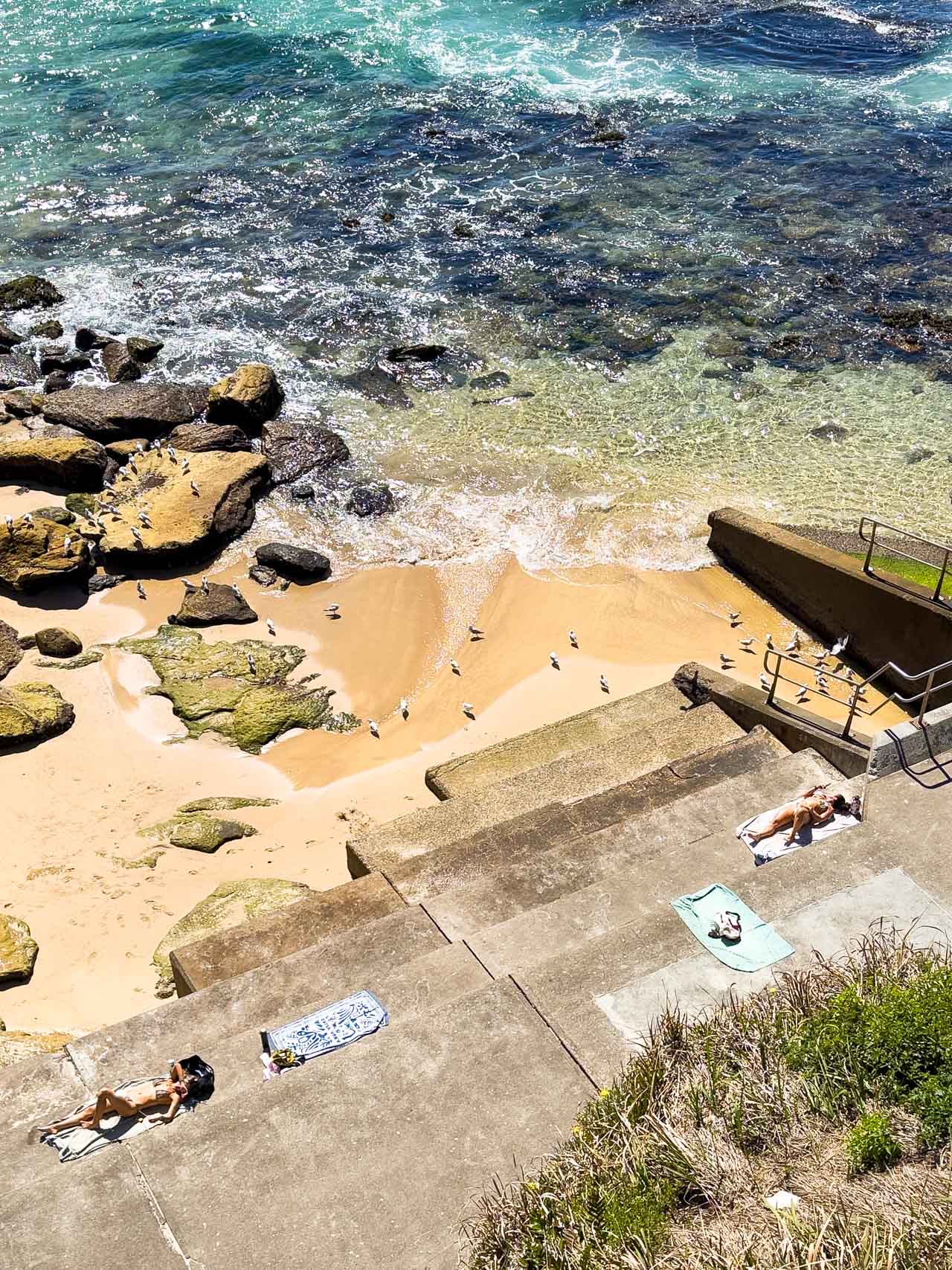
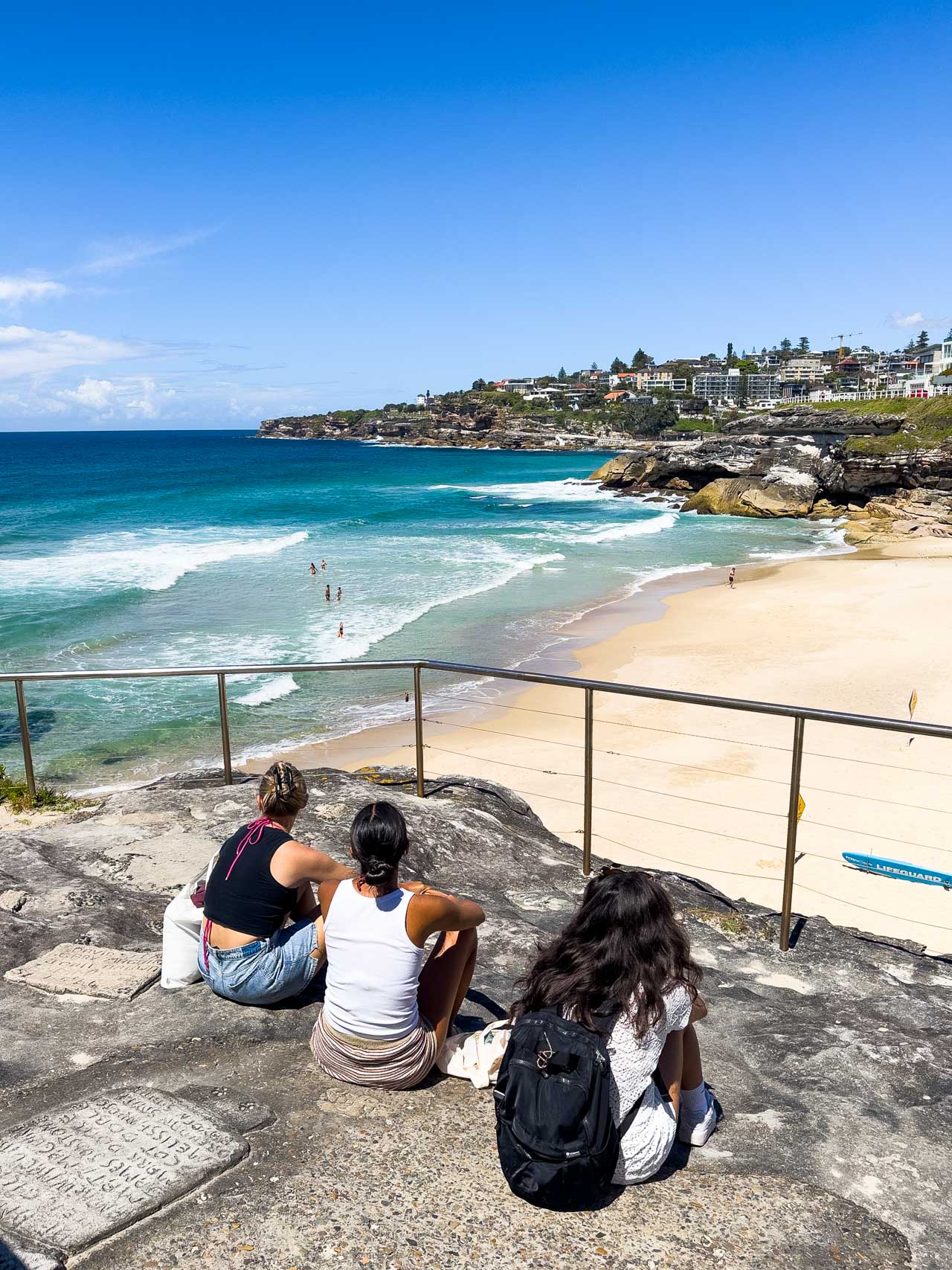
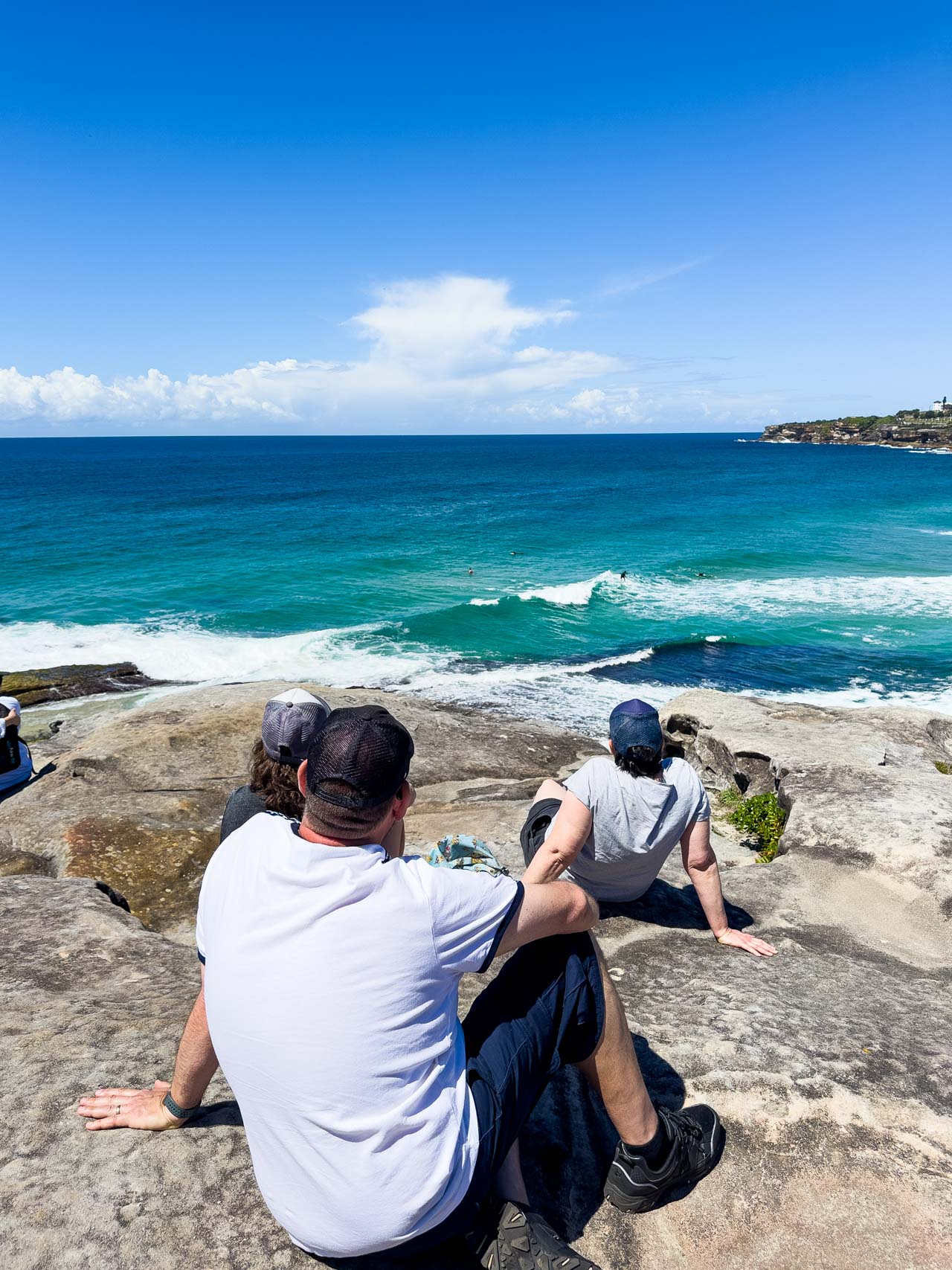
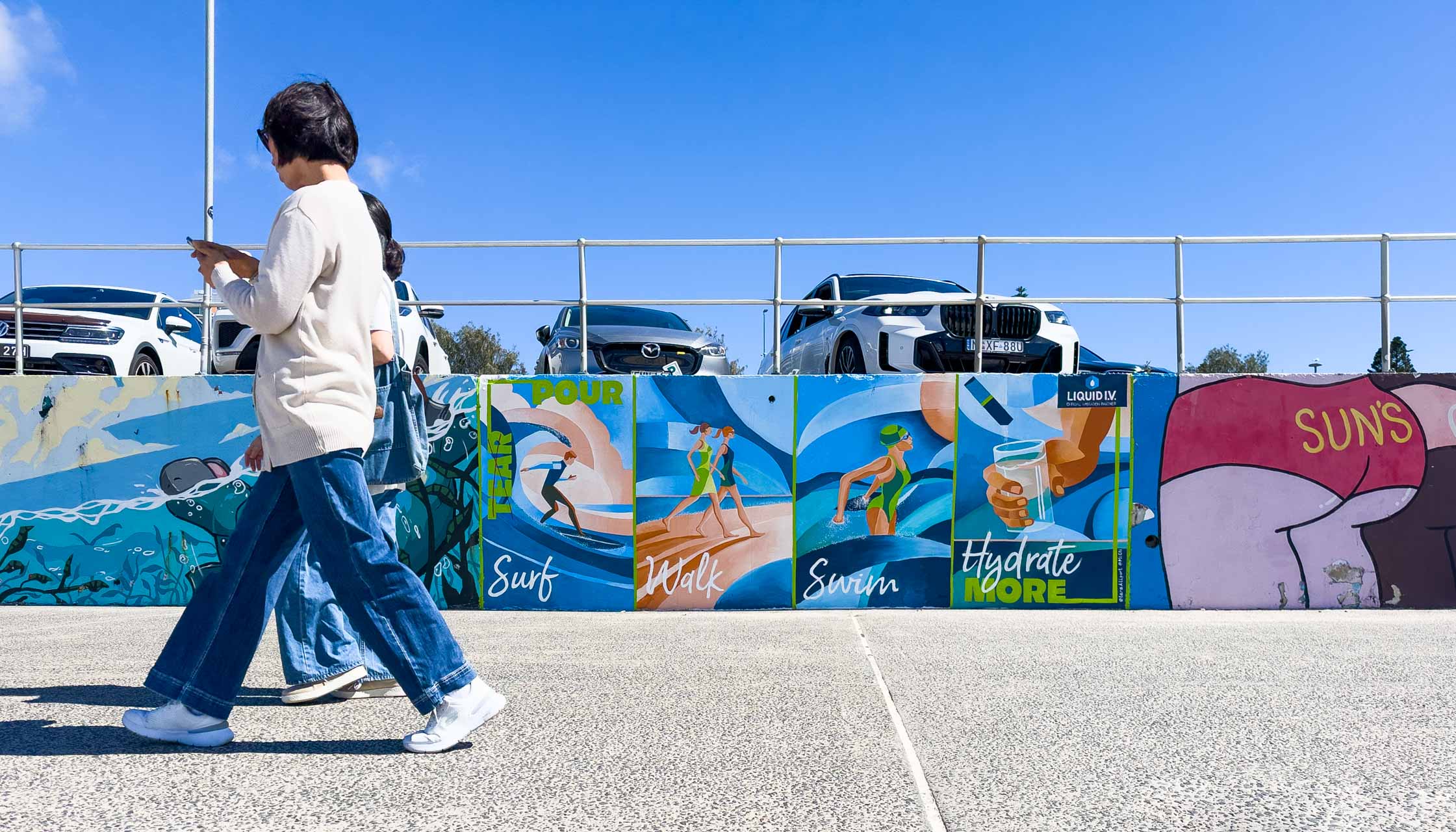
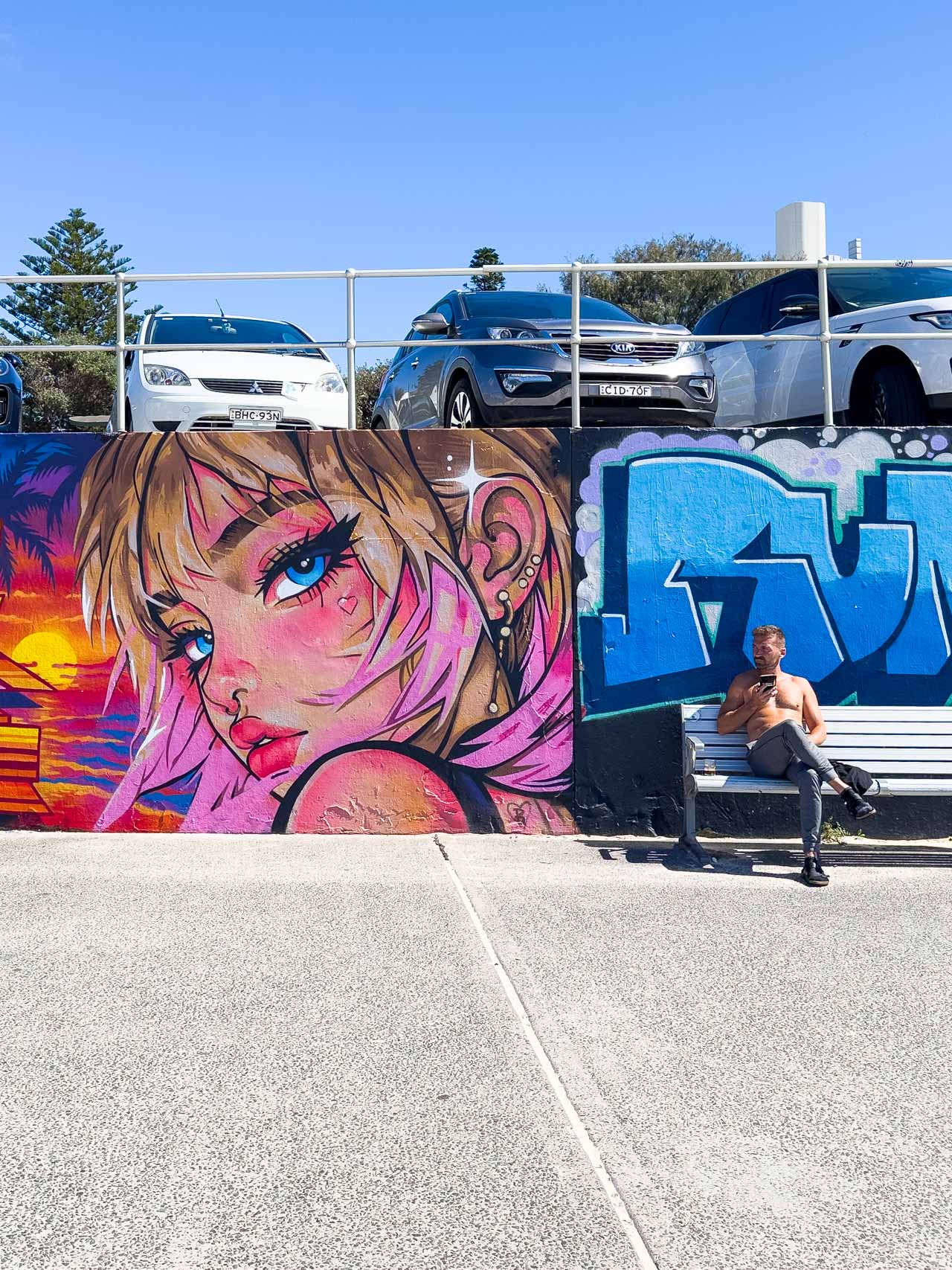
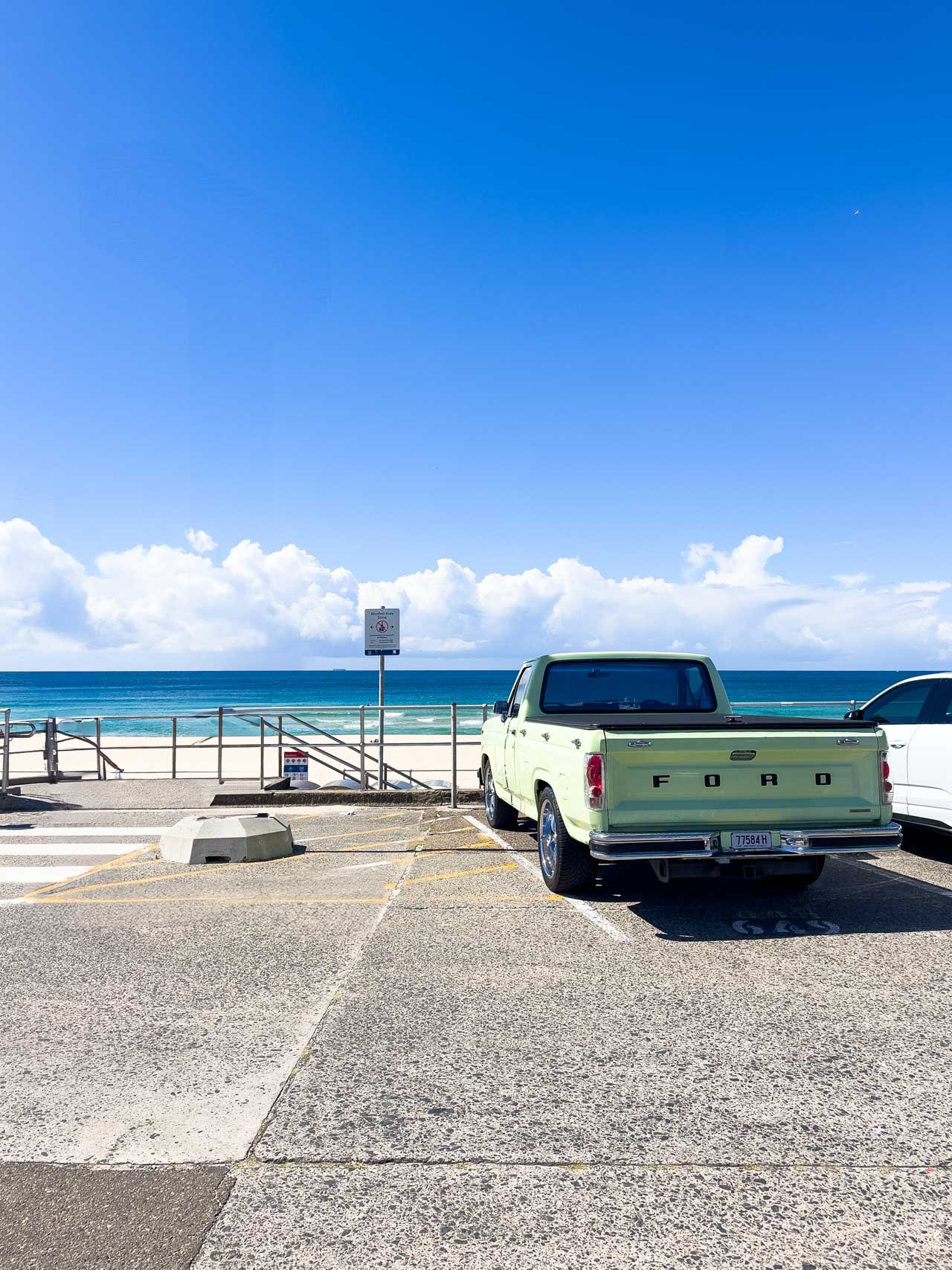
Even on a quieter day, the walk itself is the reason to go. Blue water, the sandstone cliffs, surfers at Tamarama, beach volleyball on Bondi and the murals along the car park wall. I kept pointing the phone at the people watching the view as much as at the art.
Tips if you’re going
Go midweek if you can. Weekends are packed and parking is a nightmare, so take public transport or arrive very early.
It suits anyone, young or old, and kids will love it. Allow about an hour and a half from Bondi to Tamarama at a wandering pace, more if you carry on to Bronte.
Expect steps and inclines. There’s an easier route for people with mobility issues, and some sections have no barriers, because it’s a cliff walk.
Food and drink are at the main exhibition area at the top, plus all the cafes at Bondi and Bronte either side.
Photographers: bring a zoom as well as a wide lens, use the different levels of the path, and check your memory card before you leave the house.