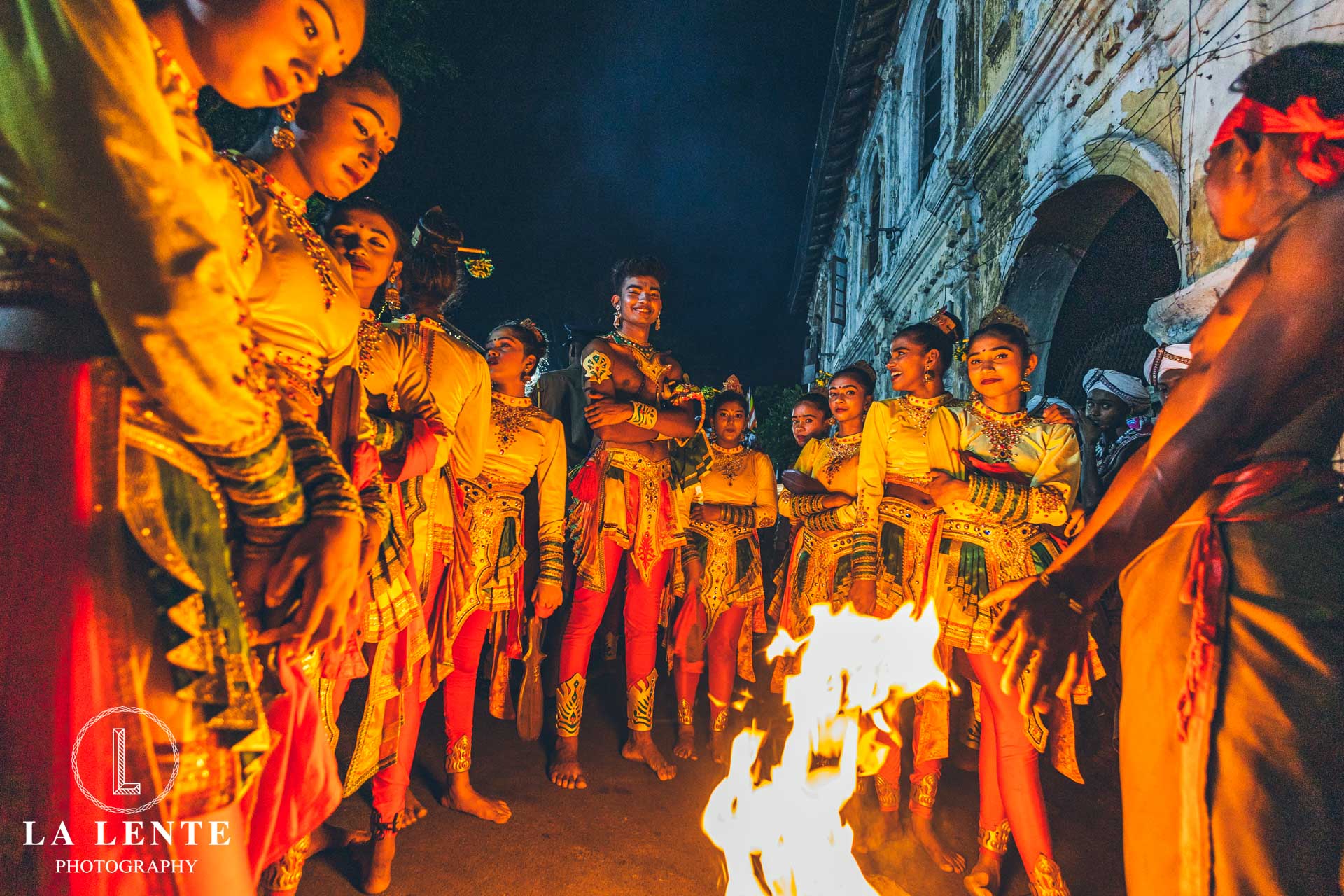
Five historical sites to see in Sri lanka
- Sri Lanka has many UNESCO listed sites located around the island.
- There are eight UNESCO sites in total, six are historical and two are natural.
- The island has other historical sites of significance which were previously kingdoms.
Background.
Following my first visit to Sri Lanka a few months ago I took the opportunity to visit the island for a second time while travelling back from India to Australia.
I had the opportunity to visit some of the historical sites (including a number of UNESCO listed properties) while also meeting with a few locals to explore opportunities to work together.
Itinerary.
I had three weeks available so I split the itinerary into separate parts which included visits to Colombo, Ella, Kandy to see the Perahera & then returning to Colombo before flying back to Australia.
I used each of these locations as my ‘base’ with day trips to visit the historical sites booked in Sri Lanka with Viator, a private driver to get between towns and local tuk tuks using PickMe (the alternative to Uber) to move around locally.
My focus for this trip was all about experiencing the history of Sri Lanka meaning I am yet to explore the north near Jafna, the east coast or some of the southern coastal areas.

Sacred City of Anuradhapura
Getting to Anuradhapura.
Staying in Colombo I booked a one day tour to Anuradhapura which I now regret doing. I had booked the tour from Viator which included a private driver who was also described as a guide although he missed two locations in the itinerary which I was very annoyed about when I realised later that night.
The drive is around 4 or 5 hours one way, so that means you start at around 6am to give yourself enough time to see the old city. It is not a freeway drive, it is navigating lots of small towns, a few rural roads and villages. So it is a stop start, busy, hustle and bustle type of trip which is interesting in itself, but it becomes a 10 hour journey together with a few hours in the humidity & heat of the Sri Lankan weather.
What would have been a smarter way to see this area would have been to book accomodation nearby and use that as a base to explore the area, so lesson learnt.
Getting around Anuradhapura
The Sacred City of Anuradhapura, a UNESCO World Heritage Site, is one of Sri Lanka’s most important ancient capitals and a centre of Buddhist culture for over a millennium.
It is a huge expanse with lots of smaller individual sites spread around a large area connected with small roads. You purchase an entry ticket and then either move around with a tour bus, have your own driver, get tuk tuks, hike or some people were even exploring on bicycles.
How old is Anuradhapura?
Founded in the 4th century BCE, it served as the island’s political and religious heart, flourishing with advanced irrigation systems, colossal stupas, monasteries, and palaces.
The city is revered for housing the Sri Maha Bodhi tree, believed to be the oldest living tree planted by humans, grown from a cutting of the sacred Bodhi tree in India under which the Buddha attained enlightenment.
Pilgrims still visit its sprawling complexes today, where monumental structures like the Ruwanwelisaya and Jetavanaramaya stupas dominate the skyline, testifying to the city’s former grandeur. Though eventually abandoned after repeated invasions, Anuradhapura remains a place of deep spiritual significance and a living reminder of Sri Lanka’s Buddhist heritage.
What did I think of this location?
As a photographer I loved visiting Anuradhapura because each location is a visual feast, there are lots of unique details and the structures mixed with people and the landscape are great to take photos of.
I am not a particularly religious person but for anyone that is spiritual this is the type of place where you can easily spend a few days to immerse yourself.
To really get the most from visiting I’d suggest getting a guide who can take you from site to site & provide education on the significance of each stop as you move through the city.
Yapahuwa Rock Fortress
Ancient Kingdoms in Sri Lanka.
Sri Lanka’s three great kingdoms, Anuradhapura, Polonnaruwa and Kandy form the backbone of the island’s history, but between their rise and fall lie several transitional capitals that are just as fascinating to explore.
I decided to go and see these during my trip so I booked what is called the ‘3 Kingdoms’ tour via Viator which would take me from Colombo with a private driver to stop at each location.
Why are these sites interesting to visit? Well after the decline of Polonnaruwa, power shifted to the Dambadeniya Kingdom, which briefly safeguarded the Sacred Tooth Relic before invasions forced the royals to move.
The capital later shifted to Yapahuwa, a striking rock fortress with its iconic carved staircase, built as both palace and stronghold. Around the same era, Panduwasnuwara served as another royal seat, laying the groundwork for King Parakramabahu’s later achievements in Polonnaruwa.
While these lesser-known sites are often overshadowed by the grandeur of the main kingdoms, they provide the missing links in Sri Lanka’s royal timeline and they are not as busy as other sites but give you an insight into the island’s layered past.
Getting to Yapahuwa Rock Fortress.
It takes about 3 hours heading north to drive from Colombo to reach Yapahuwa. The route weaves through smaller towns and some beautiful lush country side and forest.
What is Yapahuwa?
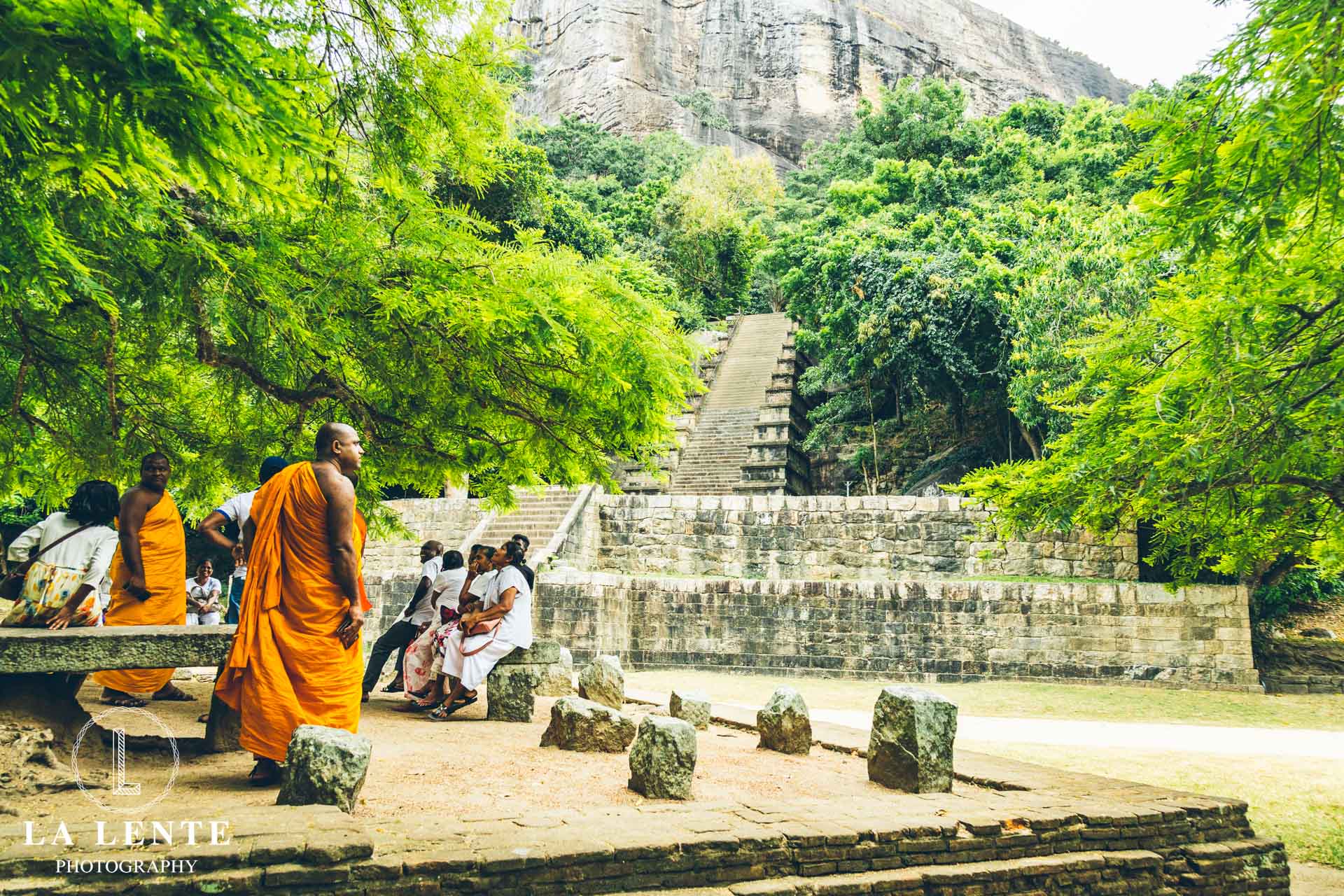
The Yapahuwa Rock Fortress is one of Sri Lanka’s lesser-known yet fascinating historical sites, built in the 13th century as a short-lived capital and stronghold.
Rising nearly 100 metres above the surrounding plains, the granite rock is crowned with ancient ruins that once housed the Sacred Tooth Relic of the Buddha.
The thing that takes your breath away is its dramatic stone staircase, decorated with exquisitely carved lions and ornate balustrades, often compared to the grandeur of Sigiriya’s entrance. The photos almost don’t do it justice but it is steep, very, very steep. This was designed on purpose to deter invaders.
Walking up the stairs takes a bit of time as each step is quite tall & short. When you reach the summit visitors can explore remnants of the royal palace and defensive walls, while enjoying sweeping views across the countryside.
Though Yapahuwa’s prominence faded after invasions forced its abandonment, the fortress remains a striking blend of military architecture and Buddhist influence, offering a raw and less-crowded alternative to Sri Lanka’s more famous heritage sites.
I was fortunate enough to be there when a small group from a nearby village were visiting so it gave some perspective and contrast of what this site looks like, once they left there was only a few people wandering around.
Peacful, visually stunning and relatively easy to access, Yapahuwa is worth visiting if you love history.

Dambadeniya Ancient Kingdom
Getting to Dambadeniya
As mentioned in the previous section, Dambadeniya is another kingdom with historic significance. It is around one and a half hour from Yapahuwa by car.
What is Dambadeniya?
The Dambadeniya Ancient Kingdom served as Sri Lanka’s royal capital in the mid-13th century and reflects a period of transition in the island’s history.
Located on a rocky outcrop near Kurunegala, the citadel was fortified with ramparts and moats to protect against South Indian invasions.
Within its walls stood the royal palace, audience halls, and a temple that once safeguarded the Sacred Tooth Relic of the Buddha before it was moved to Kandy.
Today, visitors can climb to the summit for panoramic views and explore the remains of the palace foundations, reservoirs, and temple ruins.
While less intact than Anuradhapura or Polonnaruwa, Dambadeniya holds strong cultural value, marking a crucial era in Sri Lanka’s medieval political and religious heritage.
What can you see at Dambadeniya?
This site has two ‘parts’ with the first one being the temple and palace grounds at the foot of the hill. You can then either walk or drive to the staircase that takes you to the top of the site where the old ruins are.
The walk up to the summit takes you up steep stone paths and staircases where you are rewarded with stunning views as far as your eye can see.
At the top the ruins are not very intricate or detailed it is mainly the foundations, walls and remnants of water storage that remains. They are actually still excavating the site and discovering clay pots, coins and other pieces.
Entry to this site is free and it wasn’t very busy at all so it was an ejoyable experience.

Panduwasnuwara Kingdom
Getting to Panduwasnuwara
It is about an hours drive to get to Panduwasnuwara from Dambadeniya so they are relatively close to each other by car.
What is The Panduwasnuwara Kingdom?
This site dates back to the 12th century and was established by King Parakramabahu the Great before he rose to power in Polonnaruwa.
Located in the Kurunegala District, the site functioned as a temporary capital and reflects the beginnings of the king’s ambitious vision for irrigation and urban development.
What can you see at The Panduwasnuwara Kingdom?
Today there are remnants of the palace complex, Buddhist monasteries and an ancient stupa, along with the foundations of what is believed to have been the royal residence.
Local legend also links Panduwasnuwara to the earlier story of King Panduwasdev and his daughter, Princess Unmada Chitra, adding a mythical layer to the ruins.
Though not as monumental as Sri Lanka’s more famous capitals, the site offers a quieter, less-touristed window into the island’s medieval history and the evolution of its kingdoms.
As you can see in the photos there isn’t a whole lot to see, it is mainly the walls from the old fortifications, foundations and the stupa. For this reason it isn’t very busy and it is free to visit and walk around.

Ancient City of Polonnaruwa
Getting to The Ancient City of Polonnaruwa.
So I visited the sites mentioned above while staying in Colombo. Although for Polonnaruwa I planned my itinerary to visit this location while I was staying in Kandy.
It would mean a four to five hour drive from Kandy to reach this ancient city. So I was a bit hesitant after doing the long trips from Colombo, but I decided to stick to what I had planned.
An alternative method of travelling would have been to spend a few days and also visit these locations (which I went to on my first trip);
- Matale: Spice gardens and a colourful Hindu temple.
Dambulla: Golden Temple & Cave Temples (UNESCO site).
Sigiriya / Pidurangala (near Habarana): Visit the Rock Fortress and climb it for stunning for views.
Minneriya / Kaudulla National Park: Safari trips to see elephants and other animals.
What is The Ancient City of Polonnaruwa?
This city is another UNESCO World Heritage Site and was Sri Lanka’s royal capital in the 11th–13th centuries and remains one of the best-preserved archaeological treasures on the island.
Under King Parakramabahu I, the city flourished with impressive palaces, monasteries, and vast reservoirs, including the Parakrama Samudra, an enormous man-made lake that still irrigates the region today.
Visitors can wander through sprawling ruins that showcase the kingdom’s architectural mastery with the highlights including the Royal Palace, the circular Vatadage, the towering Rankot Vihara stupa and the world-renowned Gal Vihara, where four colossal Buddha statues are carved into a single granite rock.
Unlike the older capital of Anuradhapura, Polonnaruwa feels more compact and easier to explore, offering a vivid glimpse into medieval Sri Lankan civilisation and its remarkable blend of engineering, religion, and art.
Getting around Polonnaruwa.
Very similar to Anuradhapura, Polonnaruwa can be explored on foot, bicycle, tuk tuk, car or tour bus. There is a road that loops past each of the main sites with huge car parks and toilets at each location.
You purchase a ticket at the main entry museum which has lots of information about the site, artifacts and some lovely grounds to wander around. From there it is a short drive to the main entrace of the historical sites. This site was quite busy with lots of locals, tourists and school groups exploring the ruins.
What can you see at Polonnaruwa?
As you follow the path you get to see
Royal Palace & Audience Hall – once a seven-storey palace of King Parakramabahu I, with its massive foundations and stone-carved elephants.
Vatadage (Circular Relic House) – the most iconic structure, with Buddha statues facing all four directions.
Gal Vihara – world-famous rock shrine with four colossal Buddha statues carved from a single granite outcrop (seated, standing, and reclining).
Lankatilaka Image House – huge standing Buddha within towering brick walls, roof long gone but grandeur intact.
Rankot Vihara – one of the largest stupas in Sri Lanka, still active with pilgrims.
Thuparama Image House – a rare example with its roof still intact, containing well-preserved Buddha images.
Shiva Devale No. 2 – the oldest building on site, showing Hindu Chola influence.
Lotus Pond (Nelum Pokuna) – a beautifully carved lotus-shaped bathing pond, tucked away but worth the detour.
It is a nice blend of stupas, old structures, water features and pathways surrounded by lush green forest and well worth visiting.
Give yourself a whole day to explore at leisure, relax and enjoy the history that this site showcases.
Visiting the historical sites in Sri Lanka
Much lke visiting Rome or Egypt, visiting the historical sites of Sri Lanka is like stepping into a living museum, where every ruined palace, fortress, and temple tells the story of a civilisation that thrived for over two millennia.
From the sacred stupas of Anuradhapura to the rock-carved Buddhas of Polonnaruwa, the cave temples of Dambulla, and the dramatic fortresses of Sigiriya and Yapahuwa, each site offers a unique glimpse into the island’s cultural, religious, and architectural brilliance.
Even the lesser-visited kingdoms such as Dambadeniya and Panduwasnuwara carry layers of history and legend, rewarding travellers who venture off the main trail.
Together, these ancient cities and monuments showcase not just Sri Lanka’s royal past but also its enduring spiritual traditions, making the island one of the most compelling destinations in Asia for history and culture lovers.
Depending on how you organise your itinerary each of these locations is suitable to use as a base to then do other day trips to other historical sites, safaris or other local experiences.