A first timer's review of Esala Perahera procession in Kandy
- A huge multi day parade in the heart of Kandy in Sri Lanka.
- One of the oldest processions in the world which began over 2,000 years ago.
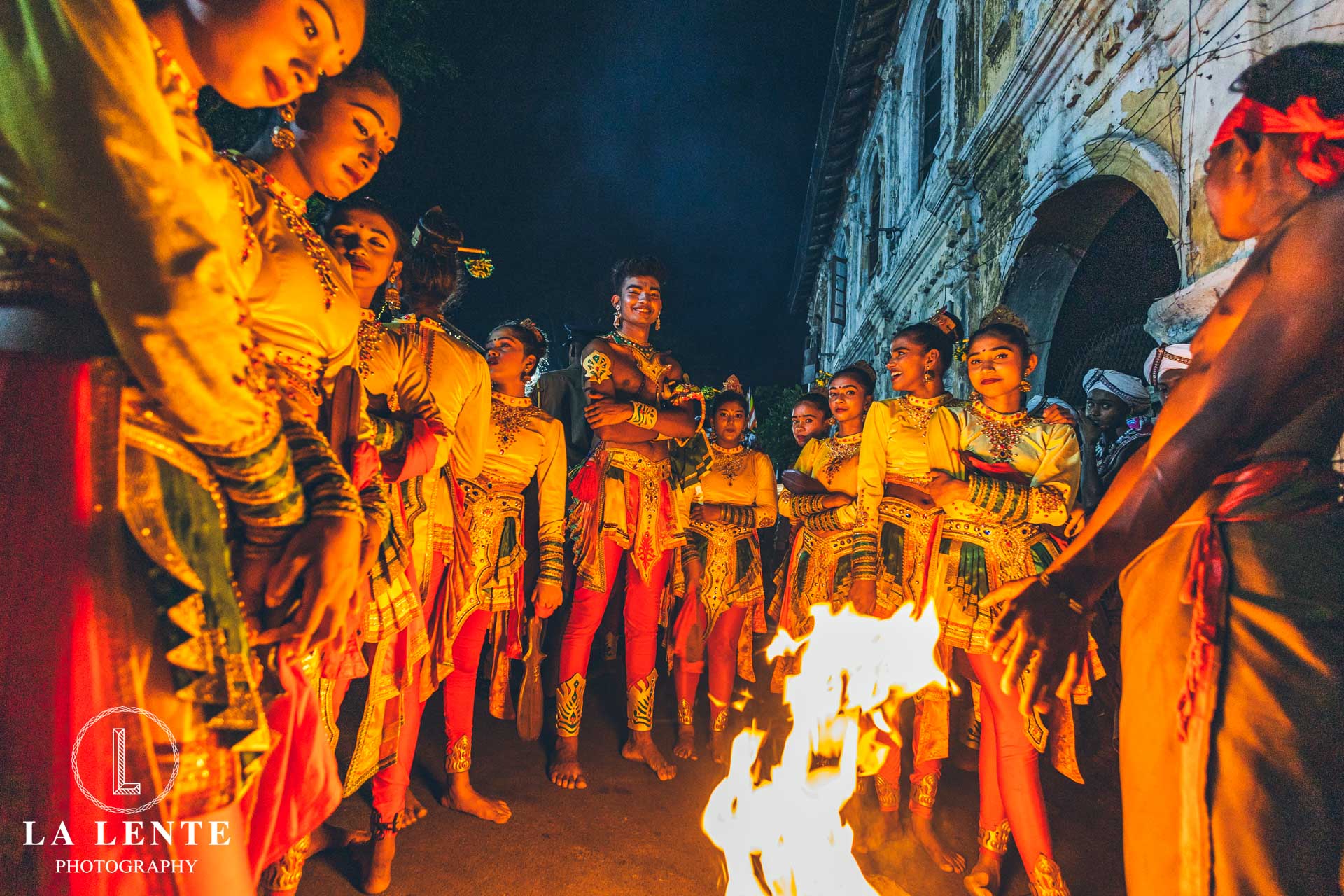
- A night time procession with dancing, music, performers and of course Elephants.
Background.
On my first visit to Sri Lanka a few months ago I had the opportunity to visit the Temple of the Sacred Tooth Relic before heading to the hotel for an overnight stay. I didn’t get to spend any time in the city at all as the timing was too tight.
So when I was planning my second visit to Sri Lanka I put Kandy on my itinerary with the intention of spending a few days there so that I could
a) experience the Perahera procession and
b) use it as a base to then visit Polonnaruwa.
I was fortunate to get accomodation in Hotel Suisse (one of the oldest buildings in Kandy), which sits about half way along Kandy Lake on the other side of the city, which made it easy to walk ten minutes or so to get to the procession or to look around.
Itinerary.
My original itinerary got extended by another day so that I could see the last night of the Perahera, but that also meant I needed to find new accomodation as Hotel Suisse was booked out for the Friday.
I was very fortunate to find a room at Heritage Boutique which is in the heart of Kandy and inside the route of the Perahera (more about why that was super important below)
So the plan was to arrive in Kandy, have a first look at Perahera, visit Polonnaruwa the next day & then see Perahera for a second time, do a cooking class in Kandy the day after before seeing the procession for a third time.

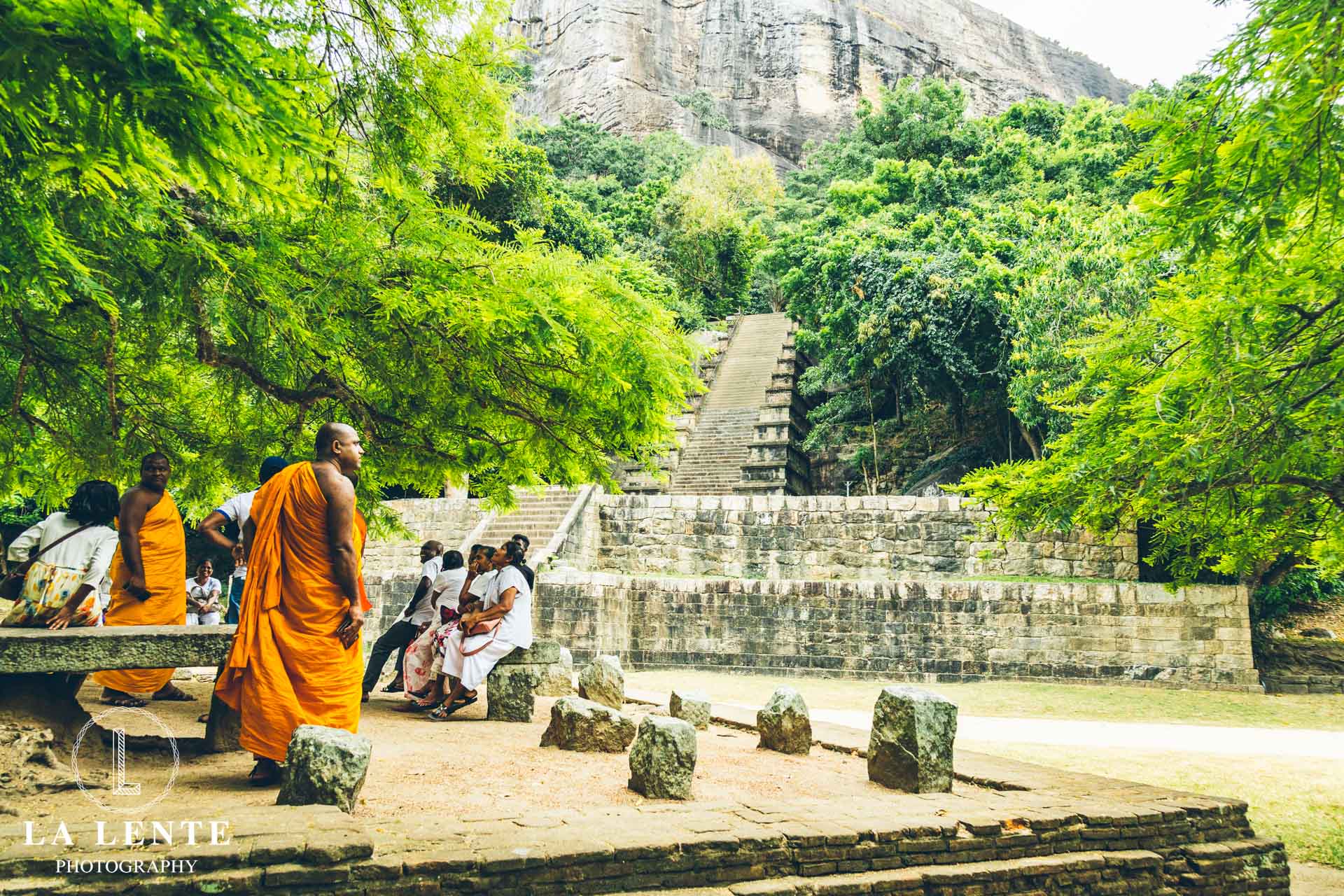
Kandy in the day time during Esala Perahera
What is the Esala Perahera?
The Kandy Esala Perahera has its roots deep in Sri Lanka’s religious and political history, blending both Buddhist and Hindu traditions over centuries.
The origins go back over 2,000 years to the Anuradhapura Kingdom, when kings first held processions to honour the Sacred Tooth Relic of the Buddha, believed to be a symbol of divine kingship. Possession of the relic legitimised a ruler’s right to govern, so safeguarding and venerating it was both a spiritual duty and a political necessity.
When the relic was moved to Kandy in the 16th century, the city became the new centre of Buddhist worship. King Kirthi Sri Rajasinghe (1747–1782) is credited with formalising the modern Esala Perahera by integrating the Buddhist procession with the older Hindu rituals of the devales (shrines dedicated to the gods Natha, Vishnu, Kataragama, and Pattini). This fusion created the unique cultural festival still seen today — a reflection of Sri Lanka’s multi-layered religious heritage.
Over the centuries, the Perahera grew into an annual spectacle, held during the month of Esala (July/August) to coincide with the rainy season and harvest rituals.
Even under colonial rule, when the Kandyan Kingdom fell to the British in 1815, the festival was preserved, though the Tooth Relic itself was kept within the Temple of the Tooth rather than carried openly in the streets.
When is the Perahera?
The Perahera is normally held in late August. Even in today’s terms, the Perahera is both a living religious ceremony and a cultural showcase, where thousands of devotees and performers participate to honour the relic, seek blessings, and keep alive a tradition that links modern Sri Lanka to its ancient past.
It runs over ten days and the crowds are huge with the streets full of locals who save their spot from early morning to guarantee to get a glimpse of the procession.
The elephant in the room.
One of the unique elements of this procession is the use of elephants. Elephants are used in the Kandy Esala Perahera because they have long been symbols of royalty, power and sacred duty in Sri Lankan culture.
In ancient times, kings kept elephants as part of their royal courts and the animals were considered protectors of the Buddha’s teachings. The most important role is played by the Maligawa Tusker, the majestic elephant chosen to carry the golden casket (karanduwa) that symbolises the Sacred Tooth Relic of the Buddha.
Since the relic itself never leaves the Temple of the Tooth, the tusker becomes a sacred bearer, treated with the highest reverence. His grand attire which is silk coverings, ornaments, and lights, reflects the elephant’s status as a living symbol of dignity and devotion.
Other elephants in the Perahera traditionally carried temple insignia, banners, or participated in the pageantry as part of the retinue of the devales (shrines). Their size and calm presence added a sense of majesty and authority to the procession.
Today, elephants remain part of the Perahera out of tradition and spectacle, though their use is very controversial due to concerns about animal welfare. There are lots of videos on the internet of elephants being treated poorly in order to obey commands.
On the surface they seem ok but as you look closer you see their tight chains preventing their movement, layers of material coverings with lights that must be hot and even a lot of swaying as they wait around for their turn in the procession.
It is a difficult scenario where the Government tries to balance the historic significance of the procession with modern expectations. Even a few locals wondered why they hadn’t transitioned to floats that could still symbolise the idea of an elephant as an alternative.

Esala Perahera procession at night in Kandy
A procession that runs over 10 days.
The Kandy Esala Perahera procession runs over 10 nights, gradually building in size and spectacle until the grand finale. This multi day structure is very traditional, with each phase carrying religious and cultural meaning.
- The first 4 nights – Kumbal Perahera;
The festival begins with the Kap Situweema ceremony, where a sanctified young jackfruit tree is planted to symbolise prosperity.Then the first five processions, called the Kumbal Perahera, take place.
These nights are relatively modest: smaller processions with elephants, drummers, dancers, whip-crackers, and torchbearers.
The emphasis is on purification and blessing — the festival is essentially being “warmed up”.
- Next 5 Nights – Randoli Perahera;
The final five processions, known as the Randoli Perahera, are the highlight. These are grander, with more lavishly decorated elephants, elaborate costumes, and larger numbers of performers.The Maligawa Tusker (a richly adorned elephant) carries the golden casket symbolising the Sacred Tooth Relic. The inclusion of Randoli (palanquins) carried by attendants, hence the name, marks the elevated ceremonial importance.
- Final Night – The Grand Randoli Perahera
This is the biggest and most spectacular night, with the largest crowds. Thousands line the streets to watch hours of parading dancers, torchbearers, and dozens of elephants.It’s both a cultural spectacle and an act of deep devotion.
- After the Processions – Day Ceremonies
The morning after the final Randoli, the Diya Kepeema (water-cutting ceremony) takes place at the Mahaweli River. Priests symbolically “cut” the water with a sword, signifying purification and blessing for the land and its people.
The next day is a ‘Day Perahera’ which returns the relic casket to the Temple of the Tooth, closing the festival. So, the Perahera builds from day one to a massive crescendo, reflecting both religious devotion and the legacy of Sri Lanka’s royal pageantry.
What is the best way to see the procession?
So as you can imagine this is a huge event for Sri Lankans and families plan their days around having someone reserve a place on the footpath somewhere within the route of the procession.
Each day there is a different route which is shown on the official website here. It means you have to plan differently depending on where you want to try and sit.
If you sit on the ‘inside’ if the route you are basically required to stay there until the procession finishes which could be 11.30pm or later. All the roads are closed off to allow the performers and animals to pass safely which means nobody can cross the road.
If you sit on the ‘outside’ it could still be difficult to leave early because the foot path is full of people with no walking space at all. So it means you have to be prepared to remain there from the time of arrival to around 10pm at night at least.
The alternative is to buy a seat in a restaurant, cafe or shop that is elevated, or in some cases, have hospitality included with food or drinks as well as toilet facilities.
If you don’t arrive early then you have to try and contend with crowds that are up to 10 people deep to have any chance of getting a view. It’s so busy that there are even kids who climb the trees to get a view and people sitting on the roads not even on the route.
Where did I watch the procession from?
The first time I went to the area closest to the Temple of the Sacred Tooth Relic. I thought I would take my chances and squeeze in somewhere. This area didn’t have any lines at the security check in so I started to worry, but pretty quickly I was fortunate to get a spot fairly close to where the procession would start.
As you can see in the photos below the only downside with this location was the big black bars but the view was fantastic and probably the best I had over the nights I went to see the procession.
The second night I tried finding an ‘outside’ spot on the street but this was pretty challenging with the footpath so thick with people it was impossible to see anything unless you had a stool or something similar to stand on.
The third night was a very different experience because my hotel balcony was ‘inside’ the route at street level where I could literaly just walk out and get amongst the things happening with the procession. Performers were practicing, elephants waiting and more.
This enabled me to capture photos that were more ‘behind the scenes’ rather than the procession itself which added to my experience overall. I could then see the very ending of the procession as they entered the back gate back to the temple grounds.
How to see the Esala Perahera in Kandy
Fortunately the Esala Perahera is broadcast via a live stream on YouTube. You can see some of the previous ones here so if you don’t manage to secure a good view not all is lost.
For anyone thinking of attending the event I’d strongly suggest securing seats in a raised position somewhere on the route which has both food and toilets available so that you can enjoy the experience.
You could see it for one night to get a taste of what it is all about and that may be enough for most people, although trying different locations can create something that is a more immersive experience.
During the day you won’t see much happening other than streets getting cleaned or barriers moved in preparation for the procession, but obviously people start saving their spots early on starting from around 7am.
It was a great experience considering it is an event that has been happening for more than 2,000 years.