Visiting Sri Lanka for the first time as a photographer

- Sri Lanka is a great place to take landscape, street, coastal or wildlife photos.
- Locals didn’t mind having their photos taken, perfect for street photography or documenting Sri Lankan life.
- It is easy to take photos of historical sites or lush landscapes like mountains or beaches as well as local villages.
- An ideal itinerary length is 14 days spent between the city, hinterland and coastal locations to get a taste of the island.
Background.
I was engaged as a photographer and flew to Sri Lanka for the first time as part of a travel agent familiarisation (Famil) tour travelling from Australia. This short trip was organised by a travel agent that specialises in group bookings called Groups By Beyond who was supported by Sri Lanka destination management company (DMC) World of Travels in partnership with Sri Lanka Airlines and the Cinnamon Hotels Group.
Itinerary.
The trip had a very short 7 day itinerary with a route covering nearly 800kms travelling by road in a tour bus with a portion by train from Kandy. This type of trip is designed to showcase all the major attractions in a short period of time that would typically be included in a holiday itinerary so that each travel agent experiences them first hand. It gives them some local knowledge and experience to then promote the destination to their clients.
Arrival.
We began the trip from Colombo, after arriving on the 11 hour direct flight from Sydney on Sri Lankan Airlines. After receiving a traditional greeting and welcome ceremony it was off to the hotel with the next few days to include stops in Habarana, Sigiriya, Matale, Kandy, a train to Nuwara Eliya, safari in Yala, a quick stop driving through Ella with an afternoon in Galle before the final destination in Beruwela to complete the trip.
The itinerary included overnight stays and visits to sight seeing experiences in a condensed time frame for the purpose of the familiarisation, but for this number of destinations a typical holiday itinerary would be done in 10 to 14 days to comfortably allow for a more relaxed pace.
First impressions.
As a photographer visiting Sri Lanka for the first time, initial impressions were that it felt like a mix of Bali, Singapore and Vietnam, no surprises really given these countries are neighbours.
Although very quickly you can see and feel the mix of colour, culture and contrasts, with its diverse landscape starting with the bustling city of Colombo to lush forests in the highlands near Ella, sprawling grazing lands in Yalla and of course the picturesque beaches along the coastal areas.
Camera equipment.
With such a fast paced itinerary I chose to take my Canon EOS RP SLR camera with its compact RF-S 18-45mm lens together with my iPhone 12 mobile phone.
This combination of camera gear gives me a small, ye light, photography kit that would be good for both landscape or street photography, but most importantly be quick to use, light to carry & not too conspicuous.
I normally travel with a Lowepro Passport Sling bag because it is easy to have either on your back, side or front as well as having a padded internal compartment to split the camera from batteries, water bottle etc.
What was it like taking photos?
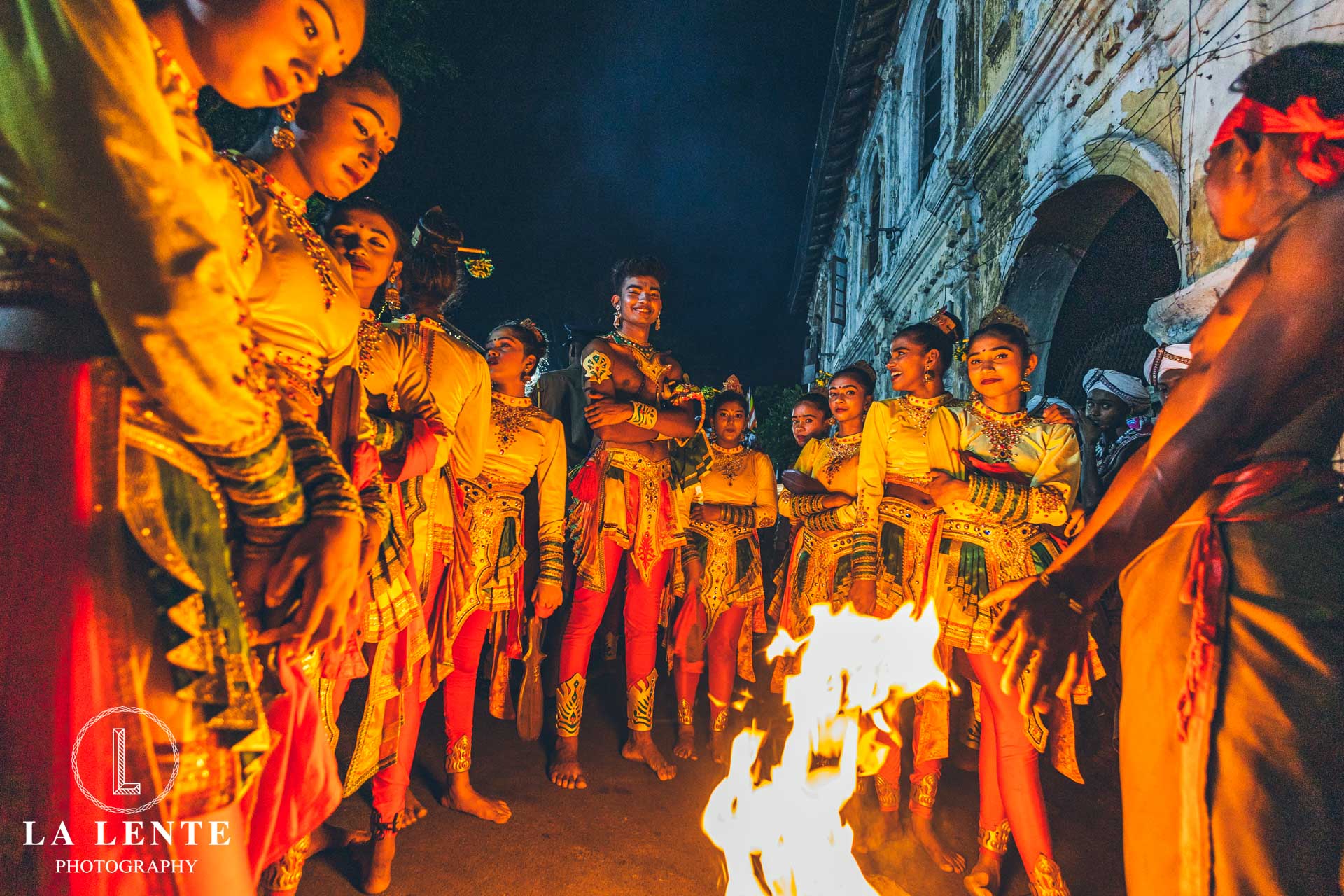
Taking photos for the first time in Sri Lanka was very enjoyable where you walk through centuries of heritage combined with the warmth of the local people who welcomed visitors at every chance. Even when the camera was pointed directly at people, they happily smiled for a photo which created so many different photographic opportunities.
As you travel around the island it reveals a quiet poetry that is mixed with bustling street markets, colonial facades, serene temples and candid moments of daily life on the streets that blend tradition with modern Sri Lankan life, it is quite a mix.
For the creative eye, Sri Lanka is far more than a destination, it’s a living canvas, vibrant with stories and textures waiting to be captured through a lens. Whether experienced through the quiet focus of a camera or the warmth of local conversation, the island leaves a lasting impression that is both visually striking and emotionally resonant.
From sweeping landscapes, ocean scenes, peaceful temples to candid moments in bustling streets, Sri Lanka offers endless inspiration for photographers who have a landscape or street style as well as seasoned content creators or travel storytellers alike.
Below you can jump to a location to see some of the photos I took and you can even download some sample itineraries to give you some inspiration.


Habarana
I landed in Colombo around 11pm and managed to crawl into bed at the first overnight stay by around 1.30am. The next morning was an early start with a quick breakfast before checking out to begin the 5 hour drive to our first overnight stay at Cinnamon Lodge Habarana. This is a hotel in Sri Lanka which really immerses you into the landscape with multiple rooms entwined on the property between its natural waterways, pathways, forest and of course the cheeky monkeys running around who live nearby.

Dambulla Royal Cave Temple and Golden Temple in Sri Lanka
Our first experience was to visit the Dambulla Royal Cave Temple. Dambulla is an important shrine for the Buddhist religion in Sri Lanka and part of Buddhist ritual practices and pilgrimage for more than two millennia. The Dambulla Rock Temple houses some of the most unique drawings in multiple cave temples flanking the golden temple of Dambulla. These caves were built during the Anuradhapura (1st century BC to 993 AD) and Polonnaruwa times (1073 to 1250), regarded as one of the most impressive of the cave temples located in Sri Lanka.
From the parking area, it’s about a 10 to 15 minute walk uphill, with stunning scenery along the way that’s perfect for photography as you climb high above the natural forest canopy below. At the entry gate, you’ll need to remove your shoes before entering any of the caves as well as covering your shoulders and knees. You can either buy or hire suitable attire as required.
Walking into the Dambulla Royal Cave Temple as a photographer is like stepping into a hidden sanctuary carved into stone and time. The dimly lit chambers are cool, silent and adorned with centuries-old frescoes and rows of colourful Buddha statues.
As your eyes adjust to the soft, golden glow that fills the rooms your instinct is to reach for your camera, although you don’t need to worry about using a flash or tripod as most modern models can deal with the mixed light.
With limited natural light, taking photos here will challenge your technical skills. So a high ISO setting of 1600 or higher becomes essential for the camera to take photos at a shutter speed that will capture the depth of the cave’s ambience without sacrificing the atmosphere.
The grain from higher ISO can actually complement the texture of the stone and age-worn murals, adding character rather than detracting from any images created. For mobile phone users, most modern smartphones will work well as long as you hold it very steady and try taking photos of brighter areas in the cave.
You’ll find compositions in the subtle contrasts where lighting highlights the curves of a statue’s face or the shadows across the floor, sections of the painted ceilings or even including people in the photos to show the sheer scale of the statues as well as the cave.
Once you explore each of the caves you can take the far left hand path to walk back down the hill to the Golden Temple with its huge statue of Buddah which is perfect for group photos with its impressive scale.

Visiting Sigiriya Rock Fortess in the early morning
Our next stop on the itinerary kicked off with a 5.30am start so we could visit the Sigiriya Rock Fortress. Visiting Sigiriya so early in the morning sounds crazy, but the benefit is you avoid the heat of the day for what is a fairly arduous climb if you go all the way to the top.
Once parked it is a short walk to the ticket booth, then you make your way to the entry gate where you begin the walk to the base of the huge rock that dominates the landscape.
With camera in hand I was greeted by the soft golden wash of morning light gently spilling across the surrounding jungle and moats. Getting there early means you arrive before the crowds as well as the heat of the day.
The climb begins in silence, save for the sound of the wind, the distant bird calls from the surrounding forest and light chatter from tour guides. The low, angled sunlight filters through the trees, casting long shadows and illuminating the stone pathways and water gardens so you can play around with sun flares and reflections to take some nice landscape photos.
It is a great time to take photos using warm natural light to full effect. An ISO of 100-400 helps capture the warmth of the light while maintaining the richness of any scene. The fortress itself, rising dramatically from the forest, looks majestic in the soft light, its reddish brown stone facade catching the sun’s warmth. Capturing people as they are walking or taking photos of the site helps to elevate the composition while illustrating the sheer size and height of the rock.
You do need good fitness levels as it is quite uneven in parts with the walk up to the half way point giving you some great views for photos, although if you take your brave pills you can continue and climb the metal staircase that take you to the very top of the rock. It is quite confronting when you see this skinny metal staircase zig zagging up the side of the rock but it teases at the same time as you hear the excited comments from people who are on the way down.
Once you climb the final steps you will feel exhausted as it is quite strenuous but you are then rewarded with panoramic shots of mist-covered treetops and the faraway hills stretching into the distance as far as the eye can see.
At this time of day the light is still soft, colours are true and every angle offers a new perspective whether it’s the symmetry of the ancient ruins or the winding stairs clinging to the cliff face.
Taking photos of Sigiriya at dawn is less about ticking a site off a list and more about documenting a timeless piece of history. It feels like a few moments frozen between the past and the present.
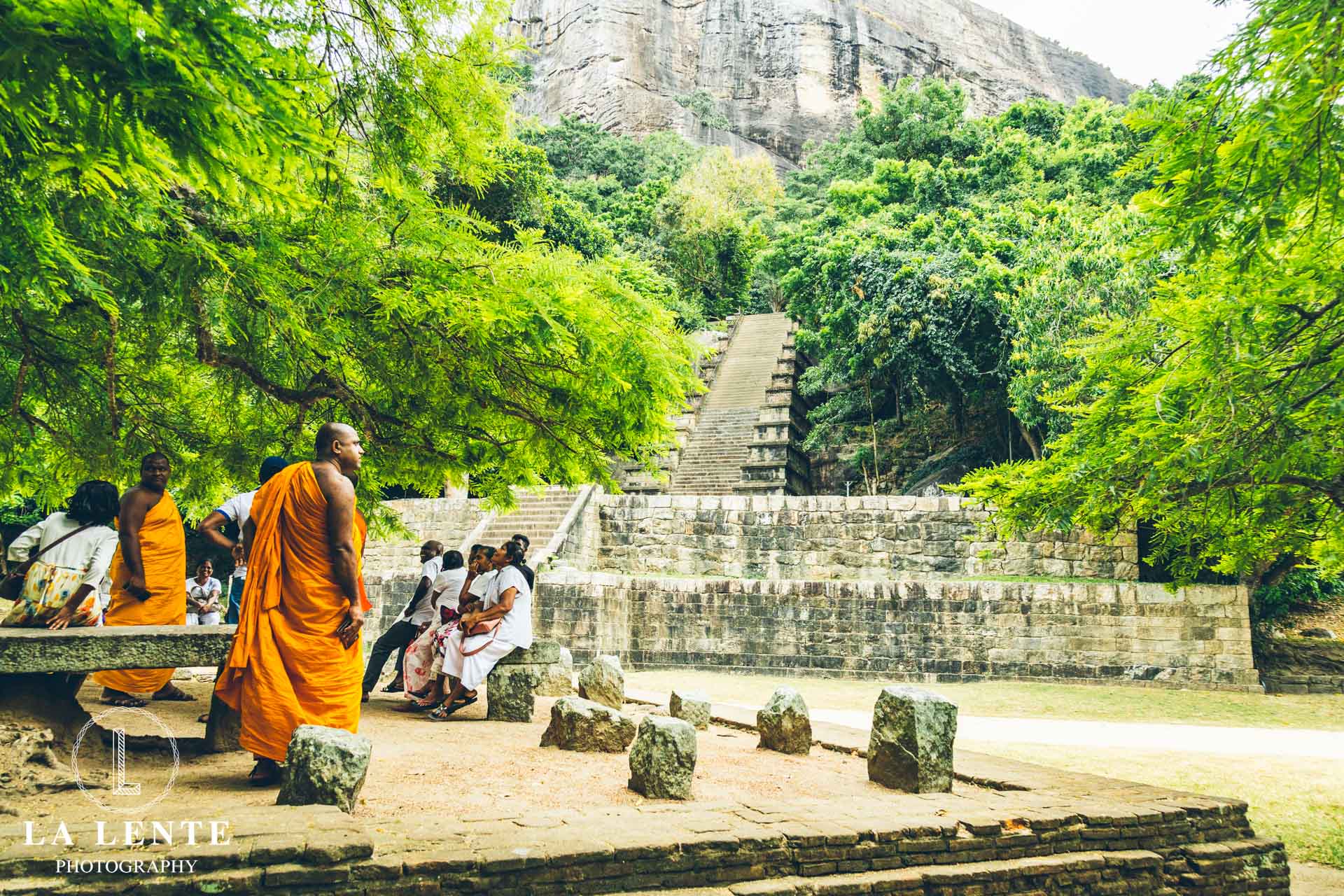
We all know Europe boasts many significant historical sites although Sigiriya is also a World Heritage Site, a 5th century rock citadel of King Kasyapa which showcases ancient Sri Lankan engineering & urban planning. It is regarded as being one of the best monuments of art & culture in the country.
What you experience at ground level changes once you scale the height, size and breadth of this site that was built so many years ago, it becomes overwhelming as you comprehend what was achieved without modern machinery, especially the gigantic ‘Lion Paws’ that you step between before ascending to the very top of the fortress.

Hiriwaduna local village experience
After we finished climbing the rock fortress we returned to the hotel for breakfast a change clothes and time to head out again. Our next stop was going to be a short drive away to visit a traditional local village called Hiriwaduna to experience what typical Sri Lankan rural life would be like.
Arriving at Hiriwadunna village mid morning the light was getting harsher and the temperature much warmer. This tour begins with a bullock cart ride near the village pond offering a unique perspective of rural life. In fact it was so unique my driver even used his mobile phone while he was yelling at the bullocks and prodding them with a stick. So it was quite a unique visual of modern technology being used on an ancient way of travelling.
As you traverse the paddy fields and vegetable plantations, the light enhances the vibrant greens and earthy tones, perfect for capturing the photos of the countryside, we even had a few dark grey clouds fly over so the landscape changed colour very quickly. This part of the experience lasts less than ten minutes before you then walk along narrow forest pathways to reach the waterway near the village to get onto a catamaran.
Once on board one of the colourful catamarans you are gliding slowly across the lake with opportunities to photograph reflections in the water of the surrounding flora and fauna. The stillness of the water creates mirror-like images adding depth to a shot. Depending on the time of year there will also be lots of flowers or birds to spot too.
Once you reach the village you are greeted with a traditional drum ceremony and you can document daily activities and interactions as the cooking demonstration begins with locals who use fire & manual techniques to farm.
The tour concludes with a traditional Sri Lankan lunch inside a village house which offers lots of chances to photograph local cuisine being made & the techniques they use to prepare the food. The interplay of light and shadow in these settings can create a rich tapestry for storytelling with a camera through still photos or video.

Street photography in Dambulla fresh produce farmers market
The next leg of our journey would include a 4 hour drive from Habarana (with a stop at Matale to visit a spice garden) and then onto the town of Kandy to see the Temple of the Sacred Tooth Relic. Although we made a quick stop at the largest vegetable market in Sri Lanka, the Dambulla Dedicated Economic Center or ‘Farmers Market’.
While it isn’t a historical sight as such, this marketplace serves as a major economic centre for the island as it is one of the main places in which the country’s harvest is bought and sold to vendors.
It businesses or locals can purchase fruits and vegetables at wholesale and retail prices. For a photographer every few seconds there is something else to take photos of. Tuk tuks, trucks and lorries drive in and out with pumpkins, varieties of bananas, mangoes, coconuts, carrots, peppers, watermelons, apples, leeks and more, there is so much colour, action and movement.
In addition to the diverse produce, the market oozes with an intriguing culture, as you are able to witness the typical lifestyle of the village people and the enterprises that operate in the area.
As a photographer, experiencing the contrast between Dambulla’s Royal Cave Temple and its bustling 24/7 wholesale produce market is like shooting two sides of the same cultural coin, one steeped in silence and sacred history, the other pulsing with the raw, unfiltered daily Sri Lankan life.
Capturing the stillness of the cave temple and its warm golden hues is a stark contrast to the the vendors, porters and buyers in constant motion under fluorescent lighting mixed with open-air, shaded, natural light.
The energy is unpredictable, the lighting mixed and the time to capture a moment very brief, but the visual payoff is immense. Piles of vibrant fruit and vegetables create a mosaic of colour, while the faces of the workers are weathered, focused while being full of character to create powerful documentary moments.
In a fresh produce market as colourful and sensory-rich as this one in Sri Lanka, a photographer has no shortage of striking subjects that can include;
- Vibrant food displays of neatly stacked piles of bananas, jackfruit, mangoes, chillies, and leafy greens offer bold compositions and bursts of colour. Overhead light mixed with natural shadows often adds texture and depth to these types of shots.
- Market vendors in action as candid portraits of people weighing produce, chatting with customers, or arranging their stalls can tell authentic stories of daily life. The lines in their faces, traditional clothing, and expressive gestures bring a strong human element.
- Textural details where you zooming in on spices, herbs, or grains like mustard seeds, cinnamon sticks, or fresh curry leaves to create detailed, abstract compositions that emphasise texture, pattern, and contrast.
- Cultural details like signage that is handwritten, woven baskets, traditional weighing scales, or even the way goods are tied and packaged offer strong cultural cues that can anchor the photo in its setting.
- Interactions that capture the ebb and flow of the crowd, customers haggling, children trailing behind parents, or tuk tuks weaving past the market entrance that adds life and motion which is ideal for documentary-style storytelling.
Shooting fast with quick reflexes while engaging with the people to capture their gaze is fun to try and pull off. Many were quite happy to have their photo taken with a few asking for payment. You could easily spend a few hours in this location but we had about twenty minutes before departing to the next location.

Visiting a spice garden in Matale, Sri Lanka
After the fresh produce market we stopped at Matale to visit The Regent Spice Garden spice garden before heading to the town of Kandy to see the Temple of the Sacred Tooth Relic. Under the soft heat of the mid-morning sun we stopped at a spice garden in Matale which was a tranquil, lush, sanctuary where Sri Lanka’s botanical legacy unfolds in vivid detail.
Fragrant trails of cinnamon, cardamom and clove drift through the air as the guide explained centuries-old cultivation methods of different plants used to make food, spices, tea or even natural skin remedies. Every corner offered a sensory encounter from the textured bark of a cinnamon, raw cocoa or soft alovera.
Photography at a location like this can be limited unless you love taking photos of plants, leaves, trees or fruits. If you take a macro lens its possible to create great images of the textures, colours and shapes of leaves, seeds and finely ground spices.
There are lots of things to look at, taste or smell from cinnamon, cardamom, pepper creepers or tea. Like all spice gardens visitors are taken around while they get an explantion about each tree and plant to learn about how they are used in food or product preparation.
There is a shop where finished goods can be purchased as well as either tasting or product demonstrations including facial massages depending on the type of tour you choose.

Walking inside Sri Dalada Maligawa, Temple of the Sacred Tooth Relic in Kandy
After driving from Matale we arrived mid afternoon in Kandy to inspect a new hotel & have lunch. This bustling city is one of the largest in Sri Lanka located in the Central Province. It was the last capital of the Sinhalese monarchy from 1469 to 1818.
Due to the timing of our arrival we went straight to the Sri Dalada Maligawa or the Temple of the Sacred Tooth Relic which is the famous Buddhist temple in heart of the city. It is located in the royal palace complex of the former Kingdom of Kandy, which houses the relic of the tooth of the Buddha.
On arrival we were greeted with stormy clouds as a thunderstorm was blowing in, so we rushed through security & to the ticket counter to leave our shoes and head inside. This was going to be another indoor photo shoot using high ISO while playing with the unusual mix of flouro, natural and candle lighting spread through the different rooms.
This location has been significant since ancient times as the relic has played an important role in local politics as it is believed that whoever holds the relic holds the governance of the country. Kandy was the last capital of the Sri Lankan kings and is now a World Heritage Site.
There are lots of things to take photos of depending on your preferences. Of course there are lots of candid moments as people pray or give offerings, there is artwork, ornaments and intricate architecture.
If you like capturing photos of ceremonies or events, Bhikkhus, of the two chapters of Malwatte and Asgiriya, conduct daily worship in the inner chamber of the temple with rituals performed three times daily: at dawn, at noon and in the evenings.
While on Wednesdays there is a symbolic bathing of the relic with an herbal preparation made from scented water believed to contain healing powers and fragrant flowers called Nanumura Mangallaya.
After visiting the temple we checked into the Cinnamon Citadel Kandy for our overnight stay in Kandy before heading off by train to Nuwara Eliya.

Travelling by train from Kandy to Nuwara Eliya
For most people that travel to Sri Lanka they will see photos of the Nine Arch Bridge with a blue train & this will become part of the itinerary. That train ride runs from Kandy to Ella and is widely considered one of the most scenic and popular train journeys in Sri Lanka as it takes passengers through lush landscapes with tea plantations and hilly landscape vistas.
Our itinerary included an alternative train ride route which was a 4 hour train ride from Kandy to Nuwara Eliya where we would meet the bus to then drive to Yala.
This train route travels up into the mountains, twisting through lush green blankets of tea bushes with the temperature dropping as it climbs higher and higher. Great photo opportunites are everywhere from the character filled train stations the people walking on the tracks to the sprawling lush mountain ranges, you will even spot Australian gum trees along the way.
If you are brave you can place a camera out the window to capture a person leaning out door or the curved arc of the carriages as it twists and turns.
The landscape shifts gradually from busy towns and dense jungle to rolling tea estates and mist-covered valleys. Villages nestled between emerald hills flicker past, their red-tiled roofs offering bursts of contrast against a sea of green. Waterfalls appear without warning, cascading down cliffs beside winding tracks, while tea pickers in brightly coloured saris dot the plantations like brushstrokes on a vast canvas. With every kilometre gained in altitude, the temperature begins to drop—the thick tropical air giving way to a cool mountain breeze.
By the time the train nears Nanu Oya, the gateway to Nuwara Eliya, the heat of Kandy feels like a distant memory, replaced by crisp air and the scent of eucalyptus & clean mountain air.
For a photographer, it’s not just a change in climate but in perspective with each frame revealing a quieter, gentler side of Sri Lanka that is far removed from busy city streets. You will see small villages, people working in the fields, colourful station decorations, lots of characters walking on the train tracks and some very curious faces in the train carriages.

Doing a wildlife safari tour in Yala
Our next stop promised to be a very unique experience. Cinnamon Wild Yala is a hotel resort complex that is situated inside the Yala National Park with its huge animal reserve.
In fact they even include an escort to and from your room just in case any wildlife decide to wander around the grounds.
The unique aspect of this location is the animal safari tours. For anyone who loves taking photos of wildlife you have two choices to consider. Either bring your own zoom lens that is at least 200mm in length or speak to your travel agent about booking the equipment that the hotel has. They have professional full frame SLR’s with 200-400 zoom or 400mm prime lenses available to use when you join one of the safari tours.
You can use a modern Pro Max iPhone or equivalent Android phone that has a large optical zoom but your photos won’t be as detailed or contain as much data as a photo taken with an SLR if you are considering prints or enlargements. So an ideal choice is pack light and rent their equipment if you love animals but make sure you book ahead of time.
We arrived late at night so there wasn’t too much to see, but it was an early start at 5.00am the next morning jumping into 4WD’s and explore the safari trails with promises of potentially seeing leopards. elephants, monkeys, birds and more.
Yala National Park is known as a bustling location filled with animals with the convenience of it being less than 20 minutes from your hotel room door. Each 4WD vehicle can seat up to eight people in a raised position which gives you lots of visibility to see in any direction. The drivers will point out animals as they drive along and stop in certain scenic spots or when herds are moving through the bushes.
You have to take photos quickly as the animals go about their daily routines and with such a natural environment they are easy to miss due to their natural colours blending into the bushland (unlike a zoo). Although without a good zoom lens on your phone or camera you will generally be too far away to take great photos, most will end up looking like a landscape image with nothing to really see.
Proof? Well a few of my photos are not too bad, but I wasn’t able to capture anything impactful with my 18-55mm lens.

Walking tour street photography at Galle Fort a UNESCO World Heritage Site
After our safari we returned to the hotel to get changed, check out and hit the road for about 3 hours to visit Galle Fort, a UNESCO World Heritage Site, before reaching our final destination of Beruwela.
So it meant we went from wild animals dashing through the forest to walking through a historic coastal fortress with a rich colonial heritage. As a photographer it creates an extreme contrast and something quite unique to Sri Lanka.
This fort was built by the Portuguese in the 16th century and later expanded by the Dutch and features well-preserved ramparts, charming cobblestone streets, and a mix of architectural styles within its walls.
Visitors can explore the fort’s museums, boutiques and cafes while enjoying the views of the Indian Ocean. The lighthouse and clock tower are popular landmarks making them a perfect spot for history enthusiasts and those seeking picturesque scenery.
Whether you’re wandering the fort’s ancient walls or soaking in the vibrant local culture, Galle Fort offers a unique glimpse into Sri Lanka’s past with a very relaxed vibe mixed with the smell of salty sea air mixed with a touch of Europe backstreets thrown in.
Our time here was brief (as we still had another hour or so to drive to reach Cinnamon Bey Beruwala for our final stop), although you could easily spend a day or two in this location before exploring other parts of the coastline.

Beruwala street photography
Our final destination was planned to be Cinnaon Bey Beruwala, a large resort right on the beach and about a twenty minute walk to Beruwala Harbour. The day was designated as a rest day but I took the opportunity to walk from the hotel up to the harbour to see some of the local street life.
The first Muslim settlement of Sri Lanka was in Beruwala which is situated in the Western coastal area of the Island. Beruwala was named “Berbereen” in the past in honour of Yusuf bin Ahmad al-Kawneyn who is also known as Shaykh Abu Barakat al Barbari a Somali Muslim scholar and a traveler who founded the city.
As a result of Arabs arriving and settling down in Beruwala between the 10th to 12th centuries AD it became a popular city for Unani medicine. During the 10th century Prince Jamal-ud-din, the son of Sultan of Konya arrived in Beruwala to practice Unani medicine. Unani medicine was spread to many other parts of Sri Lanka and Unani Physicians can still be found in Beruwala.
Walking the streets felt relatively safe with the odd tuk tuk or motorbike zipping past. There were lots of small hotels dotted along the coastal streets with small clusters of local shops, homes and abandoned sites. Eventually I reached the Ketchchimalai Mosque that is perched up high overlooking the harbour.
A local shared stories of when the tsunami hit the area in 2004, sparing the mosque, but destroying everything below. They have even left a couple of damaged boats in the harbour as a sign of rememberance.
Taking photos in this type of location is very rewarding if you love street photography. There is so much life, so much activity even though it is not a major city. The textured walls, the bright colours, the smiling faces all create a collage that looks visually stunning.
If you rent your own tuk tuk or hire a bicycle it will give you more flexibility to explore further of course, the nearby Galle Road links smaller towns with more things to see as well as the train station.

What was the food like in Sri Lanka?
In a word – delicious.
Ok to be fair my perspective is slightly tainted as most of the meals were had in hotels (except for the local village experience), but, for about 80% of what I ate I chose local Sri Lankan or Indian dishes to try.
There is a wide array of choice either savoury or sweet, lots of curries, lots of vegetarian options as well. The hotels will have a touch of spice to most dishes but easily handled for most palettes.
The difference is when you eat more authentic food either on the street, at a locals house, or a more traditional food outlet then you really get a taste of rich flavours that are packed with a spicy punch to suit the locals.
One of the unique things that I loved was the Hoppers which is a bit like a thin crepe made in a bowl with a choice of plain, egg or sweet versions on offer. They are eaten normally at breakfast or late in the afternoon as a snack. One hotel even had beetroot flavoured ones. You then top them with a chutney, like sweet caramelised onion, or mango (or for the brave, hot chilli).

What is it like taking photos of Sri Lanka
Street photography in Sri Lanka is an endlessly rewarding pursuit, whether you’re shooting on a mobile phone or a SLR. The island’s diversity of people, architecture, culture and daily life offers an ever-changing backdrop that’s both dynamic and deeply human.
In a single walk you might capture saffron-robed monks passing colonial-era buildings, tuk-tuks weaving through traffic, street vendors serving fresh food or fishermen hauling in their morning catch along the coast.
The contrasts are striking but harmonious, modern meets traditional, sacred meets everyday. Every frame holds texture, colour and character with an openness from the people that is welcoming which often leads to powerful candid portraits.
Whether you’re documenting the chaos of the local markets or the quiet rhythm of a village lane or the peace within a sacred temple, Sri Lanka doesn’t just welcome street photography, it makes it one of the best places to enjoy your craft.
Will a photographer enjoy visiting Sri Lanka?
If you love photography, Sri Lanka is a phenomenal place to visit and really surprised me. To the point I am disappointed I didn’t visit earlier in my life, although to be fair it has had its fair share of controversy with its political instability in 2022 which followed the 2019 bombings.
It can suit any style of travel from backpacker to someone who loves 4 or 5 star accomodation in a resort complex, there are even home stays or numerous Airbnb’s available. Transport can be a bit chaotic with long travel times but that is fairly common in Asian countries, in the end it all works out.
Few countries pack such visual diversity into such a compact space. Within a few hours’ travel, you can shoot misty mountain landscapes, ancient temples, bustling city streets, tranquil beaches, wildlife-filled national parks, and vibrant local markets.
The natural light is often stunning soft and golden in the highlands, bold and tropical along the coast and the country’s rich cultural mix adds layers of depth to every shot.
Whether you’re into portraiture, landscape, wildlife, street, or food photography, Sri Lanka delivers. Locals are generally warm and open to being photographed, the colours are vivid without being contrived and there’s a raw, unfiltered quality to everyday life that lends itself beautifully to storytelling.
No matter if you’re using a smartphone or a DSLR, Sri Lanka doesn’t just give you things to photograph it gives you opportunities to tell great stories with your photos.